AI SUMMARY GENERATED ONLY FROM THIS ARTICLE'S TEXT.
By Dr. Kenneth De Zilwa
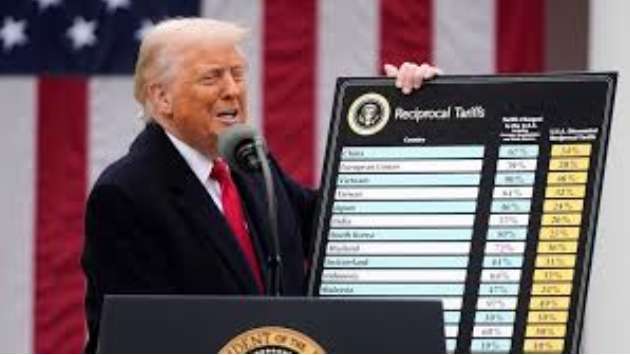
Colombo, July 11 (Daily Mirror) - In a shocking move that sent tremors through Sri Lanka’s export sector, U.S. President Donald J. Trump announced a 30% tariff on Sri Lankan apparel imports into the United States. With over 45% of the country’s merchandise exports tied to the apparel sector, the announcement is more than a trade adjustment - it is a strategic body blow to the Sri Lankan economy.
But this shock is not just about numbers or exports. It has exposed a dangerous truth: that Sri Lanka’s decades-long dependence on neoliberal free trade dogma championed by the IMF and World Bank has left it economically vulnerable, strategically irrelevant, and dangerously underprepared for the real world of power-driven trade. And worse still, the next blow is already on the horizon. If the European Union revokes GSP+, Sri Lanka will face the same economic collapse again, only this time with no fallback and no leverage; because we have no brands, no diversified strategy, and no economic sovereignty.
The Free Trade Mirage: A Model That Never Worked
Since the late 1970s, Sri Lanka has been the first in South Asia to liberalize its economy. With relentless nudging from the IMF and World Bank, since 1965, we slashed tariffs, deregulated markets, opened capital accounts, and privatized state assets - all under the gospel of free trade, efficiency, and private sector leadership.
But four decades later, what do we have?
A hollowed-out industrial base and wider trade gap.
An overdependence on contract manufacturing and a weak industrial base.
A narrow, undiversified export basket, predominantly raw material exports.
No global or national flagship brands except for a lone outlier: Dilmah Tea
This model did not lift us into prosperity. It locked us into low-wage, low-margin production, where we are simply labor for Western corporations, not partners, not equals, and certainly not beneficiaries.
GSP+ and the Weaponization of Trade
The Generalised Scheme of Preferences Plus (GSP+), offered by the European Union, is often celebrated as a tool for development. But in practice, it is a form of geopolitical leverage, tethering Sri Lanka’s market access to 27 international conventions covering everything from human rights to governance to environmental protocols. The United States has now shown that access can be revoked unilaterally, politically, and without recourse. If the EU follows suit and withdraws GSP+, the impact would be devastating. But we must ask ourselves why our economy is so vulnerable to such decisions in the first place.? Why have we constructed an export model so dependent on foreign permission, foreign standards, and foreign goodwill?
The Next Blow: No Brands, No Leverage, No Defense
Let’s not pretend this tariff from Trump is a one-off. It is a message. And the next message will come from Brussels, where voices are already questioning Sri Lanka’s eligibility for GSP+. But here is the real danger: Sri Lanka is completely unprepared to survive another external blow because we have built nothing of our own.
No global brands that command loyalty or pricing power or market share.
No domestic value chains capable of innovation or substitution.
No policy space, having surrendered it to the IMF's fiscal and monetary policy prescriptions.
No diversified trade portfolio, with the West as our overwhelming customer, with nearly two-thirds of Sri Lanka’s total exports concentrated in Western markets, a high-risk dependency that leaves the economy exposed to tariff shocks, GSP+ withdrawals, or political pressure from these regions.
What happens when GSP+ goes? The answer is simple: the same fate as Trump’s tariff - only multiplied. This is the true cost of a dependency model: Sri Lanka produces, but does not own. We manufacture, but do not design. We export, but do not lead. And why? Because the last four decades of policy from ministries to boardrooms to universities have been mentally and ideologically subordinated to external models. We followed “best practices” not because they were good for us, but because the IMF and World Bank told us they were. This is not just economic dependency. It is intellectual and strategic paralysis.
The Lost Opportunity: Why Sri Lanka Has No Brands
Sri Lanka exports over $12 billion in goods and services, with the exception of Dilmah, none of it is under Sri Lankan labels. Instead, we stitch garments for Victoria’s Secret, make lingerie for Marks & Spencer, and assemble apparel for H&M. We are the hands, not the brands nor the head. And as history shows, those who don’t own the brand get left behind. Compare our reality to our regional peers:
Padini, Petronas, Zalora, Air Asia, Royal Selangor
Even small European nations with less population smaller than Sri Lanka have forged global giants:
Country
Population
Global Brands
Sweden
10.5M
IKEA, H&M, Volvo, Spotify
Denmark
5.8M
LEGO, Maersk, Novo Nordisk
Finland
5.5M
Nokia, KONE
Austria
9.1M
Red Bull, Swarovski
Switzerland
8.7M
Nestlé, Rolex, Novartis
The difference? They believed in industrial strategy, national innovation, and protecting their domestic entrepreneurs, while providing them necessary fiscal and monetary support to be global. Sri Lanka, meanwhile, cut and pasted neoliberal templates, failed to protect any sector or industry, and sold state assets instead of nurturing them and making them efficient with dynamic management teams.
IMF Programs and the Hollowing of the State
Sri Lanka has entered into 17 IMF programs since 1965. Ironically, every IMF program, while promising stability, has been followed by more borrowing, not less. Every one of them promised “growth,” “stability,” and “investor confidence.” But the outcomes were consistent:
Privatization of revenue-generating assets
Increase Revenues at any cost, regardless of the revenue contraction (i.e., National GDP) to service debt (Including VAT on digital services, VAT on consumer products, Payee tax, and corporate tax cut tax incentives for investments)
Austerity that starved education and R&D
Import Tariff cuts that exposed fledgling industries to global giants
Policy conditionalities that stripped sovereignty
Massive brain drain as skilled workers flee due to the lack of industries
Our national balance sheet today is weak and prone to significant stress and risks. We import high-value goods and export low-margin ones. Our foreign debt has ballooned to 38 billion Dollars while our debt-to-GDP remains at 115 percent of GDP and is projected to remain above 100 percent of GDP until 2030[ Sri Lanka: First Review Under the Extended Fund 2023-Table 4. Sri Lanka: Baseline Scenario] despite the IMF's Debt Restructuring in 2024, while our net foreign assets remain negative. The IMF’s own data betrays its narrative. In its 2023 First Review Report under the Extended Fund Facility, Table 1, page 36 (“Sri Lanka: Selected Economic Indicators, 2019–2028”) clearly shows that external debt rises from USD 54 billion in 2019 to USD 65 billion by 2028, while external debt-to-GDP increases from 61% to 74% over the same period. This is the very definition of worsening debt sustainability, not improvement as sold to the public. Despite all the painful austerity, tax hikes, and asset sales demanded by the IMF, Sri Lanka's national balance sheet will emerge in 2028 more indebted, more externally leveraged, and more vulnerable to currency shocks than it was at the start of the program. If this is what “debt sustainability” looks like, it is nothing but a myth sold to the public while policy sovereignty is traded for illusions of reform.
The Hidden Cost of Depreciation: A Silent Killer of Sovereignty and Stability
At the core of Sri Lanka’s economic crisis lies a catastrophic policy flaw: the blind adoption of market-based currency depreciation often disguised as “flexible exchange rates” under IMF guidance. What remains hidden in official restructuring narratives is the devastating fiscal cost of a weakening currency on external debt. Consider the numbers. In 2019, at an exchange rate of LKR 180 per USD, Sri Lanka’s external debt of 54 billion dollars translated to LKR 9.7 trillion. By 2024, with the rupee devalued to LKR 320 per USD, that same external debt has now grown to 59.3 billion dollars; ballooning to LKR 18.98 trillion. In local currency terms, Sri Lanka’s external debt has more than doubled not because of new borrowing, but purely due to currency depreciation. This staggering cost is quietly buried under so-called “restructuring scenarios,” never honestly acknowledged.
In 2022 alone, when the rupee collapsed from 200 to over 360 per USD, this currency shock added LKR 480 billion to the annual debt service bill without a single new dollar borrowed.
That extra burden absorbed 22 percent of total government revenue for the year. In other words, nearly one in every four rupees collected from taxpayers was used not for development or public services, but to pay for the hidden loss caused by currency devaluation mooted by the IMF prescription.
Weaponizing Losses: The Hidden Agenda Behind SOE “Reform”
According to the Annual Report of the Ministry of Finance 2022 (page 169), the Ceylon Petroleum Corporation (CPC) recorded a staggering net loss of LKR. 615 billion in 2022, pushing its accumulated losses to LKR. 1,031.3 billion by the end of that year. The CPC’s cost of sales ballooned by 88 percent from LKR. 589 billion in 2021 to LKR. 1,109 billion in 2022 largely due to soaring global fuel prices and depreciation of the currency, i.e., the deliberate weakening of the dollar-rupee exchange rate (a precondition of the IMF since 1965).
More tellingly, finance costs rose 3.5 times, from LKR. 25.6 billion to LKR. 119.5 billion, directly driven by currency depreciation[ Annual Report of the Ministry of Finance 2022 (page 169), ]. But rather than acknowledging these as policy-induced and externally driven losses, the prevailing narrative, encouraged by IMF-backed frameworks, treats these outcomes as evidence of structural inefficiency and justifies the fast-tracked privatization of state assets that are essential for industrialization. Losses caused by global shocks and poor macroeconomic management are quietly reframed as management failure, corruption, and inefficiency, and this continued reframing becomes the political fuel to carve out profitable units, sell strategic infrastructure, and invite foreign acquisition under the guise of reform.
The result is not genuine restructuring, but a theatre of dispossession: national assets are sold off at a discount, and Sri Lanka’s long-term capacity to control its own energy, transport, and production sectors is irreversibly diminished. In this model, balance sheet losses are not fixed; they are manufactured, amplified, and then weaponized to transfer sovereignty from the public to private hands, often backed by donor mandates and external interests. These figures reveal the destructive financial implications of rupee depreciation on large state-owned enterprises and expose the systemic risks of externally driven economic prescriptions. This is a stealth tax on national income invisible to most citizens but crippling in its effect. It crowds out investment in education, infrastructure, health, and growth.
From 2022 to 2025, the total added cost from currency depreciation alone is estimated at LKR 1.4 trillion, a shocking figure that directly undermines the promise of debt sustainability and economic prosperity and beckons economic servitude and eventually the destruction of the national balance sheet.
Yet, time and again, Sri Lanka returns to the same institutions with the same crisis and receives the same prescriptions: free-floating exchange rates, liberalization, fiscal tightening, recycled doctrines that have failed us repeatedly. The cruel irony is that we have never truly developed policies based on our own geography, resource base, talent pool, or market access. Instead, we have cut and pasted foreign economic blueprints built for different realities, with different goals.
Every crisis we seek to fix under IMF advice merely compounds the structural flaws of the last. We are fed stale theories in shiny new wrappers, and trained to chant the same mantras of “stability” while our sovereignty slips further away. Until we confront this failed economic orthodoxy, Sri Lanka will remain trapped not by poverty of resources, but by poverty of vision and independence.
From Fiscal Losses to Global Irrelevance: How SOE Sell-Offs Erode Competitiveness
The consequences of IMF-driven SOE restructuring go far beyond fiscal balance sheets they strike at the heart of national competitiveness. When strategic state-owned enterprises like the CPC, CEB, and SLPA are weakened through artificial losses and hastily privatized, the foundational support systems for industry, logistics, and energy security are dismantled. Local manufacturers and exporters, especially in apparel, agro-processing, and light engineering, are left to operate in a high-cost, high-volatility environment, where energy prices fluctuate without sovereign control, logistics remain under foreign control, and industrial inputs are priced to global benchmarks rather than national needs. This environment stifles innovation, raises the cost of production, and pushes Sri Lankan products out of global markets due to price and delivery inefficiencies. Over time, exporters lose competitiveness, market share declines, and the country is further locked into exporting low-margin raw or semi-processed goods under foreign brands. The result is a shrinking national profit story, where value-added production becomes impossible and Sri Lanka remains stuck at the bottom of global value chains. This is the hidden cost of selling state assets to balance the books, a slow hollowing out of the real economy, leaving no room to build brands, capture value, or drive industrial transformation.
A Nation Trained to Obey, Not Innovate
Perhaps the most tragic failure is intellectual. Sri Lanka’s economists, policymakers, and business leaders have been taught to believe in free trade orthodoxy, without ever asking: Did this model work for others before they were strong? Our universities still teach comparative advantage theory as gospel, ignoring the fact that every successful economy used state intervention, protectionism, and national planning during their developmental phase. We have taught our people to compete without tools, to globalize without brands, and to negotiate without leverage.
The Tariff Is a Wake-Up Call. The GSP+ Withdrawal Will Be the Breaking Point
The Trump tariff isn’t just punitive, it’s symbolic. It tells us we have no leverage because we own nothing. When GSP+ is withdrawn, we will face the same fate: factories shuttering, workers displaced, forex inflows crashing and an urgent run back to the IMF. Again. This is no longer a theoretical debate. It is now a matter of economic survival.
What Sri Lanka Must Do — Now
Launch a National Industrial Policy focused on value addition, supply chain control, and local brand creation.
Reform but retain key public assets, using them to support domestic entrepreneurship.
Build a sovereign trade strategy, diversify partners, deepen South-South links, and reduce dependency on Western preferences.
Invest in R&D, education, and branding as tools of long-term competitiveness.
Rewrite university curricula to include economic history, development theory, and industrial policy.
Restructure debt with sovereignty, not submission, and break free from policy dependency.
Final Thoughts: Dependency Is Not Development
Sri Lanka is not poor in resources, talent, or opportunity; it is poor in strategic independence. For too long, we have confused access for advantage, compliance for progress, and foreign validation for national success. We opened our markets, liberalized our economy, and subordinated our sovereignty in the hope of prosperity but what we received in return was a cycle of debt, weakened institutions, and vanishing policy space. We have allowed others — creditors, rating agencies, and multilateral institutions to define what growth means, what reforms should look like, and what success we are permitted to achieve. That era must end. Free trade is never truly free. GSP+ is not a lifeline - it’s a leash. The IMF is not a development partner; it is an enforcer of discipline shaped by the interests of creditors, not citizens. Now is the time to reclaim our path. We must stop building our economy on borrowed frameworks and foreign approval. The nations that thrive in the 21st century are not those that obey, but those that build brands, capacity, policy, and confidence. We must think beyond exports, beyond quotas, beyond compliance. We must own our brands, direct our trade, protect our industries, and design policies rooted in Sri Lanka’s unique strengths, not generic blueprints recycled from Washington.
Either we own our future, or we will continue to rent it at an ever-rising cost.
(Dr. Kenneth De Zilwa is a business cycle economist and global policy strategist focused on national balance sheet development and economic sovereignty. He writes on global business cycles, capital markets, debt reform, industrial policy, and structural transformation in emerging economies.)
Comments - 18
Comments - Trump’s Tariff Blow and the Free Trade Myth: Sri Lanka’s Economic Trap Exposed
Kandaih Balendran Friday, 11 July 2025 10:40 AM
Few oligarchs became super rich while the workers remain in poverty.
37
Insider Friday, 11 July 2025 10:42 AM
So very well summarised in either we own our future, or we will continue to rent it at an ever-rising cost.
310
Norman de Silva Friday, 11 July 2025 10:47 AM
Well written article.
Most of us don't even care or want to understand how politics and economy works.
The author has given enough points to ponder.
Would the people support a government that could change country's economic future?
A big question mark!
413
Priyanee Wijesekera Friday, 11 July 2025 10:53 AM
Now it is up to President AKD to deal directly and personally negotiate with the American President as well as the European Union to negotiate better opportunities for Sri Lanka.
Talking piffle in Sri Lanka and bad mouthing opposition politicians will not save the country from the looming crisis
111
Swami Neil Friday, 11 July 2025 10:57 AM
Spot on.
49
Rukshitha Friday, 11 July 2025 11:08 AM
Excuse me, Dr. Kenneth De Zilwa, but how come your article makes absolutely no mention of the overstaffing issue in Sri Lanka’s government sector? These wage-earners contribute nothing to economic development and are a burden to the nation, yet the recently elected so-called "aragalaya" President increased their wages by an outrageous 10,000. These increased salaries should be cut immediately. Additionally, how could you overlook the fact that this country lacks high-paying jobs? An MBA holder can barely secure a job paying more than 200,000. Since the collapse in 2022, 4 million people have left the country. As of now, our population is around 17 million and continues to shrink.
020
Ravinda Friday, 11 July 2025 11:35 AM
UK relaxe (DCTS) on 10 July. Sri Lanka will surely benefit more than its exports to US
12
Realistica Adams Friday, 11 July 2025 11:51 AM
This is may be new to Dr de Zilva but people who understand the SL economy know all this. The risks and their management for the 44% tariff has been in discussion for the past three months. This is not HOT NEWS. The economy is now on a path with IMF guidance with vulnerability to this and many more external shocks expected in the next five years. Fear mongering and panic setting is not required, most of these recommendations are already underway.
05
Burampi maama Friday, 11 July 2025 12:02 PM
First reconcile why country faces regular paralysis nature of our maintenance systems such as roads, transport, healthcare, garbage collection and recycling etc. due to political interference and corruption, creating the global brand of fools paradise. None of these present politicians or parties can change the system. Tea leaves plucking and the industry rooted with imported labour during colonial era but failed to develop other industrial businesses with their support as India did to compete at global level. Now it is too late and the ball is with the communist socialists who sabotaged all the way for last 77 years. False patriots have already sold the country and the analysis is good only for sake of publishing.
15
FredSnR Friday, 11 July 2025 12:13 PM
A country run by a few families a few schools and politicians? when we have to innovate, produce, to compete with the best on the world stage, to progress, always looking for that crutch from outside to lean on, need a way of finding the best and the brightest then give them the support and freedom to get to the top otherwise they won't wait, they will go, but what we have had in the past is a dependence culture a servile can't do attitude, talent not encouraged, outside forces .
00
Paul Cole Friday, 11 July 2025 12:25 PM
"confessions of an economic hit man" is exactly about the situatrion in SL and most developing / "third world" countries...trapped in cycle of borrowing and debt, while the politicians line their pockets and enjoy the good life at the expense of the workers..!!!!
02
DPerera Friday, 11 July 2025 02:35 PM
The govt should first focus on reducing bureaucracy and increase efficiency. When this is done, they can get rid of redundant public servants
02
nihar mohamed Friday, 11 July 2025 04:16 PM
There has been countless articles written, reviews discussed and talks held. But end of the day when the respective parties or individual or put on the pedestal we would get the same result with almost simillar excuses.. I am sure even if the greatest of minds could lead us we would still falter... we lothe being ruled, we love jealousy and conspiracy we take pride in destroying the fellow citizen. Mercy, kindness ,love, commitment, discipline are all just mere words to us...Quite pathetic honestly.
00
Lanka trade barriers to US is the problem Friday, 11 July 2025 08:34 PM
Sri Lanka has too much protectionism. It needs to address its tariff, and non-tariff policies and trade barriers against US and US will have to reciprocate.
00
Lanka trade barriers to US is the problem Friday, 11 July 2025 08:34 PM
Sri Lanka has too much protectionism. It needs to address its tariff, and non-tariff policies and trade barriers against US and US will have to reciprocate.
01
Pala Friday, 11 July 2025 09:11 PM
A long and pointless article. Free trade has lifted millions out of poverty and brought countries from low income to middle or higher income in record time. Those were the countries who did it right, Sri Lanka did not. And the war didn't help either. We never had a visionary leader, champion industrialists or a hardworking population who forego short term gains for a prosperous long game. So don't blamte he system that worked for others, it's only bad implementation.
13
Uday Saturday, 12 July 2025 07:49 AM
Ha ha….. coming from a guy who said money printing does not cause inflation!!!!! What a joke!
00
Terrence K Saturday, 12 July 2025 09:06 AM
The leaders of this country should read this article and implement the salient feautures if Sri Lanka is going to own its future or rent it out to an ever rising cost. The pathway is very arduous and the public should be prepared to face an uphill task which could only be achieved by the correct mindset for new strategies as there are many obstacles from Unions, Aragalayas, etc all wanting short term benefits discarding the long term strategies which will benefit not only the present/ future generations. It is true that the present scenario is because of depreciating the rupee with no additional borrowings which has bloated our outside debt. Speaking of brands our country is promoting brands of Corporate of other countries except the brand of Ceylon Tea Dilmah. In the best interests of our country the President should obtain the services of Dr. Kenneth de Zilwa with many brains from different fields in implementing a THINK TANK OF PROFESSIONALS!
01
222
Add comment
Comments will be edited (grammar, spelling and slang) and authorized at the discretion of Daily Mirror online. The website also has the right not to publish selected comments.