 CHATURANGA PRADEEP SAMARAWICKRAMA
 Reply To:
Name - Reply Comment
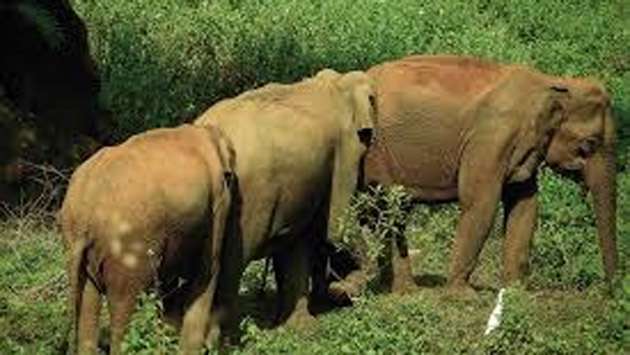
Colombo, June 8 (Daily Mirror) - The government has cleared three major elephant corridors that had been blocked for years as part of a national programme aimed at finding practical and sustainable solutions to the long-standing human-elephant conflict.
The announcement was made at a press conference held today (8) at the Department of Government Information. The event was attended by Environment Minister Dr. Dammika Patabendi, Deputy Minister Anton Jayakody, Additional Secretary of the Wildlife Division Udaya Kumara, Additional Director General Manjula Amararathna, and Wildlife Director U.L. Taufeeq.
The three elephant corridors that have been restored are Wetahirakanda, Hadapanagala and Koholankala. According to the Ministry of Environment, these traditional migration routes had been blocked for years due to unplanned development projects and politically motivated land allocations carried out under previous administrations.
Officials said the blockage of these routes forced elephants to move through villages and settlements, worsening the human-elephant conflict. The government stated that legal, administrative and social obstacles were resolved to return the lands to wildlife use.
As part of the programme, the government also plans to establish “Elephant Enrichment Zones” within forest reserves. These areas will provide natural food and water sources for elephants by cultivating grass and other vegetation preferred by the animals and rehabilitating reservoirs and waterholes.
The government has introduced a three-stage plan to address the human-elephant conflict. In the short term, authorities will repair existing electric fences, construct new fences in high-risk areas, introduce early-warning systems for villagers and strengthen round-the-clock wildlife patrols.
The medium-term plan includes expanding community-based village electric fencing systems and improving compensation schemes for people affected by elephant-related incidents.
For long-term solutions, the government intends to review the country's land-use policy, establish scientific boundaries between wildlife habitats and human settlements, legally protect elephant corridors and use drones and satellite technology to monitor elephant populations and movements.
Officials also noted that the Joint Forest Protection Center, established in 1995, remains operational in efforts to prevent wildlife crimes.
The government said it is committed to implementing balanced measures that protect both rural communities and Sri Lanka’s wild elephant population while addressing the root causes of the human-elephant conflict.