Reply To:
Name - Reply Comment
By Sirangika Lokukravita
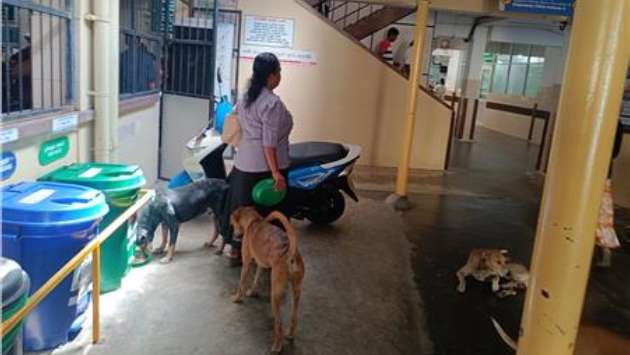
Colombo, Oct. 13 (Daily Mirror) - The staff and patients of the Karapitiya Teaching Hospital in Galle have been left vulnerable to an increasing number of stray dogs roaming freely within the hospital premises.
According to hospital sources and members of the public, more than 80 stray dogs are frequently seen inside the Outpatient Department (OPD), clinics, pharmacy, and even patient wards. Several people, including two female doctors, patients, and visitors, have reportedly been bitten and subsequently received treatment for dog bites.
President of the Karapitiya Environment and Community Development Society, Bandula Dias, said the stray dog menace has persisted for years without any effective action being taken.
“Dogs are found even on patient beds and chairs, which can easily spread germs and viruses. It’s alarming that some hospital staff continue to feed the dogs despite the health risks. Our repeated complaints to hospital management have been ignored,” he said.
A retired school principal, Sunil Wimalasiri, stressed that no stray animals should be allowed within hospital premises, warning that such animals can transmit several serious diseases.
“People wrongly believe that rabies is the only disease spread by dog bites. Stray dogs and cats also cause other illnesses, including skin diseases,” he explained.
A local resident, W. Manilal, shared his personal experience, saying he narrowly escaped an attack by one stray dog but was later bitten by another near the hospital entrance.
“When I tried to defend myself, a female security officer scolded me for hurting the dog. They treat the animals with affection while ignoring the safety of patients,” he said.
When contacted, Hospital Director Dr. Ranga Sabhapahti confirmed that the issue had been reported to the Galle Municipal Council and several animal welfare groups, but no effective action had been taken.
“We have now referred the matter to the Ministry of Health as a last resort. This is a serious problem that needs urgent attention,” Dr. Sabhapahti said.