 DARSHANA SANJEEWA BALASURIYA
 Reply To:
Name - Reply Comment
Colombo, June 11 (Daily Mirror) - While Sri Lanka has made significant strides in domestic stabilisation following its 2022 fiscal crisis, a leading global evaluation warns that escalating geopolitical conflict in the Middle East poses a critical threat to the island nation's financial survival.
According to the newly released Global Peace Index 2026 Report, Sri Lanka has been categorized as a high-risk, energy-import-dependent economy that remains exceptionally vulnerable to the ongoing economic fallout of the 2026 Iran War.
Sri Lanka recorded the largest percentage improvement in the region on the 2026 GPI, with its overall score improving by 2.3 per cent. It is the second most peaceful country in the South Asia region and is ranked 67th globally. Sri Lanka’s improvement was driven by the Militarisation domain, which improved by 6.4 per cent, with the UN peacekeeping funding indicator improving by 40.8 per cent. The Safety and Security domain also improved by 1.8 per cent, driven by a 25 per cent improvement in the
political instability indicator. Sri Lanka’s improvement reflects ongoing stabilisation following the 2022 economic crisis.
In the Global Peace Index (GPI) 2025, Sri Lanka ranked 97th out of 163 countries.
Despite ranking as the second most peaceful country in South Asia due to an improved domestic security landscape, the nation's fragile economic architecture is now facing a severe external stress test.
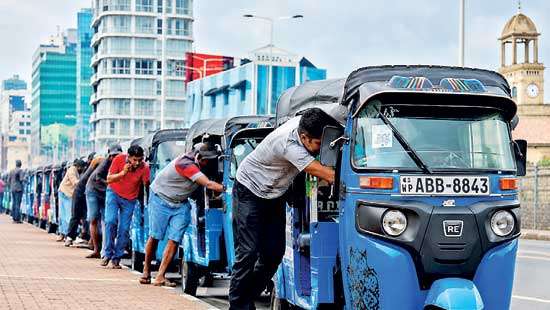
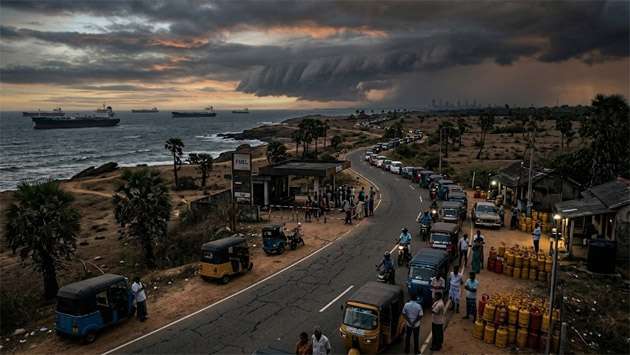
The core of Sri Lanka’s vulnerability lies in a dangerous intersection of high sovereign debt and heavy reliance on foreign fuel. The report highlights that Sri Lanka currently carries a public debt-to-GDP ratio of 101 per cent while simultaneously relying on foreign imports to meet 60 per cent of its total energy needs. As the conflict drives up global crude oil and liquefied natural gas (LNG) prices, the country faces immense fiscal strain that could undo its recent economic progress.
The IEP warns that a prolonged conflict scenario in the Middle East could drive Sri Lanka’s energy import bill up by an estimated $600 million to $900 million, equivalent to 1.5 to 2.2 per cent of its GDP, directly threatening the primary surplus targets required under its ongoing $2.9 billion Extended Fund Facility with the International Monetary Fund (IMF).
According to the report, for Sri Lanka, debt-to-GDP would approach 143 per cent by 2028, a level at which any IMF program becomes unworkable without writing off a large share of what creditors are owed.
For the world's most fragile economies, the Iran shock is the latest in a long line of pressures, piling on top of fiscal exhaustion since COVID-19, unresolved debt problems, and chronic hunger, according to the report.
Energy shocks reach fragile states through three reinforcing channels. The first is the direct cost of importing energy, which rises immediately with oil and gas prices.
The second is the food price channel, which works through fertiliser shortages and higher transport costs, taking six to nine months to come through. The third is fiscal compression, where higher import costs, rising borrowing costs and bigger subsidy bills strain governments that have little room to absorb them. Setting these three channels against IEP's Ecological Threat Register (ETR) and Positive Peace Index (PPI) shows which countries are most at risk of tipping into fragility
in the second half of 2026.
Pakistan and Egypt would also cross the threshold at which the risk of a disorderly debt restructuring rises sharply.
Advanced economies such as Japan and Italy follow a different pattern from emerging market. Their existing debt levels are far higher, but their borrowing costs stay more stable. The main risk is that public debt crowds out productive investment over time rather than triggering immediate default.