 CHATURANGA PRADEEP SAMARAWICKRAMA
 Reply To:
Name - Reply Comment
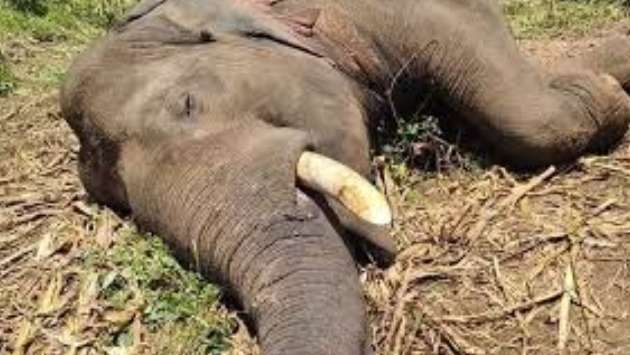
Colombo, Dec. 25 (Daily Mirror) - Sri Lanka has recorded the highest number of elephant deaths in South Asia and is often cited by conservationists as having the world’s highest elephant mortality rate caused by human–elephant conflict, despite having a much smaller elephant population than India, wildlife officials said.
While India has an estimated 20,000–27,000 elephants, Sri Lanka is home to only about 6,000–7,000. However, official figures show that the number of elephants dying each year in Sri Lanka, in proportion to its population, is the highest in the region.
According to the Department of Wildlife Conservation (DWC), 397 elephants have died so far in 2025, as of mid-December. This follows 386–388 deaths in 2024. The year 2023 was the worst on record, with 488 elephant deaths.
Most of these deaths were caused by human–elephant conflicts. Elephants were killed by gunshot injuries, illegal electric fences, train collisions and hakka patas — improvised explosive devices hidden in food. Of the total deaths this year, 71 elephants were shot, 56 died from electrocution, 46 were killed in train accidents and 20 died after triggering hakka patas. Two elephants died due to poisoning. And in a shocking tragedy one elephant was killed last week after it was set on fire by three individuals in Seeppukulama in Mihintale. Other causes includ drowning and falling into abandoned wells.
The situation has worsened after Cyclone Ditwah, Environment Deputy Minister Anton Jayakody said. Speaking to the media last afternoon, he explained that damage to electric fences has pushed more elephants into villages.
“The electric fence system is not fully functional, and some wildlife areas are still under water,” he said. Grasslands remain muddy and unsuitable for grazing, leaving elephants with little food.
Out of around 5,700 kilometres of electric fences maintained by the Wildlife Ministry, 838 kilometres were damaged by the cyclone. About half of the damaged fences have now been repaired.
Deputy Director of Elephant Conservation U.L. Taufiq said four elephant calves died due to flooding caused by the cyclone. Six elephants were rescued, one was released into the Minneriya National Park, and the remaining calves were being treated at the Girithale Wildlife Office.
The DWC said there is an urgent need for stronger measures to be implemented to reduce human–elephant conflict and protect Sri Lanka’s remaining wild elephant population.