Reply To:
Name - Reply Comment
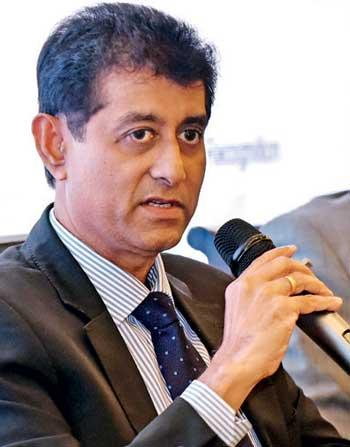 |
| Duminda Hulangamuwa |
By Nuzla Rizkiya
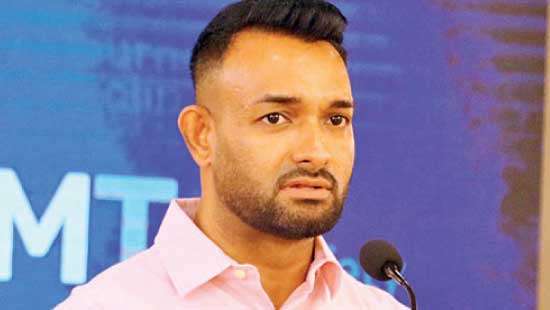
The government is optimistic about achieving its revenue targets under the tax reforms introduced in the 2024 Budget, provided the economy expands beyond projections set by the International Monetary Fund (IMF), Senior Economic Advisor to the President, Duminda Hulangamuwa, said.
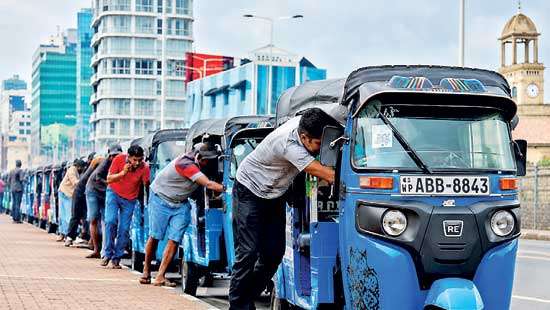
He emphasised that the government aims to meet fiscal parameters through overall economic growth and increased revenue from vehicle imports, rather than adjusting tax rates.
“We don’t want a situation where we lower duties, leading to excessive imports by June, only to halt them in July. That would disrupt industries and their investments. Instead, we will monitor the situation closely to balance foreign currency outflows with revenue generation,” Hulangamuwa noted.
Speaking at a post-budget forum organised by the Institute of Certified Management Accountants (CMA) of Sri Lanka, Hulangamuwa also outlined plans to reform State-Owned Enterprises (SOEs) under a new corporate management structure modeled after Singapore’s Temasek Holdings.
Although the approach was initially proposed in the 2024 Budget, he noted that the new framework would be distinct, introducing a centralised holding company to oversee the strategic direction and management of commercial SOEs.
“The holding company will be responsible for appointing managers and directors based on commercial criteria to make them commercially viable. Maybe a part of that holding company can go to the stock market,” he said.
The reform effort, he explained, is aimed at transforming SOEs into profitable entities by ensuring professional management free from political influence.
Additionally, the government plans to introduce a new Public Procurement Law next year to encourage private sector participation in infrastructure projects. Alongside this, the Public-Private Partnership (PPP) Law, initially drafted under the previous administration, will be presented with modifications as part of the Economic Transformation Act, which seeks to restructure the Board of Investment (BOI) into an investment promotion body.
“We expect that the introduction of these three laws will bring in investment and encourage the private sector to get involved in the projects. Whether it’s energy, roads, ports or logistics, all of them will come under PPPs because we are focused on growth, opportunities, and employment for the country. This is the only way we can grow,” Hulangamuwa said.