Reply To:
Name - Reply Comment
By: Allaam Ousman
Governance crisis deepens ahead of key court date and World Rugby deadline
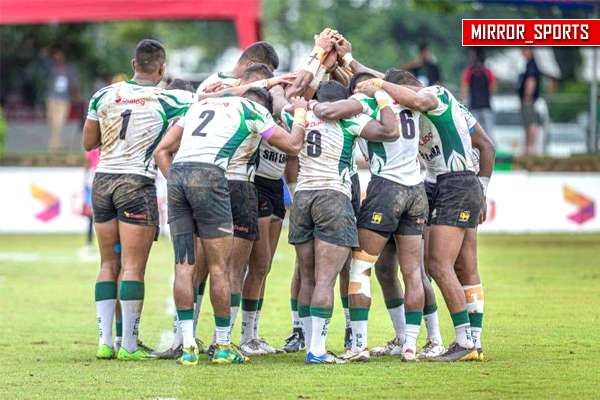
Despite a resounding on-field victory over Malaysia and a triumphant return to Asia Rugby’s top tier, Sri Lanka Rugby (SLR) finds itself at a perilous crossroads - one that could undo all recent sporting progress unless urgent governance reforms are enacted.
With a contempt of court hearing looming on April 28 and a nonnegotiable deadline from World Rugby set for June 14, SLR’s future hangs in the balance.
While the players have proven their mettle on the pitch, off the field, administrative paralysis and legal entanglements threaten to bring the entire operation to a halt.
Asia Rugby’s Vice President Rizwan Malik, speaking in Colombo ahead of Sri Lanka’s victory, acknowledged the encouraging sporting momentum but warned that time is running out fast.
“Sri Lanka has been given a golden opportunity - but it’s also the final one,” Malik said.
“This extension till June 14 is non-negotiable. If the governance issues are not sorted by then, sanctions are inevitable.” Those sanctions, according to Asia Rugby CEO Ben van Rooyen, could include exclusion from international tournaments for at least two years, possibly until 2027. Worse still, they risk alienating sponsors, fans, and the international rugby community.
“You can’t ask a sponsor to invest when the future is so uncertain,” van Rooyen emphasised. “They’ll just say, ‘Sort your house out - we’ll talk in two years.’”
At the centre of the crisis is a tangled web of litigation and administrative deadlock. Despite the establishment of a Working Task Force by World Rugby - including representatives from Asia Rugby, the National Olympic Committee of Sri Lanka (NOCSL), and the Sri Lankan government - the reform roadmap is already behind schedule.
The task force was created to implement sweeping constitutional changes, introduce transparent governance mechanisms, and oversee democratic elections.
But, as van Rooyen revealed, even preliminary steps remain incomplete. “The scrutiny committee hasn’t delivered its report. The new constitution hasn’t been adopted. And we’re waiting for the next court date on April 28 to see where things stand,” he said.
“That day could be the gamechanger.” A successful outcome on April 28 could clear the way for elections by early June - but only if all parties act immediately.
However, delays caused by fresh injunctions or internal opposition could derail the entire process. “Someone has to give in,” van Rooyen said bluntly. “Without that, we’re just going in circles - one step forward, two steps back.”
The crisis within SLR is symptomatic of larger problems in Sri Lankan sport. Political interference, bureaucratic hurdles, and a lack of institutional discipline have stymied progress across disciplines.
With just under two months remaining, the roadmap is clear but tight. A new constitution must be adopted. A 40-day nomination and election process must be initiated. All of this must be wrapped up before World Rugby’s mid-June deadline. “There’s no room to cut corners,” van Rooyen warned. “The constitution has to be passed first. Then elections.
Not in parallel.” If missed, Sri Lanka could be locked out of the international calendar for years - with no certainty of when the ban could be lifted, as World Rugby’s Council meets only quarterly. “You miss a council window, and you wait another three months,” said van Rooyen. “It’s not just a delay - it’s a dead end.” Saturday’s victory against Malaysia was a beacon of hope for Sri Lankan rugby.
But without systemic reform, that hope could be extinguished in courtrooms and committee meetings. The message from Asia Rugby is unmistakable: the talent is there, the passion is there, but the governance must catch up.
As Rizwan Malik put it: “This isn’t about individuals. It’s about the game. And the game deserves better.”