Reply To:
Name - Reply Comment
By Allaam Ousman
Corruption, foreign imports, and a lost generation
The state of football in Sri Lanka has plunged into a dire and seemingly irreversible decline, marked by the absence of a clear pathway for local talent to emerge despite incumbent officials painting a rosy picture. Since 2022, domestic tournaments — the bedrock for nurturing grassroots talent — have been non-existent. The lack of competitive platforms has left aspiring footballers without opportunities to showcase their skills or develop into future national players.
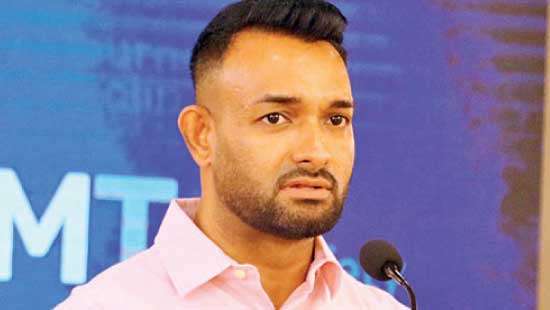
At the heart of this crisis lies the Football Federation of Sri Lanka (FFSL), headed by Jaswar Umar. His tenure has been clouded by a barrage of corruption allegations, yet the focus of the administration appears to be fixated on recruiting Sri Lanka-origin, foreign-based players to represent the national team, rather than fostering local talent. This approach has drawn severe criticism from analysts, who argue that the nation's football development has been completely neglected. FIFA, the world governing body, and the Asian Football Confederation (AFC) have both tightened the purse strings, starving Sri Lankan football of crucial funding — a direct consequence of poor governance and mismanagement.
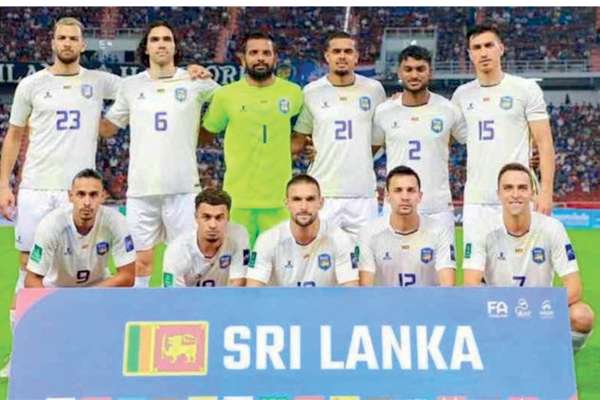
The current Sri Lanka national football team is almost unrecognisable. With the exception of the captain Sujan Perera, the squad is predominantly filled with foreign-based players. Among them, only one has the distinction of previously representing a national team; the rest are players competing in third or fourth divisions abroad. These athletes seem to be leveraging Sri Lankan representation to boost their profiles, enhancing their marketability to their respective clubs overseas. This practice not only undermines the credibility of the national team but also extinguishes the hopes of local players aspiring to wear the national jersey.
Sri Lanka’s footballing infamy reached an embarrassing peak during the AFC qualifier against Thailand, where head coach Abdullah Almutairi from Kuwait was handed a red card — an exceptionally rare occurrence in international football. The incident symbolised the disorder and lack of discipline that has plagued the team both on and off the field.
Despite a large base of 42,000 active school-level players across 600 schools, grassroots football development remains stagnant, with schools and parents bearing the costs while the FFSL reaps the branding benefits. Allegations of financial mismanagement, such as Umar's alleged misuse of Rs. 12 million to purchase ZOLO brand footballs linked to his own brand, only deepen the crisis.
Youth national pools suffer from inadequate preparation, with trials lasting a mere two months. Opportunities are reportedly sold to foreign-born players through agents, depriving local talent of a fair chance to represent their country. The national team itself reflects this imbalance — with only one local player (the goalkeeper/captain) while the rest are foreign-residing or dual citizens, often playing in lower-tier leagues abroad. This approach contrasts sharply with successful football nations like France and England, where foreign-origin players integrate into domestic leagues before earning national call-ups.
Sri Lanka's FIFA ranking has plummeted from 124th to 200th out of 207, driven by alleged embezzlement of FIFA and AFC funds under successive FFSL presidents. The nation has also failed to develop Pro License coaches over the past 30 years, falling behind regional peers like India and the Maldives.
Meanwhile, Umar and Company continue to manipulate the narrative, misleading the public and appeasing government officials. A complicit section of the local media, seemingly swayed by the FFSL’s influence, has echoed the federation’s hollow promises of progress. This media manipulation has helped obscure the depth of the crisis from mainstream attention.
The FFSL’s descent into corruption has arguably positioned it as the most tarnished sports body in the country. Successive sports ministers have repeatedly turned a blind eye to the federation's underhanded tactics and blatant mismanagement. Despite mounting evidence of malpractice, accountability remains absent.
The federation has also delayed its Annual General Meeting (AGM) for 2023-2024, planning the next one for March 29, 2025 — a delay conveniently ignored by the Sports Ministry.
Election processes have been riddled with irregularities, including fraudulent certificates — notably, Vavuniya Football League President Nagarajah was linked to foreign credit card fraud and money laundering but was reinstated despite these allegations.
Financial transparency is virtually non-existent. The FFSL has not presented audited accounts since 2022, and a ministry audit report remains suppressed by officials, preventing it from reaching law enforcement or parliamentary oversight. Stolen equipment, including Adidas footballs, bags, and boots, has been linked to Umar, former national captains, and the finance manager, with CCTV footage reportedly supporting the claims.
The ongoing trend of sidelining local talent, coupled with a lack of financial transparency and political interference, threatens the future of Sri Lankan football. Immediate intervention from the government, FIFA, and other stakeholders is necessary to revive the sport, restore integrity, and provide local players with the opportunities they deserve.
The question now is whether the current government — which swept into power on a platform of anti-corruption and reform — will finally address the rot within the FFSL. The time for platitudes and promises has long passed. Sri Lankan football, once a sport that inspired thousands, now stands on the brink of total collapse. If urgent action is not taken to revive domestic competitions, support grassroots development, and purge corrupt leadership, the sport may never recover from this disgraceful chapter.