Reply To:
Name - Reply Comment
By Nuzla Rizkiya
The Digital Economy Ministry, in partnership with the United Nations Development Programme, Asian Development Bank and key partners, launched a civil registration and vital statistics (CRVS) system, in efforts to improve Sri Lanka’s digital public infrastructure.
The launch took place during Sri Lanka Digital Public Infrastructure (DPI) Summit 2025 inaugurated in Colombo yesterday.
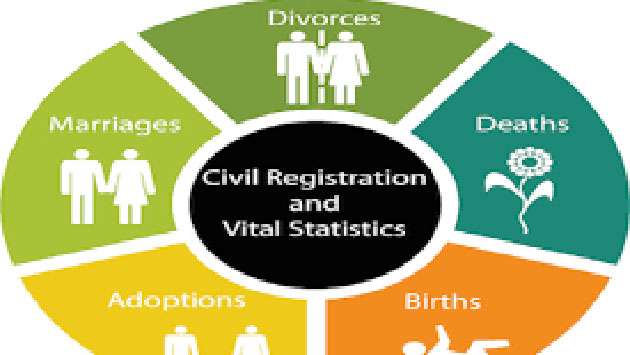
A CRVS system, according to the World Health Organisation, is a fundamental component of a country’s digital infrastructure that registers all births and deaths.
The digital platform also compiles vital statistics such as cause-of-death information and may record marriages and divorces to help governments rely on accurate and reliable data for governance, planning and service delivery.
Addressing the DPI Summit, Digital Economy Deputy Minister Eranga Weeraratne shared that the upgraded CRVS system in Sri Lanka would improve the accuracy, reliability and accessibility of vital information for the public.
“Our ultimate goal is to create a society where public services are easily accessible to all citizens at their fingertips,” Weeraratne said.
However, he stressed the need to improve DPI in Sri Lanka as a key component of this mission.
According to Weeraratne, DPI serves as the backbone of the country’s digital transformation efforts and the government requires a collaborative effort with the private sector.
“This is a foundational framework upon which every digital modernisation initiative of the economy will rest. Through this, the government envisions Sri Lanka’s digital economy to reach US $ 15 billion by 2030,” Weeraratne said.
To facilitate the public-private partnerships, he referred to the Digital ID system as a crucial component that would connect both the government and private sector systems.
As a stepping stone in the government’s digital economy drive, the Digital ID will streamline the public services and make way for every citizen to have access to essential services, according to Weeraratne.
Moreover, he emphasised that Sri Lanka’s economic transformation should be “inclusive, equitable and secure”, with significant efforts made towards bridging the digital divide across the country.
“Marginalised groups, rural communities and underserved populations should not be left behind in the digital economy. We must strive to position Sri Lanka as a competitive player in the global digital marketplace,” Weeraratne said.