Reply To:
Name - Reply Comment
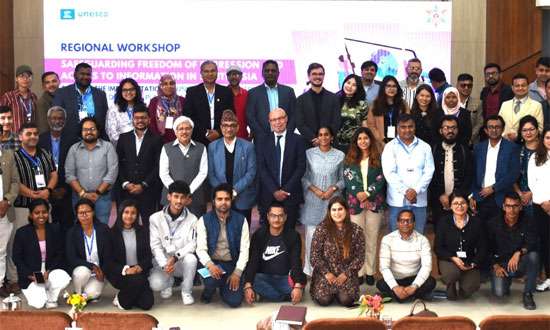
March 27, Daily Mirror - Stakeholders from across South Asia have called for stronger, rights-based approaches to digital platform governance, as countries in the region work to address growing challenges in the digital space while safeguarding freedom of expression and access to information.
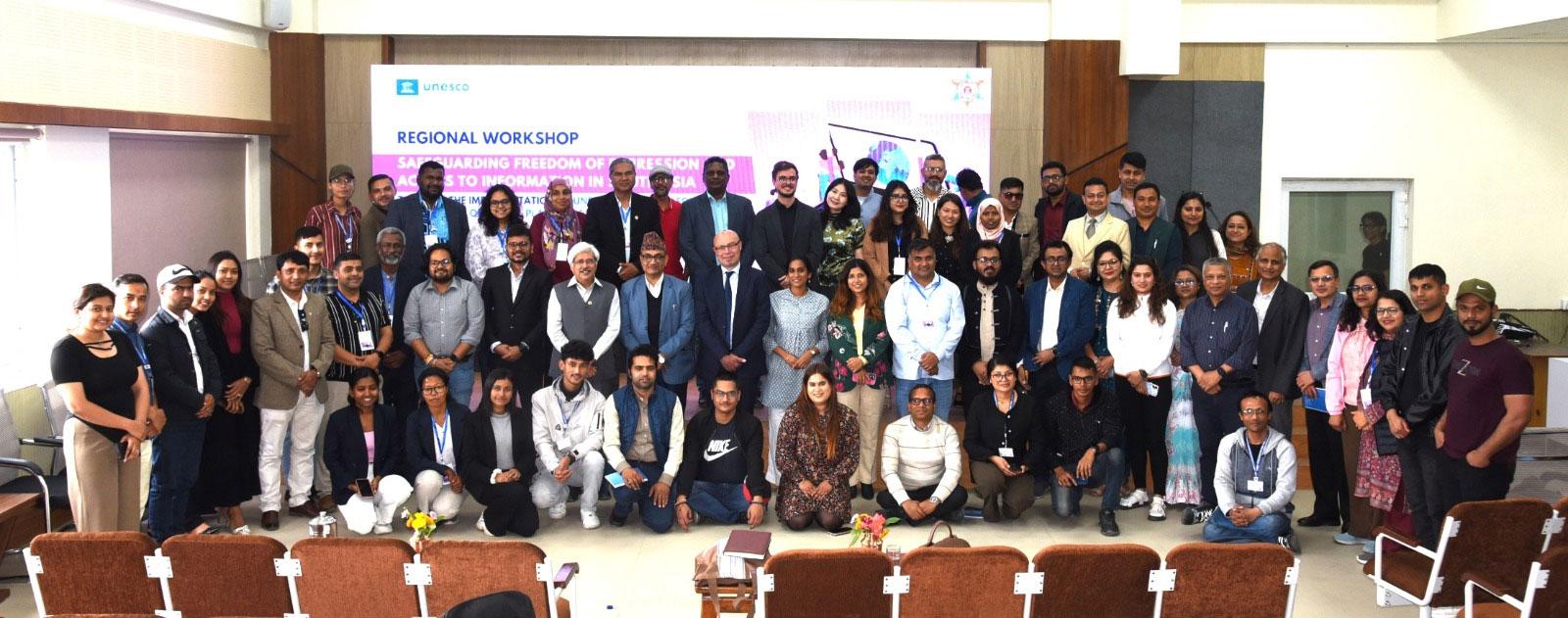
The call came at the conclusion of a four-day regional workshop held from 24 to 27 March 2026 at Tribhuvan University in Kathmandu.
The event, titled “Safeguarding Freedom of Expression and Access to Information in South Asia,” was organized by UNESCO in collaboration with Tribhuvan University’s Central Department of Journalism and Mass Communications, with financial backing from the European Union. Part of the global Internet for Trust (I4T) initiative, the gathering brought together over 90 experts and policymakers from Bangladesh, India, Nepal, Sri Lanka, and the Maldives to address the urgent need for transparent and accountable digital regulation.
Throughout the summit, speakers emphasized that while digital platforms offer immense opportunities, they also pose significant risks to democratic stability. Veronique Lorenzo, Ambassador of the European Union to Nepal, underscored that protecting freedom of expression is not an optional luxury. "In an evolving global context, ensuring access to reliable information is an essential pillar of democratic, inclusive, and resilient societies," she stated, reaffirming the EU's support for a human-centered digital future.
UNESCO’s Regional Advisor for South Asia, Ms. Ma’aly Hazzaz, said that the strength of the initiative lies in its regional sensitivity. Rather than imposing a "one-size-fits-all" solution, the I4T Guidelines provide a framework for building safeguards that reflect local South Asian realities while upholding universal principles of public trust.
One of the most concrete outcomes of the workshop was the validation of two draft regional toolkits. Developed through a collaborative effort between universities in Nepal, Bangladesh, and Sri Lanka, these toolkits provide practical, region-specific guidance for policymakers and civil society. They aim to translate high-level international standards into actionable steps for curbing misinformation and holding global tech giants accountable.
Hasara Liyanage, a Member of Parliament from Sri Lanka, highlighted the power of regional unity. She argued that collective advocacy gives South Asian nations significantly more leverage when engaging with global digital platforms, allowing the region to present a unified front on human-rights-based policy priorities.
The workshop didn't just focus on high-level policy; it also looked toward the future of education. Dr. Kundan Aryal of Tribhuvan University emphasized the necessity of embedding these "Internet for Trust" principles directly into journalism curricula. By doing so, the region aims to create a sustainable foundation for digital governance education that will empower the next generation of media professionals.
As the event closed, Jaco du Toit, UNESCO Representative to Nepal, praised the progress made, stating that the conversations in Kathmandu are helping to shape a broader global movement toward an internet that is open, safe, and grounded in human rights. UNESCO reaffirmed its commitment to providing technical expertise and capacity-building to ensure that the digital age strengthens, rather than weakens, the integrity of information in South Asia.