 DARSHANA SANJEEWA BALASURIYA
Reply To:
Name - Reply Comment
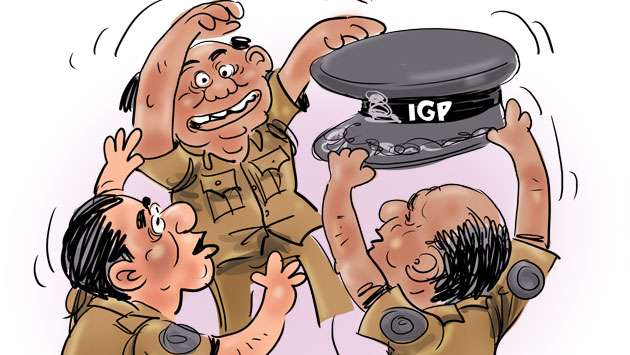
Colombo, July 23 (Daily Mirror) - With Inspector General of Police Deshabandu Tennakoon facing removal from office after being found guilty of gross abuse of power by a three-member Committee of Inquiry chaired by Supreme Court Justice Preethi Padman Surasena, President Anura Kumara Dissanayake is set to nominate one or more candidates to the Constitutional Council (CC) for the appointment of the 37th IGP of the Sri Lanka Police, the Daily Mirror learns.
The new IGP will take office at a time when the country is witnessing a troubling surge in crime and underworld activity. In the first six months of this year alone, over 60 shooting incidents have been reported, resulting in more than 45 deaths. President Anura Kumara Dissanayake has previously said that all necessary measures will be taken to eliminate underworld operations, although he acknowledged the process will take time.
The three-member Committee of Inquiry, which concluded that Tennakoon was guilty of gross abuse of power, submitted their findings to the Speaker of Parliament. The committee held Tennakoon responsible for the 2022 W-15 Hotel shooting incident in Weligama, which resulted in the death of a police officer.
Tennakoon, who served as the 36th IGP, is set to become Sri Lanka's first IGP to be impeached.
Once Deshabandu Tennakoon is impeached by Parliament, the President can formally initiate the process to appoint his successor, a senior police officer told the Daily Mirror.
Currently, Senior DIG Priyantha Weerasuriya has been serving as Acting IGP since September 27, 2024. He joined the police force in 1988 as a constable and rose through the ranks. However, he is second in line in terms of seniority to Senior DIG Lalith Pathinayake, who now serves as Acting Senior DIG (Administration) following the suspension of Senior DIG Nilantha Jayawardena who was last week removed from the service by the National Police Commission over the Easter Sunday attacks.
The 21st Amendment to the Constitution empowers the President to recommend one or more officers to the Constitutional Council for consideration. The IGP is appointed upon the approval of at least five members of the ten-member Council.
Historically, the Constitutional Council has been involved in three appointments of IGPs. In 2003, Indra de Silva was appointed by the CC under then Speaker Joseph Michael Perera. In 2016, the Council led by Speaker Karu Jayasuriya appointed Pujith Jayasundara as the 34th IGP. In 2024, Deshabandu Tennakoon was appointed as the 36th IGP under the Council chaired by Speaker Mahinda Yapa Abeywardena, a decision now being legally challenged.
According to former Senior DIG Priyantha Jayakody, seniority has not always been the deciding factor in past appointments. For instance, despite Chandra Fernando being senior to Indra de Silva in 2003, the Constitutional Council chose de Silva to avoid potential conflict with then President Chandrika Bandaranaike Kumaratunga. Fernando was later appointed as the 29th IGP after de Silva’s retirement.
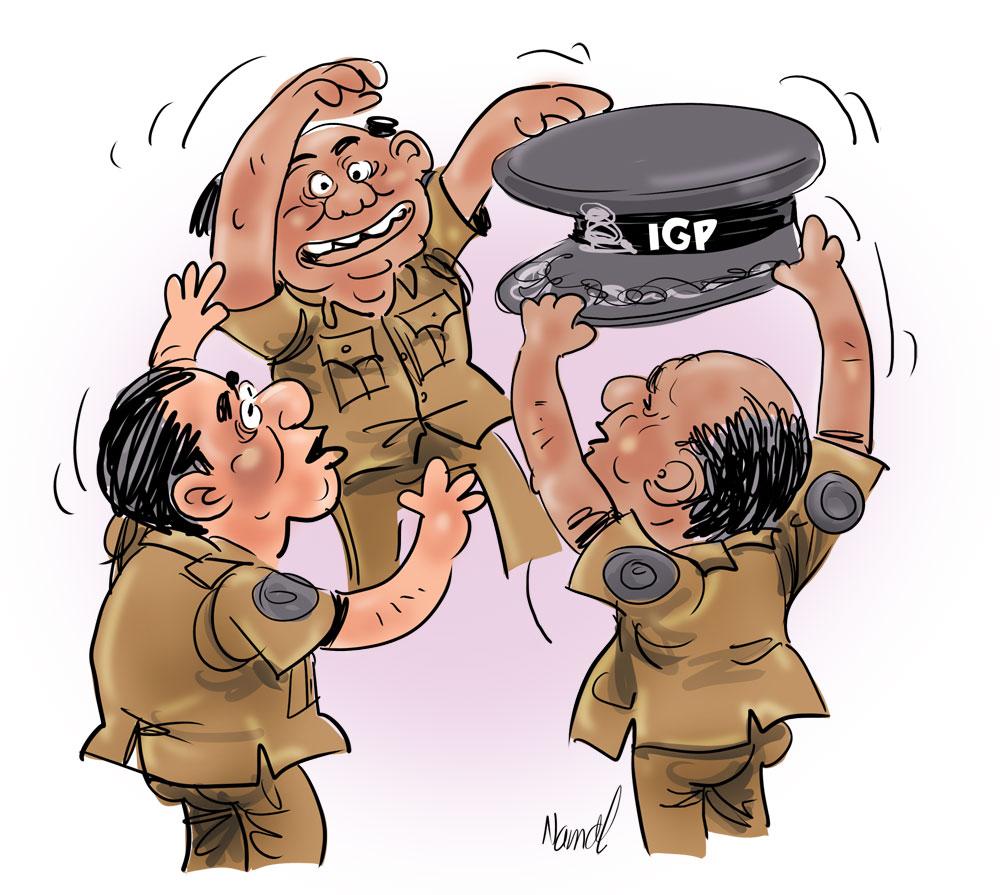
Despite Lalith Pathinayake’s standing as the most senior officer eligible for the role, Priyantha Weerasuriya’s long stint as Acting IGP could give him a significant edge in the appointment process. In Jayakody's view, even if Weerasuriya retires at 60, Pathinayake may still have a brief opportunity to hold the position before his own retirement.
The appointment ultimately depends on the President’s recommendation. In the past, Presidents Chandrika Kumaratunga and Maithripala Sirisena submitted multiple names to the Constitutional Council for consideration. However, in 2024, then President Ranil Wickremesinghe sent only one name, Deshabandu Tennakoon, breaking with established practice, a move viewed by some as controversial.
The current Constitutional Council comprises the Speaker (Chair), the President’s representative, the Prime Minister, a Prime Minister’s nominee, the Opposition Leader, an Opposition Leader’s nominee, a representative from the largest party in Parliament (other than the Opposition), and three members from civil society. The Speaker only exercises a casting vote in the event of a tie.
Recently, the President’s recommendation to appoint an Auditor General was rejected after being opposed by the Opposition Leader, his representative, the minority party representative, and the three civil society members, indicating that the Council may again exercise its independent oversight in the upcoming IGP appointment.