Reply To:
Name - Reply Comment
 |
 |
 |
 |
 |
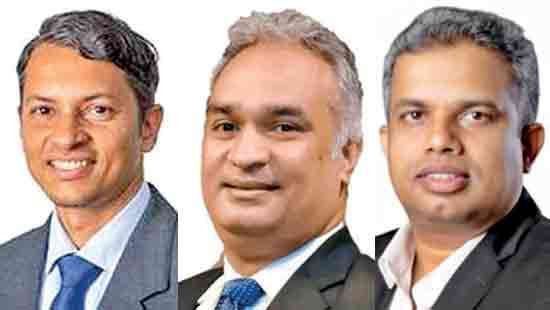
| Heminda Jayaweera | Indika De Zoysa | Ravin Tharinda Piyasiri | Ishari Siriwardane | Thurupathan Vijayakumar |
Sri Lanka has world-class tech talent capable of building AI-driven startups that can compete globally, but the country’s startup ecosystem remains “stuck at a prototype level,” hindered by limited venture capital, outdated investment mechanisms, and weak government support, industry leaders warned.
During a panel discussion titled ‘Scaling AI in Startups and SMEs,’ at the at the recent National AI Expo 2025, experts said promising startups often struggle to secure funding and are forced to relocate abroad to scale their innovations.
The panel included Heminda Jayaweera, CEO of TRACE Expert City; Indika De Zoysa, strategic advisor and national ICT policy expert; Thurupathan Vijayakumar, AI industry professional; Ravin Tharinda Piyasiri, Sri Lanka Telecom Deputy General Manager; and Ishari Siriwardane, SLT Mobitel General Manager of Digital Transformation Projects.
A recurring theme was the gap between technical knowledge and the “know-how” to scale a business. Jayaweera illustrated the challenge with an analogy:
“Think about manufacturing a bicycle. Everybody knows how it works. But if I ask, can you make 1,000 bicycles? Only very few people can do that. That’s the difference between knowledge and know-how. We are in that know-how issue.”
The panel also highlighted the lack of sophisticated financial infrastructure. Jayaweera said Sri Lanka’s ecosystem is missing tools common in mature startup markets, such as the SAFE investment model and phantom share arrangements. While a “fund of funds” model to develop a local venture capital industry is in progress, its absence contributes to the funding gap.
Vijayakumar said the lack of aggressive funding significantly affects startup valuations.
“When you are struggling to find Series A or B funding, you are going to lose 80 percent of your valuation. That is where aggressive VC funding should be there to enable our startups from day one. That’s what we are missing,” he said.
According to the panel, talent-wise, there aren’t any difference and the main constraints are regulatory and policy shortcomings.
“It is a life-and-death situation. We do it or we die,” warned De Zoysa while citing a local company with US and Japanese patents and GMP certification that cannot get regulatory clearance to market its product in Sri Lanka.
He also stressed that broader digital adoption is a prerequisite for AI integration.
“The adoption of digital itself is far behind. They don’t have a basic ERP. That transformation has to happen for that 52 percent of the economy,” he said.
The panel called for a cohesive ecosystem linking government, academia, and industry, including reforms to procurement laws to allow startups to collaborate with the government and policies to attract foreign investment.
Jayaweera urged founders to prioritise collaboration early and not focus on individual ideas. Instead, focus on getting collaborative action.
“You need to have that team structured at a very early stage,” he said.
Despite the challenges, panelists said Sri Lanka has the potential to build a US$ 15 billion digital economy, contingent on rapid improvements in funding, policy, and collaboration.
(NF)