Reply To:
Name - Reply Comment

By Huzefa Aliasger
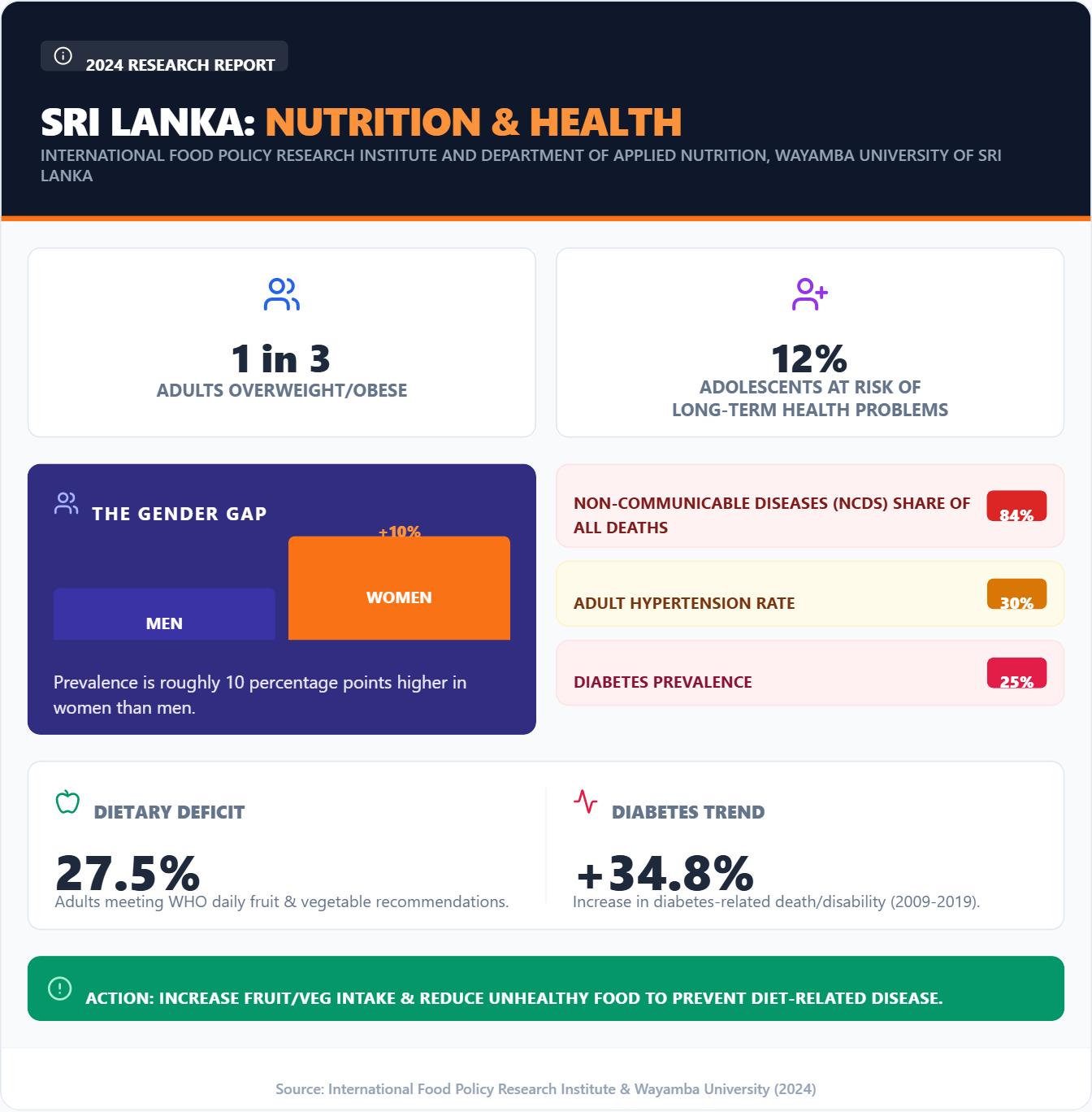
Colombo, Feb. 12 (Daily Mirror) - Sri Lanka continues to face a growing public health challenge as more than one-third of the country’s adult population is now classified as overweight or obese, according to a national nutrition and diet study conducted by International Food Policy Research Institute and Department of Applied Nutrition, Wayamba University of Sri Lanka.
The report which was released in 2024 says that among adults, overweight and obesity are significantly more common in women, with prevalence rates roughly 10 percentage points higher than in men.
While obesity is less common among younger children, approximately 12 percent of adolescents in Sri Lanka are overweight or obese, signaling a growing risk of long-term health problems. Health experts warn that obesity is closely linked to the country’s increasing burden of noncommunicable diseases. NCDs account for 84 percent of all deaths in Sri Lanka, with diabetes-related death and disability rising by 34.8 percent between 2009 and 2019.
The report highlights that “overweight and obesity are part of a broader “double burden of malnutrition” affecting the country, where undernutrition and micronutrient deficiencies coexist alongside rising rates of diet-related noncommunicable diseases (NCDs).”
Nearly 30 percent of adults have hypertension, and about one-quarter of the population lives with diabetes, conditions strongly associated with unhealthy diets and excess body weight.
Dietary habits are identified as a major contributing factor. Sri Lankan meals are largely centered on rice and other starchy staples, often with limited quantities of nutrient-rich foods. Only 27.5 percent of adults consume the World Health Organization’s recommended daily intake of fruits and vegetables, while national supply levels remain below recommended standards.
The report notes that improving diet quality, increasing fruit and vegetable consumption, and reducing unhealthy food intake are essential steps to address obesity and prevent diet-related diseases.