Reply To:
Name - Reply Comment
Sri Lanka’s worker remittances rose sharply in March, supported by seasonal inflows ahead of key festival periods, with receipts climbing to their highest level in four months, Central Bank data showed.
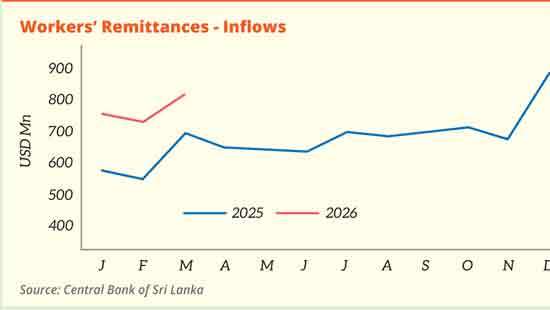
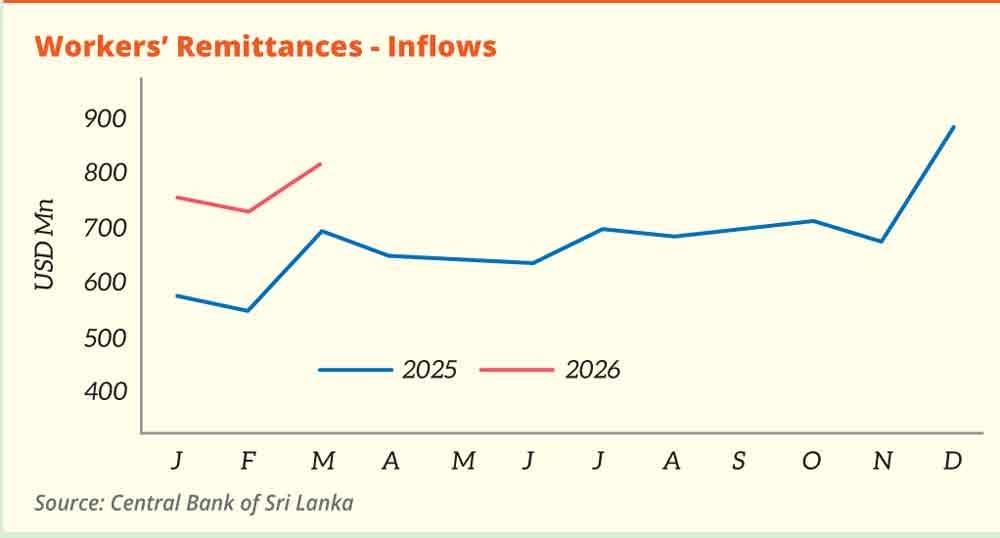
Remittances stood at US$ 814.8 million in March 2026, up from US$ 693.3 million a year earlier and US$ 729.0 million in February, making it the second-highest monthly inflow since December 2025, when the country recorded US$ 879.1 million.
March and December typically generate stronger inflows as overseas workers remit more funds ahead of major festival seasons.
Cumulative remittances for the first three months of 2026 reached US$ 2.29 billion, up 26.5 percent from the same period a year earlier, providing a key buffer to Sri Lanka’s external sector as the economy navigates global uncertainties.
There were fears coming into March that Middle East instability could cut into what Sri Lanka usually receives from migrant workers due to repeated attacks by Iran on its neighbouring Middle Eastern countries. The Middle East region hosts a large number of Sri Lankan expatriate workers.
A prolonged closure of the Strait of Hormuz, a key shipping route, and the resulting damage to the rest of the Middle Eastern economies could take a toll on remittances.
However, so far there have not been any such signs, as a fragile ceasefire holds until this Tuesday while talks are scheduled between the US and Iran, seeking a possible deal between the two nations for the second time.
While there were some early implications for export income to Sri Lanka from supply chain disruptions due to the war, tourism earnings have also come in lower than hoped, as arrivals were substantially affected during the peak season.
Hence, any impact on remittances could pressure the Sri Lankan economy, as the country is also forced to pay at least 50 percent more for oil since the war broke out seven weeks ago.
In 2025, Sri Lanka recorded its highest-ever remittance income of US$ 8,076.2 million, up by a robust 22.8 percent.
Worker remittances remain the single biggest source of foreign currency for Sri Lanka, keeping the fragile economy afloat alongside tourism earnings.