Reply To:
Name - Reply Comment
By Sumanasiri Gunathilaka – Monaragala
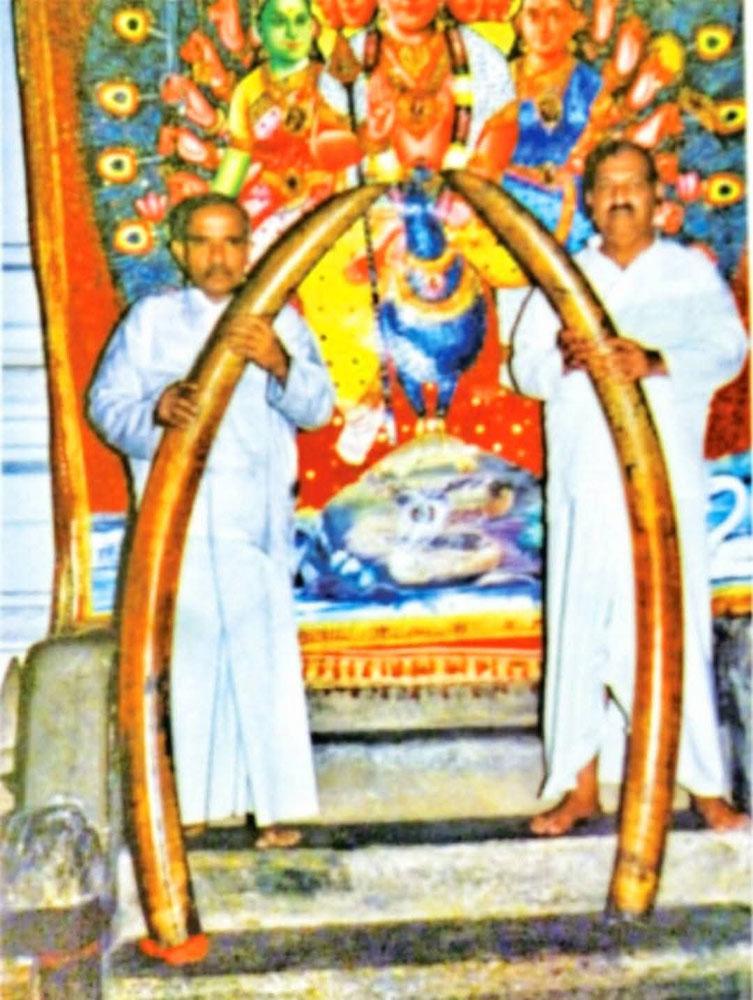
The tusks of 'Kadol', the legendary elephant that supported King Dutugemunu in his battle against King Elara, have been brought out for public display in conjunction with the sixth day procession (Perahera) of the historic Ruhunu Kataragama Maha Devalaya. The tusks will remain on display until the Perahera concludes on the 2nd.
According to legend, an elephant that lived near Lake Chaddantha in the Himalayas gave birth to a calf that later crossed the sea and arrived at Magama Kadolkele in Ruhuna.
Remarkably, the calf is said to have been born on the same day as Prince Gemunu, strengthening the mythical bond between the future king and his loyal elephant.
The elephant returned alone to the Himalayas and the calf was spotted by a fisherman who informed the royal palace. The calf was then taken into royal custody.
It was named “Kadol” after the forest it was found in and the fisherman who discovered it.
Historical records state that the Kadol elephant played a key role in breaching the Vijithapura fortress during the battle between King Dutugemunu and King Elara.
Following the victory, the elephant carried the deity during the first Esala Perahera held in Kataragama. After King Dutugemunu’s death, the elephant gradually weakened and died en route to Magama. It was buried at a location called Poramadilla. Later, by royal decree, the tusks were offered to the Kataragama Devalaya.
The tusks, kept inside the Devalaya’s inner chamber, are displayed on either side of the temple’s main sanctum before the sixth day Perahera.
After the procession, tradition dictates that the tusks be returned to their sacred resting place.