 DARSHANA SANJEEWA BALASURIYA
Reply To:
Name - Reply Comment
- Although the suspect or shooter involved in a certain shooting is arrested, they are released after three or four months. Shortly after, the individuals resume their criminal activities
- Despite the current govt.’s pledge to eliminate drugs and underworld crime in the country, it is clear that a specialised elite squad or unit may be necessary to address the rising incidents of shootings.
- Public Security Minister Ananda Wijepala has directed the Acting Inspector General of Police (IGP) to involve the STF in future operations, if necessary
- While many countries have specialized elite units to combat organized crime and drug syndicates, Sri Lanka still lacks such an established force
- Former Public Security Minister Tiran Alles, who initiated the 'Yukthiya' operation, defended the use of lethal force, stating that eliminating criminals was not a sin and that authorities should not hesitate to act for the country's safety
In light of escalating shootings across Sri Lanka, which have claimed at least 11 lives including a six-year-old child and 9-year-old boy in the first two months of 2025 alone, authorities are under pressure to take immediate and decisive action to combat the country’s soaring crime rate.
Yesterday's tragic incidents, including the death of the innocent 6-year-old girl, 9-year-old boy and notorious underworld figure 'Ganemulla Sanjeewa,' highlight this deepening crisis that citizens are unsafe. According to the police, at least 14 shooting incidents have been reported across the country so far this year, with many believed to be the work of organized crime groups.
The latest shootings occurred in Middeniya and Colombo. In Middeniya, a 39-year-old man and his young daughter and son were killed when an unidentified gunman opened fire on their motorcycle at Kadewatta Junction. The girl and the son later died in hospital. Police said the deceased man, Aruna Widanagamage, also known as 'Kajja,' was reportedly involved in multiple criminal activities.
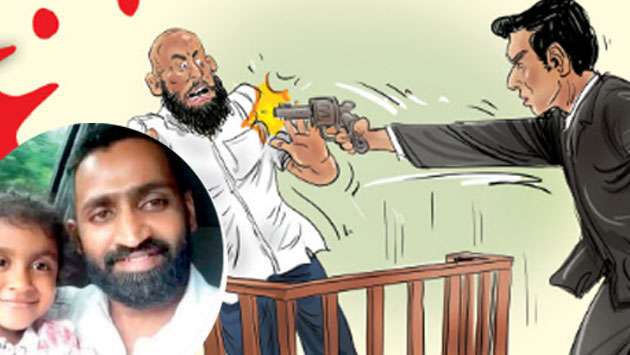
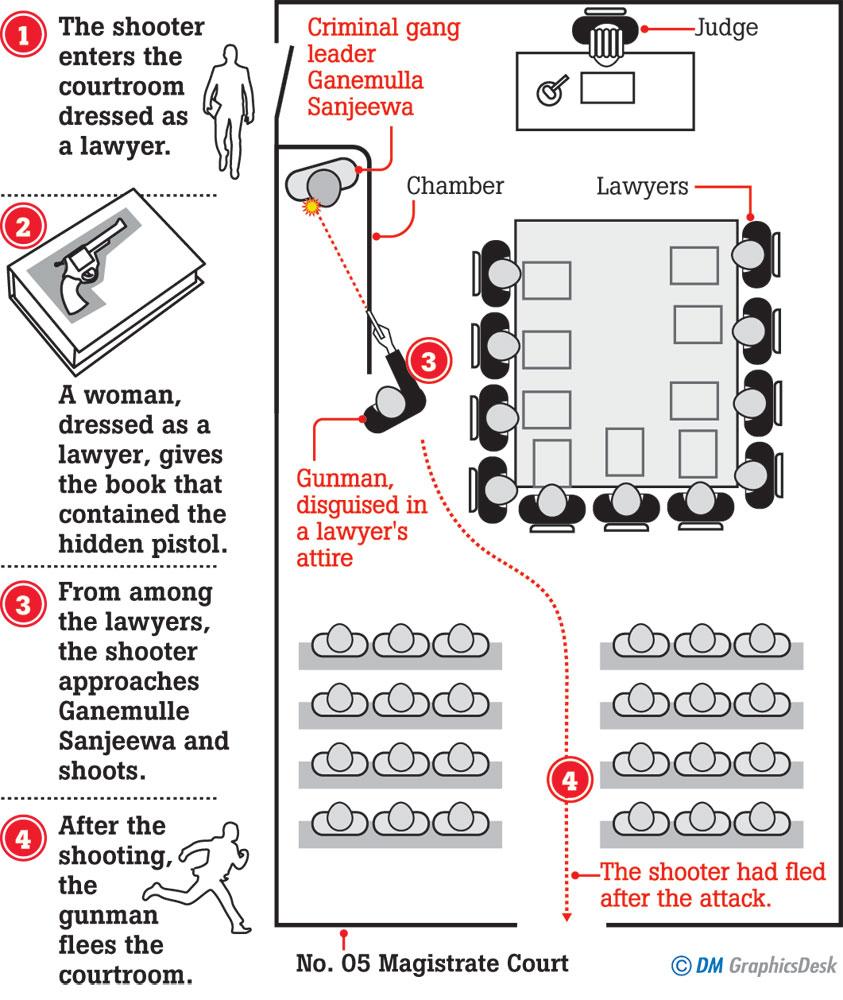
Meanwhile, in Colombo, the notorious figure 'Ganemulla Sanjeewa' was shot dead in a brazen attack at the Hulftsdorp Court Complex last morning. Disguised as a lawyer, the gunman easily entered the court complex and shot Sanjeewa inside a courtroom before fleeing the scene.
A senior police officer said that many of these violent crimes are linked to the drug trade. The officer said that most countries grappling with soaring crime rates have turned to lethal measures to control organized crime, a strategy Sri Lanka might need to adopt in light of the growing violence.
He said that specialised operations, including undercover agents and secret operations, are necessary to tackle these growing threats. "One team cannot address this issue alone," the officer said. "We need full cooperation from all law enforcement agencies to combat these criminal syndicates. Without it, the criminals will continue to operate unchecked."
According to the reports, Sri Lanka has seen some success with previous operations. The 'Yukthiya' operation, aimed at targeting criminals, resulted in the arrest of several individuals wanted for shootings.
"Although the suspect or shooter involved in a certain shooting was arrested, they were released after three or four months. Shortly after, the individual resumed their criminal activities. All the incidents appear to follow a similar pattern. This cycle will continue unless proper action is taken. We need a mechanism to ensure that suspects arrested in connection with shooting incidents remain in custody until their court cases are concluded. Without such a system, shooters will continue to be released, even after being arrested for shootings" the officer said.
In the past, when operations targeting criminals were conducted by police, there were instances of violent confrontations, leading to the deaths of suspects. This often sparked criticism from certain political groups in the opposition.
Last year, former Public Security Minister Tiran Alles, who initiated the 'Yukthiya' operation, defended the use of lethal force, stating that eliminating criminals was not a sin and that authorities should not hesitate to act for the country's safety.
Despite the current government's pledge to eliminate drugs and underworld crime in the country, it is clear that a specialised elite squad or unit may be necessary to address the rising incidents of shootings.
The officer said that tackling these crimes is a significant challenge, especially when considering traditional cultural factors.
In response to the surge in organized crime, Public Security Minister Ananda Wijepala has directed the Acting Inspector General of Police (IGP) to involve the STF in future operations, if necessary. The police have also decided to station STF personnel at six critical police stations in Colombo to assist with crime-fighting efforts.
While many countries have specialized elite units to combat organized crime and drug syndicates, Sri Lanka still lacks such an established force. The STF have been crucial in handling terrorism and organized crime. However, the senior officer said that there is an urgent need for broader cooperation across all law enforcement agencies to effectively address the underworld's stranglehold on society.
Last week, Sri Lanka Police took measures to establish a Central Crimes Investigation Bureau (CCIB) with DIG Nihal Thalduwa as the Range DIG and SSP Shani Abeysekera as its Director. The new range has been established in order to increase the efficiency of the investigation of cases under the Criminal Investigation Department (CID).
It was reported that the Bureau is still in its early stages and that it will take several months for the Bureau to become fully operational, as it needs to recruit officers, provide specialized training, and establish necessary infrastructure.