 KELUM BANDARA
Reply To:
Name - Reply Comment
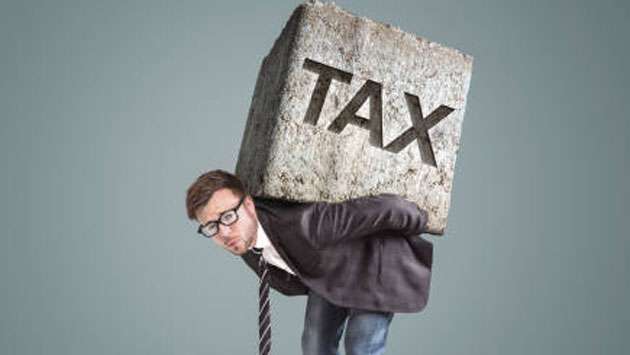
Colombo, Feb 25 (Daily Mirror) - Heavy reliance on indirect taxes is continuing to push up the cost of living, despite repeated efforts by successive governments to ease the financial strain by increasing the percentage of direct taxes instead.
Indirect taxes, including Value Added Tax (VAT) and excise duties, account for a staggering 80 per cent of the country’s total tax revenue, leaving just 20 per cent to come from direct taxes such as income tax.
In upper middle-income countries, indirect tax revenue accounts for 60 per cent and the remaining 40 per cent from direct taxes. Sri Lanka has aimed at this target, but successive governments have found it difficult to widen its direct tax net.
The direct tax revenue is only two per cent of the Gross Domestic Product (GDP) in Sri Lanka, whereas it is at least four per cent in some other developing countries. The average monthly household income is Rs. 76,414 and the average monthly household expenditure Rs. 63,130 according to the Census and Statistics Department.
The matter is now discussed in political circles when the budget debate is in progress.
A family has to pay as much as Rs.40,000 in terms of taxes a month when making payments for goods and services, according to the 2025 budget, the Frontline Socialist Party (FSP) said yesterday.
Delivering remarks to the press, FSP Education Secretary Pubudu Jayagoda said it is a monthly increase of Rs.8,200 over the last year.
He said the government had formulated this budget in a manner beneficial to the leading companies, but not to the masses.
“The government collects 30 per cent of tax revenue from leading companies. There is no increase over that. However, the tax charged on privately held companies has been increased from 10 per cent to 15 per cent. Likewise, tax on joint ventures has been increased from 10 per cent to 15 per cent. Tax on assets of non-profit welfare bodies has also been increased to 30 per cent this time. In simple terms, the government has heaped the tax burden on ordinary people and small ventures,” he said.
He said the difference in income tax revenue is only Rs.141 billion, and the government had not taken any measure to recover tax revenue in arrears.
Quoting a report submitted to Parliament, he said the total tax revenue arrears from the leading companies amounted to Rs.1,068 billion by March, last year. He said tax on goods and services had increased by 25.94 per cent.
“Tax revenue on goods and services amounted to Rs.2,201 billion last year. It had shot up to Rs.2,772 billion this time. There are 5.8 million families in the country. This means that one family has to pay Rs.39,817 in taxes when paying for goods and services. When people pay Rs.40,000 as tax, what is there for them to spend?” he asked.