 Jamila Husain
Reply To:
Name - Reply Comment
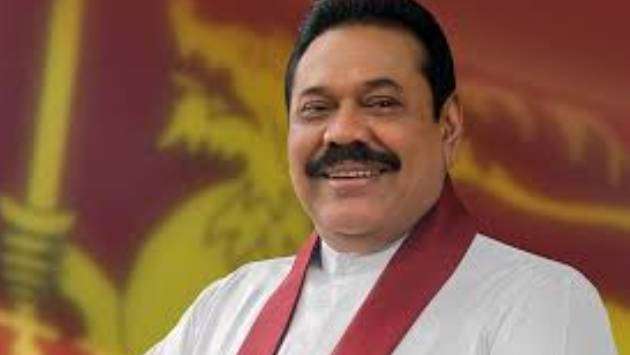
Colombo, March 27 (Daily Mirror) - Former President and leader of the Sri Lanka Podujana Peramuna (SLPP) Mahinda Rajapaksa has strongly criticized the United Kingdom for imposing sanctions on Sri Lanka’s former military leaders, questioning how the UK could penalize those who ended a war against terrorism.
Speaking exclusively to Daily Mirror, Rajapaksa accused the UK of maintaining a double standard by sanctioning Sri Lankan military figures while the Liberation Tigers of Tamil Eelam (LTTE) remains a banned terrorist organization in the UK.
“In 2009, Sri Lanka’s armed forces successfully ended a brutal 30-year war against the LTTE after thousands of innocent civilians were killed in terrorist attacks, including bombings in Colombo,” Rajapaksa said. “The LTTE’s massacres spared no one—not even women and children. The North suffered the most, as the LTTE forcibly recruited children as soldiers to further their violent agenda.”
“I made the decision to eliminate Prabhakaran and his ruthless terrorists to put an end to the bloodshed. My people deserved peace. My military, while ensuring zero civilian casualties, launched operations to eradicate the LTTE once and for all. Sri Lanka finally achieved peace and stability, something we could never accomplish with terrorists constantly wreaking havoc,” he asserted.
The former President emphasized that he did not make the decision to go to war lightly. “Despite the 2002 ceasefire agreement, the LTTE carried out 363 killings between February 2002 and the end of September 2005. Attacks escalated after I was elected President in November 2005, including claymore mine attacks in Jaffna in December 2005 that killed 13 soldiers, a suicide attack on a naval craft in January 2006 that killed 15 naval personnel, and the suicide attack on the Army Commander inside Army Headquarters in April 2006.”
Rajapaksa noted that despite these provocations, his government engaged in two rounds of peace talks in Geneva and Oslo in 2006, which were unilaterally halted by the LTTE. “I was compelled to go to war after the LTTE’s landmine attack on a civilian bus in Kebithigollewa in June 2006, which killed 64 and seriously injured 86, many of them children,” he said. “Military operations commenced in July 2006 when the LTTE closed the Mawilaru anicut, cutting off irrigation water to cultivators in the Trincomalee district, and continued until the LTTE was completely defeated on May 19, 2009.”
He also cited the 2010 presidential election, where the Tamil National Alliance urged Tamils to vote for the wartime Army Commander, who secured over 60% of the vote in the Northern and Eastern Provinces—contradicting claims of systemic persecution. “The UK’s sanctions on Vinayagamoorthy Muralitharan (Karuna Amman), who defected from the LTTE in 2004 and later entered democratic politics, are a clear attempt to appease the dominant segment of the Tamil diaspora in the UK,” he added.
He reminded the international community that three decades of LTTE terrorism claimed the lives of 27,965 armed forces and police personnel, as well as thousands of civilians, including politicians.