Reply To:
Name - Reply Comment
By BRIAN R. BRAUN
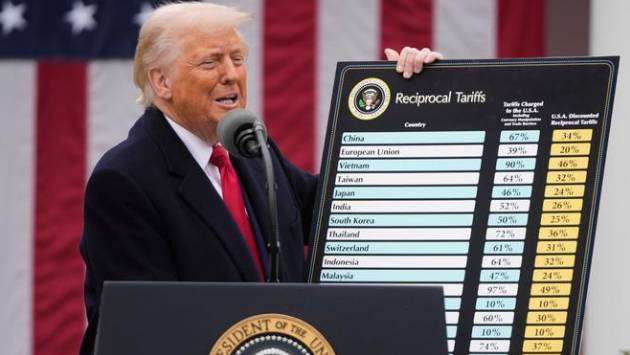
Colombo, April 9 (Daily Mirror) - As the United States imposes sweeping reciprocal tariffs around the world, Sri Lanka finds itself in especially dire straits. The staggering 44% tariff rate, the sixth highest globally, poses a direct threat to Sri Lanka's US-dependent export market, potentially leading to steep job losses and economic instability at a time when the country is struggling to recover from a 2022 financial crisis.
To put this into context, the new tariff poses an existential threat to Sri Lanka’s economic stability. The US is Sri Lanka's largest export destination, accounting for 23% of all merchandise exports and over 70% of apparel exports, the country’s most profitable. With the new tariff, Sri Lanka’s garments sector is at grave risk of increased costs and new competition from other major apparel exporters with lower tariff rates, namely Bangladesh and Vietnam. This comes at a critical time, as Sri Lanka emerges from a painful economic crisis in 2022 marked by inflation, fuel shortages and debt restructuring that it is only just beginning to recover from.
Given the magnitude of this challenge, Sri Lanka will need to act decisively and strategically to weather these economic headwinds.
Sri Lanka must accelerate its diversification efforts
First, Sri Lanka must accelerate its diversification efforts. While the country has been exploring new markets and sectors for years, the urgency of the current situation demands a more focused approach. Sri Lanka should consider expanding into renewable energy technologies given its natural endowments, furthering its pharmaceutical manufacturing efforts, and developing its advanced agricultural products. These sectors can be exported to emerging markets in Africa, Southeast Asia, and Latin America, where there is growing demand for sustainable and high-tech products. For instance, leveraging its expertise in agriculture, Sri Lanka could export organic produce to countries like India and China, which have large and growing markets for organic food.
Sri Lanka should strengthen its trade relations with regional blocs like AfCFTA
Building on a foundation of diversification, Sri Lanka should strengthen its trade relations with regional blocs like the African Continental Free Trade Area (AfCFTA), whose economies are less developed than Sri Lanka’s and present opportunities for market expansion, and the Association of Southeast Asian Nations (ASEAN), which is both geographically near and one of the fastest growing economic regions. These partnerships can provide access to large and diverse markets traditionally neglected by Sri Lanka, reducing its dependence on traditional markets like the US. By diversifying its export base, Sri Lanka can cushion the impact of tariffs and create new, long-term economic opportunities.
Diplomatic efforts crucial
Diplomatic efforts are also crucial in navigating the challenges posed by the tariffs. Sri Lanka should engage in proactive diplomatic campaigns to negotiate better terms or exemptions from the US tariffs. This involves not just bilateral negotiations with the US but also leveraging regional and global partnerships to enhance Sri Lanka's negotiating position. Strengthening ties with the EU and Japan alongside both India and China can provide strategic economic benefits, including investments and technology transfers, which are essential for diversifying Sri Lanka's economy and enhancing its global competitiveness.
Furthermore, Sri Lanka should strategically and proactively promote its commitment to economic reforms, including the phased reduction of its high import tariffs, as part of its appeal to the US for tariff relief. The government's participation in an IMF-supported reform programme can bolster its case for exemptions or reduced tariffs, proactively shape the narrative around Sri Lanka's economic reforms, and enhancing the visibility of its reform agenda on the international stage, ensuring that key stakeholders are aware of the country's progress and commitment.
Involving opposition parties in key economic decision-making processes
Domestically, ensuring political unity is essential for addressing the economic challenges posed by the tariffs. Despite the National People’s Power’s commanding two-thirds majority in Parliament, framing economic policies as a national imperative rather than a partisan issue is crucial for maintaining investor trust, ensuring economic stability, and navigating complex negotiations with the US, IMF, and other international partners. A bipartisan approach would not only bolster public confidence at a time of grave uncertainty but also provide policy continuity. Involving opposition parties in key economic decision-making processes or offering concessions on other policy areas could foster cooperation.
Public engagement, likewise, is critical in building support for economic policies, especially when many Sri Lankans are still struggling from the last economic crisis. The government should engage in comprehensive public awareness raising and messaging to explain the rationale behind its economic strategies, including the impact of tariffs and the potential need to further restructure subsidies. By being transparent about the challenges and the benefits of these policies, the government can build public trust if not support at a time of anxiety and hardship. This approach ensures both that the government remains accountable to the public and that Sri Lankan households can adequately prepare for potential turbulence.
Sri Lanka must ensure a brighter economic future
While the imposition of a steep reciprocal tariff by the US presents stark challenges for Sri Lanka, it also provides unique opportunities. By diversifying its exports, strengthening diplomatic efforts, fostering political unity, and engaging the public, Sri Lanka can navigate these challenges and position itself for long-term economic growth. The key to success lies in adopting a comprehensive and coordinated approach that integrates economic, political, and diplomatic strategies. As Sri Lanka charts its course through the tariff storm, it must prioritise resilience, innovation, and cooperation to ensure a brighter economic future.
The writer is a Colombo-based political analyst and consultant. He previously served as Sri Lanka Country Director for the International Republican Institute, a US non-profit, non-governmental organisation that promotes democracy around the world.