Reply To:
Name - Reply Comment
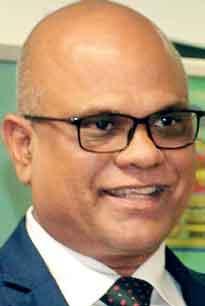 |
| Dr. Ajith Mel |
In a major step toward digitalising Sri Lanka’s insurance sector, the Insurance Regulatory Commission of Sri Lanka (IRCSL) is preparing to launch a national motor insurance database, paving the way for a new risk score system to penalise undisciplined drivers.
Speaking at a media conference held in Colombo yesterday, IRCSL Chairman Dr. Ajith Mel outlined a comprehensive roadmap to modernise the industry. A primary initiative is centralizing all insurance data into a national database, set to be officially launched by the Prime Minister at the BMICH.
By comparing insured vehicle records with the Department of Motor Traffic’s total registered vehicles, the regulator aims to expose the sheer volume of motorists bypassing the law.
“There are vehicles running on Sri Lankan roads without any form of insurance,” Dr. Mel stated bluntly. “The difference between these two figures will reveal the number of vehicles driving without even basic third-party insurance.”
Leveraging this centralised data, the IRCSL plans to introduce a risk score product to tackle the country’s rising number of road accidents. This system will directly penalise drivers who commit traffic offenses, while safe drivers will remain unaffected, complementing the industry’s existing no-claim bonus structures.
Further strengthening road discipline and regulatory oversight, the commission, in collaboration with Minister Ananda Wijepala and State owned telco SLT-Mobitel, recently rolled out Sri Lanka’s first digital motor insurance card, distributing 500 tabs to the police for instant verification.
Dr. Mel pointed out a unique local loophole where policyholders default on premiums during the country’s 60-day insurance credit period but continue to drive with invalid physical plastic cards. The digital integration, which instantly flags invalid policies, is currently applied to general motor insurance and will eventually expand to include life and health insurance data.
These structural enhancements arrive as the commission seeks to aggressively expand dismal market penetration levels, which currently stand at a mere 5 percent for general insurance and 6 percent for life insurance. With 29 insurance companies—comprising 14 general and 15 life insurance providers—alongside nearly 82 brokerage firms and around 40,000 registered agents operating, the IRCSL is collaboratively drafting a national program to double the market size by 2030.
Addressing rogue operators in the market, Dr. Mel issued a firm directive to unauthorized insurance agents conducting business without a commission license, urging them to obtain the necessary qualifications and legalize their operations rather than exiting the business entirely.
Beyond motor insurance, the regulator is making significant strides in life insurance by finalizing a localized mortality table, shifting away from the industry’s long-standing reliance on global tables for calculations. In development since 2010, the local mortality table has now received necessary input from the Foreign Ministry and awaits clearance from the Legal Department before it is released to life insurance companies.
The IRCSL is also exploring the introduction of standalone health insurance companies to the local market, noting that unlike nations such as India, Sri Lanka currently lacks specialised providers in this segment.
Furthermore, a dedicated IRCSL newsletter will soon be launched to keep stakeholders informed of local and global industry developments.
To ensure sustainable long-term growth, the IRCSL is taking proactive measures to attract young talent and improve public financial literacy. (NF)