Reply To:
Name - Reply Comment
 By Nishel Fernando
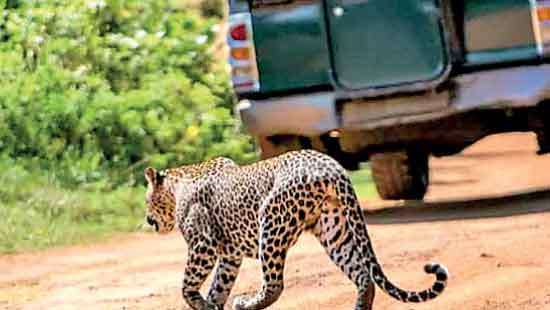
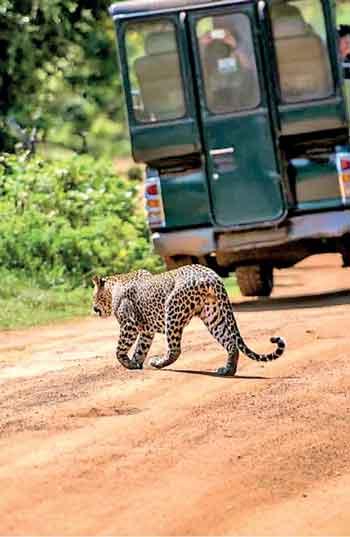
Sri Lanka’s tourism authorities are moving to implement strict carrying capacity limits and a unified digital ticketing system for the national parks, with a primary focus on the Yala National Park, to address the persistent overcrowding issues that threaten the visitor experience.
Speaking to reporters at a press conference held in Colombo yesterday, Sri Lanka Tourism Development Authority (SLTDA) Chairman Buddhika Hewawasam acknowledged that overcrowding at Yala has reached critical levels, primarily because Sri Lanka’s wildlife parks currently operate without any restrictions on carrying capacity.
“The problem is something we all need to look at and consolidate because, in any wildlife park in Sri Lanka, you don’t have a carrying capacity restriction. You take any number of people who come,” Hewawasam stated.
To mitigate the congestion, specifically at Yala, the authorities are proposing a cap on daily visitors, managed through a digital platform. Discussions are currently underway with the Digital Economy Ministry to introduce an e-ticketing system, equipped with QR scanning facilities. This system aims to regulate the visitor flow by enforcing specific time slots and limits on the number of vehicles entering per hour.
“Every other park in the world works like that ... you know exactly how many you can carry per day and how many you can carry per hour,” he noted, emphasising that the infrastructure for such a system is already available and the focus is now on implementation.
A key bottleneck identified in managing traffic flow has been the limited entry and exit points. Hewawasam explained that while Yala has three gates capable of operation—allowing access to Block 1 and Block 2—the staff shortages within the Wildlife Conservation Department have hindered their full utilisation.
“Unfortunately, due to the shortage of employees in the Wildlife Department, it is difficult to open the other gates. However, if those gates are opened, we can divert traffic; vehicles can access from one point and exit from another, preventing the current situation, where everyone enters and exits from the same place,” Hewawasam explained.
To fast-track these solutions, a Presidential Task Force is currently coordinating efforts between the relevant agencies, including the Wildlife Conservation Department, Forest Department and tourism authorities. The task force aims to resolve the policy discrepancies and establish a single, unified API connectivity and ticketing platform for all wildlife parks.
While acknowledging the logistical challenges, the SLTDA affirmed that these measures are essential to ensure the sustainability of wildlife tourism. Hewawasam confirmed that despite the current issues, the necessary dialogue to establish carrying capacity caps and digital interventions is progressing rapidly.