 KELUM BANDARA
Reply To:
Name - Reply Comment
- More than 50 percent to come from it
- The government targets Rs. 1,167 billion in terms of income tax and Rs. 651 million in terms of taxes on external trade
Colombo, February 19 (Daily Mirror) - Tax on goods and services will dominate the government’s revenue for 2025, and it will be more than 50 percent of the total tax revenue estimated, according to the budget presented in Parliament.
This is in contrast to political rhetoric of the National People’s Power (NPP) which was critical of taxation on essential goods and services.
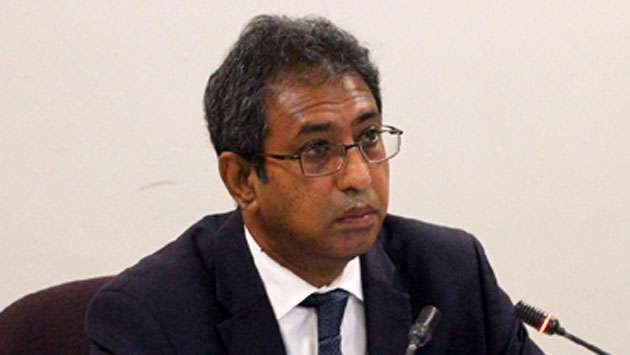
Samagi Jana Balawegaya (SJB) MP Dr. Harsha de Silva who opened the debate on the budget also raised this question in the House yesterday. He asked why the government had displayed its duplicity while proceeding with taxes on essential commodities imposed by the previous rule despite being critical of the move at that time.
The government expects a tax revenue of Rs.4, 590 billion and Rs.2, 772 billion of it is from goods and services. It is an increase from Rs. 2,201 billion expected last year.
The government targets Rs. 1,167 billion in terms of income tax and Rs. 651 million in terms of taxes on external trade. The government’s total revenue from tax, grants and non-tax sources is estimated to be around Rs.4, 990 billion.
The total expenditure is estimated at Rs. 7,190 billion.
The government expects a huge gain of tax revenue by liberalization of motor vehicle imports on February 1, 2025, according to President Anura Kumara Dissanayake who delivered the budget speech on Monday.
The increase of tax-free threshold for personal income tax, further adjustments to the second income tax slab, removal of VAT on fresh milk and yoghurt are also envisaged in the budget.
Parliament measures including the introduction of VAT on digital services, the imposition of corporate income tax on export of services, and an increase in the corporate tax on cigarettes/liquor, and gaming.
The tax policy measures outlined here are expected to deliver the required revenue to enable Sri Lanka to meet the revenue targets of 15.1 percent of GDP in 2025.
Nonetheless, in parallel, the government is taking concerted efforts to improve tax administration and compliance. In fact, Sri Lanka's revenue strategy for the upcoming budget aims to enhance fiscal sustainability by strengthening tax administration, improving compliance, improve institutional strength through enhanced digitalization and rigorous monitoring mechanisms; while providing relief to the most vulnerable groups of the society.
Efforts will be directed toward digitalizing tax systems to reduce leakages and enhance transparency while minimizing human interactions in tax administration, according to the President.