Reply To:
Name - Reply Comment
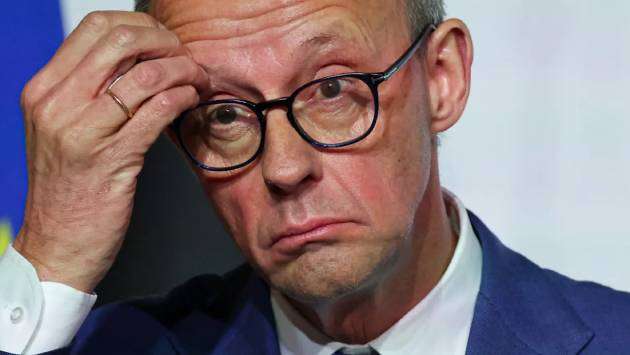
(The Telegraph) - New rules designed to boost stagnating economy require ill employees to get doctors’ notes immediately
German workers will have to report to a doctor in person to get a sick note on the first day they are ill, under strict proposals from Friedrich Merz.
The tough new rules, aimed at boosting productivity in Germany’s stagnant economy, replace a system where employees could get a note by phoning a doctor and did not need to do so until their third day off work.
“The number of sick days is too high,” Mr Merz, the German chancellor, told journalists. “We are creating a set of tools that will enable those involved, both employees and companies, to correct this.
“We know this is a tough decision. But we can no longer afford the competitive disadvantage caused by prolonged absences from work.”
The move will be welcomed by employers, but has angered Germany’s powerful trade unions. Frank Werneke, the head of the services sector union Verdi, accused Mr Merz of creating “a culture of distrust of employees”.
Doctors also opposed the change, warning it would swamp Germany’s GPs with unnecessary appointments.
“Our practices would be flooded with patients who don’t need in-person care and would be better off in bed,” said the German Association of Family Physicians, which called the measure “an absolute catastrophe”.
Germans, on average, take about three weeks, or 15 working days, of sick leave per year. This is lower than in France and most Nordic countries, but higher than Sweden, the Netherlands, Denmark, Poland and Italy.
In Britain last year, 149 million working days were lost to sickness or injury. That represented 2pc of all working hours, or an average of more than four days per worker.
Britons do not need to produce a sick note from their doctor until they have been off work for seven days.
Mr Merz’s attack on sick leave was part of a package of reforms to increase productivity and shore up Germany’s public finances, negotiated between his centre-Right Christian Democratic Union Party and its coalition partner, the Left-wing Social Democrat Party.
Other measures include a bonfire of red tape, and a gradual increase in the age at which Germans can retire and draw a pension. This could rise from 67 to as high as 70 in coming decades.
Mr Merz is also offering tax cuts for lower and middle-income earners, paid for by higher rates on incomes exceeding €250,000 (£215,000).
“It may have taken longer than many hoped, but Germany’s long-awaited summer of reforms has finally arrived,” said Carsten Brzeski, an economist at Dutch bank ING.
“It is not a package that will morph a stagnating economy into a booming economy overnight. But it is a package that could create the preconditions, the framework, for future growth.”