 Moiz Mustafa
Reply To:
Name - Reply Comment
By Moiz Mustafa
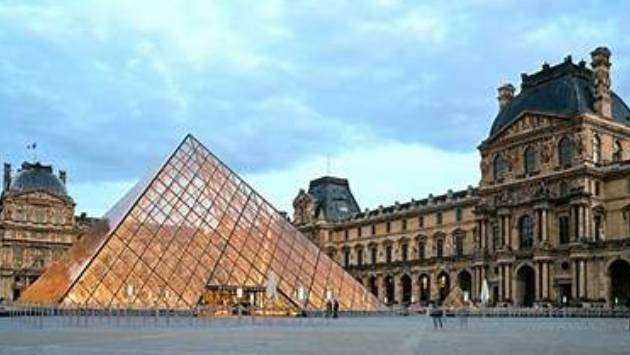
Colombo, October 25. (Daily Mirror) - France has been shaken by one of the most spectacular museum robberies in recent memory — a daylight Louvre heist that stripped the nation of priceless royal jewellery worth more than €88 million (around Rs. 31 billion).
The theft, executed in just seven minutes by four masked men, targeted jewels once worn by emperors and queens — treasures that art recovery expert Arthur Brand has called a “national disaster” for France.
“These are not just diamonds and gold,” Brand told international media. “They are the pride of France — the jewels of Napoleon, his wife, and his successors.”
Yet, for Sri Lankans, this story glitters with a surprising connection — one of the stolen tiaras was studded with Ceylon sapphires, linking this Paris robbery to the island’s centuries-old gem trade.
Ceylon Sapphires Among the Stolen French Crown Jewels
Among the eight items taken from the Louvre Museum’s Apollo Gallery was a sapphire diadem, necklace, and earring set once worn by Queen Marie-Amélie and Queen Hortense. The diadem alone contained 24 Ceylon sapphires and more than 1,000 diamonds — a dazzling bridge between Sri Lanka’s gem mines and Europe’s royal courts.
Valued between €10 and €12 million (Rs. 3.5–4.2 billion), the sapphire set was one of the Louvre’s star exhibits, celebrated for its Parisian craftsmanship and the unmistakable blue stones that came from the island once known as Ceylon.
Also missing is the emerald necklace and earrings gifted by Napoleon Bonaparte to Empress Marie-Louise in 1810, worth €3.7 million (Rs. 1.3 billion), and the reliquary brooch of Empress Eugénie, encrusted with two historic Mazarin diamonds from the 1600s, estimated at €5 million (Rs. 1.76 billion).
The diamond bow brooch of Empress Eugénie — once part of a 4,000-diamond belt displayed at the 1855 Universal Exhibition — was also stolen. The Louvre had paid €6.72 million (Rs. 2.36 billion) to reacquire it in 2008. Her pearl diadem, shimmering with 212 pearls and nearly 2,000 diamonds, worth up to €8 million (Rs. 2.8 billion), is gone as well.
Only one relic — Eugénie’s crown, set with 1,354 diamonds and 56 emeralds — was recovered, found damaged near the museum, apparently dropped during the thieves’ escape. Its value alone is around €10 million (Rs. 3.5 billion).
LKR Value of the Louvre Heist: A Loss Beyond Price
In total, the stolen jewels are worth over Rs. 31 billion, a figure nearly equivalent to Sri Lanka’s annual cultural budget.
To put that in perspective, it’s enough to fund hundreds of rural schools or build major hospitals across the island.
“This is economic damage, yes,” Paris prosecutor Laure Beccuau said, “but it is nothing compared to the historical loss.”
Her words ring true far beyond France. For a nation like Sri Lanka, long celebrated for its blue sapphires and gem-cutting heritage, the heist highlights how fragile the world’s most priceless treasures truly are. Those same Ceylon sapphires that once symbolised royal splendour now link the island’s legacy to one of Europe’s darkest cultural moments.
Sri Lanka’s Gem Legacy in the Spotlight
For centuries, Sri Lanka’s soil has glittered with gemstones that travelled to royal courts from London to Paris. From the Blue Belle of Asia to the jewels of European monarchies, Sri Lankan sapphires have outlasted empires.
The Louvre heist is more than a French tragedy; it’s a global wake-up call about heritage protection, museum security, and the growing black market for precious stones. For Sri Lankans, it’s a poignant reminder that the island’s most famous export — the Ceylon sapphire — carries a legacy that is as coveted as it is vulnerable.
Reality Check: Counting the Cost of Royal Glitter
It’s easy to read €88 million — or Rs. 31 billion — and lose track of what that truly means. But when translated into Sri Lankan terms, the scale of the Louvre robbery becomes strikingly clear.
To put France’s loss in perspective, the stolen royal jewels are worth the equivalent of:
- 1,225 BYD Sealion 6 electric SUVs
(starting around Rs. 25.3 million each — enough to fill the Galle Face Green car park several times over.)
- 206 two-bedroom Altair apartments
(valued at roughly Rs. 150 million each — nearly half of Colombo 2’s skyline in one heist.)
- 6,200 pre-owned Rolex Datejust watches
(at Rs. 5 million apiece — a lifetime of luxury on every wrist in a small town.)
- Over 47,000 MBA programmes at Sri Lankan universities
(costing about Rs. 650,000 each — enough to educate a generation of professionals to master’s level.)
- Around 15,000 business-class round trips from Colombo to Paris
(at roughly Rs. 2 million per ticket — enough to fly a small city to the Louvre and back, twice.)
That’s the sheer magnitude of what vanished — wealth that could buy fleets, fund futures, and fill skylines. Yet for France, the loss runs deeper than rupees or euros. These jewels are fragments of art, faith and empire.
And for Sri Lankans, there’s a bitter irony: among the treasures glittered Ceylon sapphires, once mined from the island’s rivers, now lost in a heist that reminds the world just how fragile beauty — and history — can be.
Closing Thought
In the end, what disappeared from the Louvre wasn’t only gold and diamonds — it was a piece of shared history. For Sri Lanka, whose sapphires once crowned empires, the theft feels both distant and deeply personal — proof that even centuries later, the light of a Ceylon sapphire can still captivate the world, and sometimes, tempt it too far.
All value comparisons and currency conversions in this article are intended to give readers a rough idea of scale. Figures are approximate and based on publicly available data and current market estimates at the time of writing.