 KELUM BANDARA
Reply To:
Name - Reply Comment
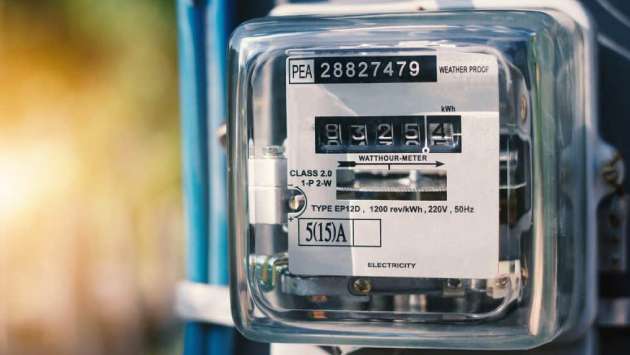
Colombo, April 29 (Daily Mirror) - The government is under compulsion to increase electricity prices since the International Monetary Fund (IMF) will unlock the next tranche of US$ $ 344 million, contingent on the restoration of cost recovery pricing, Daily Mirror learns.
In the fulfilment of an election promise, the current government reduced electricity tariffs by 20 per cent in January this year. However, the IMF conveyed its displeasure over this move since it is not cost–recovery pricing
The IMF and the Sri Lankan authorities reached a staff-level agreement recently on economic policies to conclude the Fourth Review of Sri Lanka’s reform programme supported by the IMF’s Extended Fund Facility.
Once the review is approved by the IMF Executive Board, Sri Lanka will have access to about US$344 million in financing, bringing the total IMF financial support disbursed under the arrangement to about US$1.7 billion.
Nevertheless, the staff-level agreement is subject to IMF Executive Board approval, contingent on: (i) the implementation of prior actions relating to restoring electricity cost-recovery pricing and ensuring proper function of the automatic electricity price adjustment mechanism; and (ii) the completion of financing assurances review, which will focus on confirming multilateral partners’ committed financing contributions and adequate debt restructuring progress, according to IMF Mission Chief for Sri Lanka Evan Papageorgiou.
Sri Lanka’s ambitious reform agenda continues to deliver commendable outcomes. The post-crisis growth rebound of 5 per cent in 2024 is remarkable. Revenue mobilisation reforms had improved the revenue-to-GDP ratio to 13.5 per cent in 2024, from 8.2 per cent in 2022. Gross official reserves reached US$6.5 billion at end-March 2025, given sizeable foreign exchange purchases by the Central Bank. Substantial fiscal reforms have strengthened public finances. Sri Lanka’s debt restructuring is nearly complete, according to him.
Asked about the government’s move on electricity pricing under its next revision to be effective from July 1 this year, a spokesman for the Ceylon Electricity Board (CEB) said that it is in the process of calculating rates to be submitted to the Public Utilities Commission of Sri Lanka soon.
“We calculate the cost involved. It varies according to the sources we depend on for power generation. At times, we depend more on hydropower if it rains. Otherwise, it is mostly on thermal power. Also, we depend on solar power for daytime energy requirements,” he said.
The current government is proceeding with the IMF programme, although it pledged to rejig it before the elections.