 CHATURANGA PRADEEP SAMARAWICKRAMA
Reply To:
Name - Reply Comment
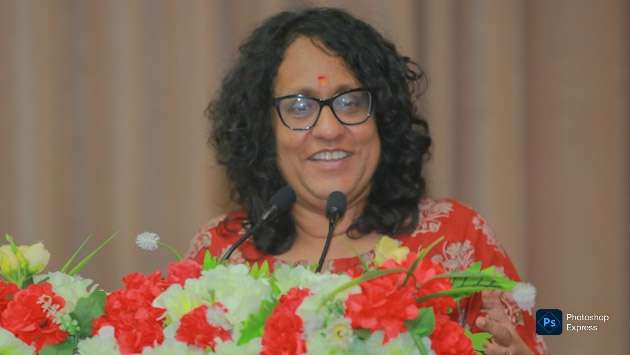
Sri Lanka’s new education reform is not just an initiative of the Education Ministry or the leadership of President Anura Kumara Dissanayake, but a collective responsibility that must be embraced by all sectors of society to secure a better future for the country’s children, Prime Minister and Education Minister Dr. Harini Amarasuriya said.
Speaking at an awareness program today, Dr. Amarasuriya said the current education system fails to instill confidence or optimism in students completing their school education. “A child who enters school in Grade 1 today does not complete their schooling with happiness or hope about the future. That must change,” she said.
Highlighting the urgent need to create a child-friendly environment and teaching system, she stressed the importance of producing not just academically qualified individuals, but well-rounded professionals doctors, engineers, entrepreneurs, artists with practical skills.
The Prime Minister underlined that the reform must ensure equity across all regions. “This is not about one district or province. Every region matters. If we are to offer equal opportunities to all children, we must distribute resources fairly especially to underserved and under-resourced areas,” she said.
She noted that in addition to resolving teacher shortages, all schools must be equipped with digital tools, proper classrooms, sanitation facilities, water, sports grounds, laboratories, innovation hubs, and aesthetic units.
“We have a clear plan. But more than anything, we need a child-friendly learning environment. Our goal is to produce responsible citizens through education,” she said.
Dr. Amarasuriya pointed out the importance of public dialogue and continuous feedback in shaping the reform. “This is not my reform, not the President’s, not the Ministry’s. This is Sri Lanka’s education reform. We must all be involved.”
Implementation of the reforms will begin in 2026 with changes to Grade 1 and Grade 6, she said, explaining that a phased approach is essential to avoid another decade-long delay.
She called on all stakeholders including teachers’ unions, education professionals, university academics, and parents to participate in the national conversation on education. “All schools, whether under the line ministry or provincial councils, must work together. All the children of this country are our responsibility.”
“This is not a single change it’s a complete overhaul of the education system. Let us work together, for the sake of our children,” she concluded.