Reply To:
Name - Reply Comment
By Mirror Business Desk
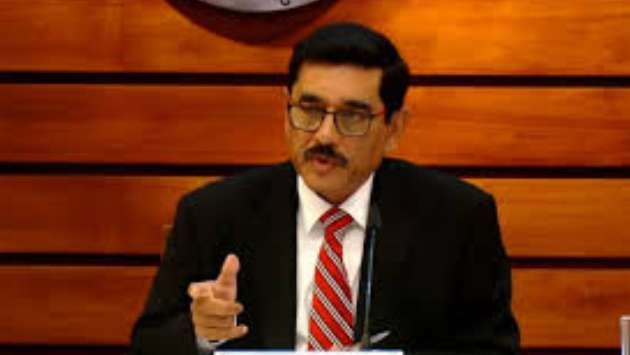
Colombo, September 1 (Daily Mirror) - Sri Lanka’s future economic stability depends on protecting the independence of its Central Bank, Governor Nandalal Weerasinghe said, warning that political interference had left the country vulnerable to its worst financial collapse in 2022.
The CBSL Chief asserted that having witnessed both the benefits of independence and the costs of its absence, he firmly believes it is the responsibility of future generations to protect, preserve, and promote the independence of the Central Bank.
“Only then can it continue to serve as a steadfast anchor of stability – an essential foundation for sustainable growth and shared prosperity,” he said.
Weerasinghe noted that in an unpredictable political and economic environment, Central Bank independence was not merely important but “indispensable” to stability.
History and global experience, he said, showed that Central Banks with clear mandates, well-defined boundaries and adequate operational autonomy were best placed to deliver on their promises of price stability and financial security.
At the same time, he stressed that independence did not mean isolation. Constructive dialogue and coordination with fiscal authorities were necessary for effective economic management, he said, a framework now strengthened under the Central Bank Act (CBA) of 2023.
Transparency and open communication, he added, were essential to building public trust and safeguarding against undue influence.
Turning to Sri Lanka’s recent past, Weerasinghe said the 2022 crisis highlighted the dangers of compromised autonomy. Large fiscal deficits financed through monetary expansion, or “money printing”, eroded price stability, while global supply shocks, the rupee float and higher taxes pushed inflation to nearly 70% by September 2022.
“Unfortunately, the Sri Lankan public and businesses had to learn the hard way the repercussions of lack of Central Bank independence and the consequences of fiscal dominance during the buildup to the 2022 crisis,” he said.
The Central Bank’s response, raising interest rates to record highs, helped bring inflation down and protect the financial sector from near-collapse.
Weerasinghe said this shows that how even in difficult circumstances, an independent Central Bank could help restore stability and enable a rapid rebound.
He argued that Sri Lanka missed a crucial opportunity in 2019 when a new Central Bank Bill failed to pass parliament. Stronger legal protections, he said, could have prevented excessive monetary financing and ill-timed tax cuts that severely damaged the country’s external credit ratings.
“The prohibition of monetary financing could have helped keep inflation under control. Moreover, the absence of Central Bank financing might have compelled the government to avoid reckless tax cuts,” he said, adding that a firm commitment to price stability under an inflation-targeting regime would have allowed the exchange rate to act as an automatic stabiliser.
He went on to remind that most stabilisation measures during the crisis were carried out under the Monetary Law Act of 1949, which proved that autonomy could be exercised even before the 2023 reforms, provided there was strong coordination with fiscal authorities.
Quoting European Central Bank President Christine Lagarde and former U.S. Federal Reserve Vice Chairman Alan Blinder, Weerasinghe said Central Bank independence is being tested globally, making it vital for Sri Lanka to protect reforms already in place.
“Independence does not mean isolation. Our recent experience has shown that only a strong, independent Central Bank can help a nation navigate crises and lay the foundation for sustainable recovery.”