Reply To:
Name - Reply Comment
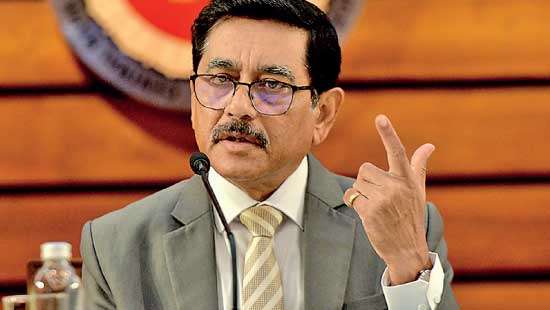
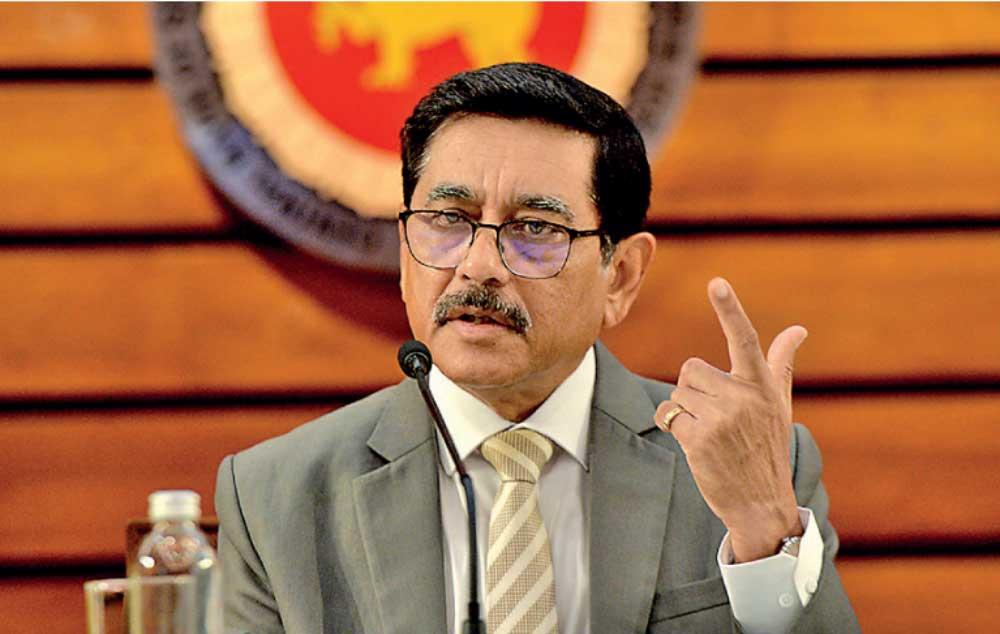
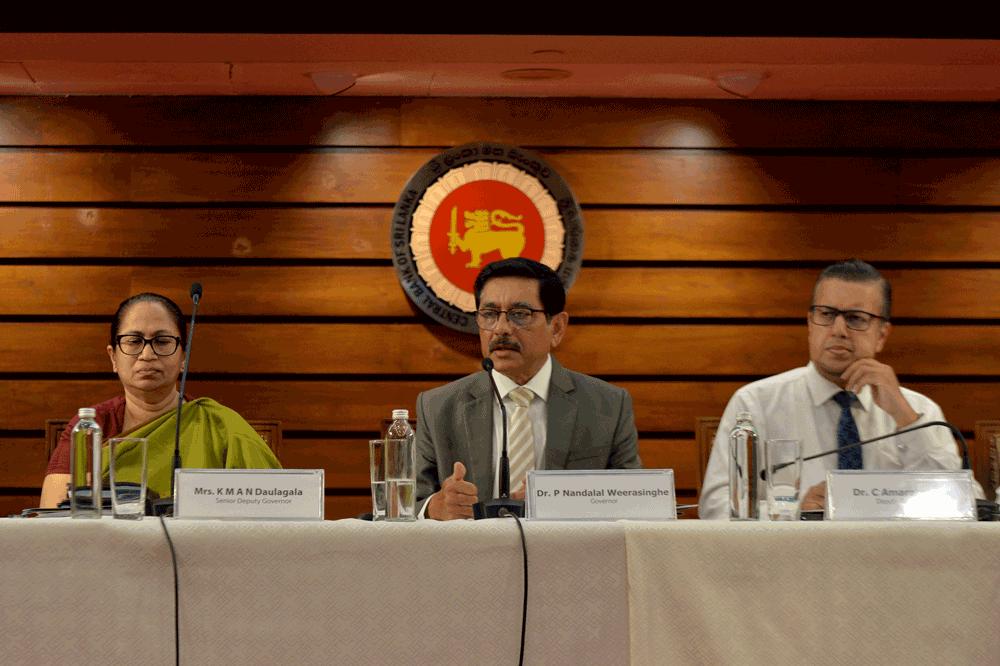
Central Bank Governor Dr. Nandalal Weerasinghe gestures while addressing the monetary policy press briefing yesterday
PIC BY PRADEEP PATHIRANA
The Central Bank left its key policy rate, the Overnight Policy Rate, unchanged at 7.75 percent yesterday, at its second policy meeting for the year.
The stance was delivered although there were some expectations for the Monetary Policy Board to deliver an increase in the interest rates to lean against the rising prices, which are now set to reach its desired level much faster than before the war in Iran.
The Central Bank, the primary mandate of which is to ensure price stability, said its projections now show inflation reaching its 5 percent medium-term target by the second quarter this year, much earlier than the third quarter it initially projected.
Sri Lanka thrice raised its fuel prices by around 35 to 40 percent since the war broke out with Iran on February 28. These higher energy prices are reverberating through the supply chains, which have caused the prices of everything from consumer staples to discretionary to rise by substantial amounts. However, Central Bank Governor Dr. Nandalal Weerasinghe speaking to the media yesterday said their preliminary projections show that inflation is around 2 percent in March, up from 1.6 percent in February, according to the Colombo Consumer Price Index.
Accordingly, he expressed with confidence that the country has more space and buffers to withstand the near-term impact from the Middle East crisis than before. “The fact that the country’s inflation was soft at 1.6 percent coming into this war and also the country having built its highest post-crisis foreign currency reserves, we now have better ability to absorb some shock than before,” Dr. Weerasinghe said addressing the post-meeting press conference.
By end-February, Sri Lanka had foreign exchange reserves of US $ 7.3 billion while the Central Bank continued to buy substantial amounts of foreign exchange in the first two months.
He also said that there aren’t any cracks observed yet in the foreign currency inflows such as remittances and trade, which have been strong in the first two months. The tourist arrivals however have declined by around 17 percent in the first three weeks.
In fact, he said the remittances have been higher in the first 15 days in March compared to a month ago.
Usually, March and December stand as the highest remittance flowing months to Sri Lanka, due to the festive seasons.
However, there hasn’t yet been any announcement with respect to any job losses or people wanting to return from the Middle East, due to the ongoing conflict, materialising any one or both could cause concern.
Yet, the Central Bank did not completely rule out the possible fallout, should the
conflict prolong.
“However, the ongoing conflict in the Middle East poses risks to Sri Lanka’s external sector outlook, particularly through energy, tourism, trade and remittance flows, although the overall magnitude of the impact remains uncertain.”
The rupee has also weakened since the war broke out three weeks ago by 1.6 percent against the dollar, which hasn’t been much different to its regional peers. While short-term volatility is typical in the foreign exchange market, the Central Bank said it would intervene only when there is going to be any extreme volatilities.
Asked if the current shock could shave Sri Lanka’s growth for 2026, Dr. Weerasinghe said it is still too early to gauge that.
He also said they do not see the need to impose any limits on imports of vehicles or any other non-essentials at the moment, as the adjustments in the prices would rebalance the demand and supply. Pix by Pradeep Pathirana