Reply To:
Name - Reply Comment
By Ishan Sheriffdeen
|
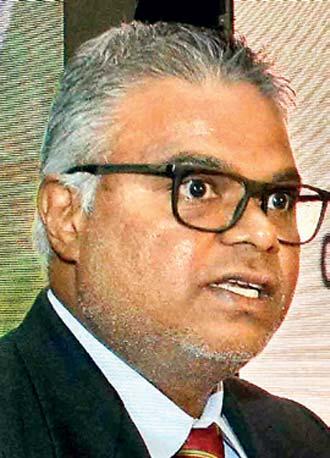
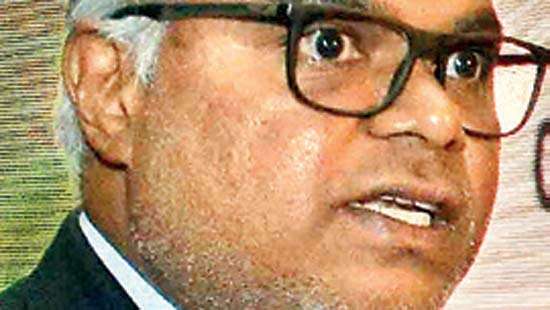
Harin de Silva |
Sri Lanka’s rubber industry is at crossroads at present with changes taking place in trade, climate, and global consumer expectations, and these have contributed to the falling output, the Ceylon Rubber Traders’ Association (CRTA) said.
The total rubber production has continued to experience a steep fall, with year 2024 recording less than 70,000 metric tonnes.
According to the CRTA newly elected Chairman Harin de Silva, thousands of hectares have been lost to real estate, unproductive lands and even total neglect. Replanting period also remains very long.
“State support to the industry is inadequate, and our base of 65,000 rubber small holders is struggling to survive. The country’s rubber sector is now seen as an industry of the past, and not the future. Young and skilled people are leaving the estates,” said de Silva, while noting that the highlighted are major challenges holding back the industry.
While speaking at the Post-Business Session of the Association’s 106th Annual General Meeting in Colombo last Friday, he stressed that tackling such issues requires concerted action by farmers, researchers, policymakers and industry stakeholders.
Despite being one of the oldest industries in the country, rubber has no unified development strategy and one voice. Plans have been conceptualised on paper, along with pilot projects and departments, but “little traction” at the grassroots level.
De Silva said that it is time fragmented efforts are left aside, and called for the formation of Sri Lanka Rubber Industry Council, that could make a greater impact on the overall sector.
“If we want to revive the industry and compete with major rubber producing countries like Thailand, Malaysia, Vietnam and West Africa, we must speak with unity and urgency to implement action.”
With the government withdrawing rain guarding subsidies, De Silva said CRTA has partnered with the Asian Development Bank to mobilise a grant of US$ 40 million to rain guard every mature rubber tree in the country.
“This initiative is an investment for the future,” he emphasised.
Meanwhile, The European Union, one of Sri Lanka’s largest and most premium export markets for natural rubber and rubber products has made the European Union Deforestation Regulation (EUDR) effective from this year, and natural rubber entering the European market as from 2025, must be verifiably deforestation-free, CRTA pointed out.
“They have drawn a clear line in the sand. This regulation is both a challenge and an opportunity for us. The challenge lies in improving compliance. Traceability, geolocation data, land use history etc must be meticulously documented. Many of our smallholders who contribute nearly 70 percent to our national output are not equipped to meet these stringent data requirements at present,” he said.
Noting there are gaps in technology, advanced and institutional support, de Silva said the opportunity is that Sri Lanka rubber is by nature and practice EUDR-compliant, and by adhering to the regulation, the sector can achieve sustainable growth and greater market access,” he added.
With regard to emerging issues affecting export markets, CRTA also expressed deep concern over possible attempts to impose a 44 percent blanket tariff by the United States on all imports from Sri Lanka, and said that could have a devastating impact particularly on the rubber industry that is grappling with many problems.
Touching on the growing need to shift rubber cultivation to non-traditional areas of the country, particularly to the intermediate and dry zones, CRTA highlighted the strategic move would offer several important benefits for the sustainability and growth of the sector, letting the industry to utilise the underutilised or abandoned agricultural land, especially in the intermediate zone, without competing with residential or industrial units.
“It will create new employment opportunities, stimulate local economies and improve living standards in the regions that have traditionally lacked land for development. Rubber has been mainly cultivated in wet zone regions such as Kegalle, Kalutara and Ratnapura.
“With the development of new rubber clones that are drought-tolerant and bettersuited for dry environments, cultivation in non-traditional areas is starting to become a very viable option,” de Silva added.