 CHATURANGA PRADEEP SAMARAWICKRAMA
Reply To:
Name - Reply Comment
Colombo, Feb 18 (Daily Mirror) - The Ceylon Electricity Board (CEB) acknowledged the recent island-wide power failure, explaining that the high penetration of non-synchronous solar PV reduced grid inertia, increasing its vulnerability to faults. This imbalance between generation and demand led to cascading disconnections, which ultimately resulted in a total power outage.
While issuing a media release, CEB media spokesman Eng. M.H. Dhammike Wimalaratne highlighted that the cause of the power failure due to a system-wide failure was triggered by a disturbance at the 33kV Panadura Grid Substation, leading to a sudden voltage drop across the network.
He said the CEB assures the public that immediate and long-term corrective actions are underway to prevent future occurrences. The isandwide power failure occurred on February 9 at 11:13 AM.
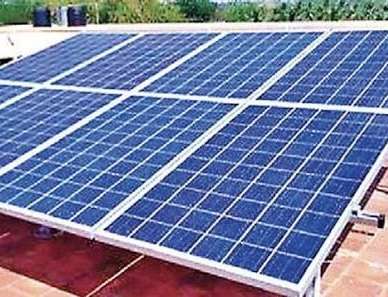
"At the time of the incident, over 50% of the national electricity demand was met by 800 MW of solar photovoltaic (PV) generation, with additional supply from the Lakvijaya Power Plant at Norochcholai (470 MW) and hydropower plants (130 MW). Due to the high penetration of non-synchronous solar PV generation, the grid had a low system inertia, making it vulnerable to faults. The disturbance resulted in an imbalance between generation and demand, leading to cascading disconnections and a total power failure.
"The High Solar PV Penetration & Low Inertia - a lack of synchronous generation, made the grid more vulnerable to voltage and frequency disturbances. A sharp voltage drop caused multiple solar PV systems to disconnect, worsening the imbalance and further destabilising the grid," the spokesman said.
They further said that the Norochcholai Power Plant tripping was an automatic protective response by this plant to the system instability, and not due to an internal plant failure. The measure prevented catastrophic damage to the power plant and prolonged outages.
Additionally, the outage was influenced by the "Sunny Sunday" effect—a condition where low weekend demand combined with high generation from solar PV creates grid instability. With most industrial and commercial customers offline, the grid was operating with reduced demand and reduced inertia, making it more susceptible to sudden disturbances.
Therefore, the CEB has taken immediate corrective actions as follows to implement urgent measures to stabilise the national grid and prevent similar failures:
* Maintaining more synchronous generators at minimum generation and operating selected gas turbines in synchronous condenser mode at key locations to enhance grid stability and voltage support.
* Curtailing ground-mounted solar PV generation (only when necessary) during low-demand periods to mitigate instability risks.
Medium-Term Strategies
To further strengthen grid reliability, the CEB is in the process of implementing the following measures, which will be accelerated:
* Adjusting rooftop solar PV inverter settings to prevent unnecessary disconnections during minor disturbances/faults, ensuring grid resilience.
* Introducing special industrial tariffs for weekends and holidays to encourage industries to shift operations to low-demand periods, thereby assisting grid stability.
* Promoting solar installations with appropriate BESS capacities over solar PV installations without BESS and to introduce a tariff for the Solar PV customers with Battery Energy Storage Systems (BESS) and the relevant hardware
Long-Term Grid Stability Solutions
CEB is committed to long-term investments to modernise the national power grid to integrate more renewable energy while maintaining stability.
These include:
* Deploying grid-forming inverters with BESS to provide synthetic inertia and frequency stabilization.
* Installing emergency backup generators at Norochcholai Power Plant to ensure rapid reconnection and continued operation of critical systems in case of future disconnections.
* Accelerating the Maha Oya Pumped Hydro Project (Water Battery) – a 600 MW storage facility that will enhance grid flexibility and energy security.
* Advancing Smart Grid investments to improve real-time monitoring and control of renewable energy integration.
The CEB is commitment to a reliable power supply and acknowledges the inconvenience caused to the public and remains fully committed to ensuring a resilient, reliable, and future-ready electricity grid. As Sri Lanka continues to transition towards a renewable energy-driven power system, the CEB is proactively implementing both immediate and long-term solutions to strengthen grid stability, added the media release.