 CHATURANGA PRADEEP SAMARAWICKRAMA
 Reply To:
Name - Reply Comment
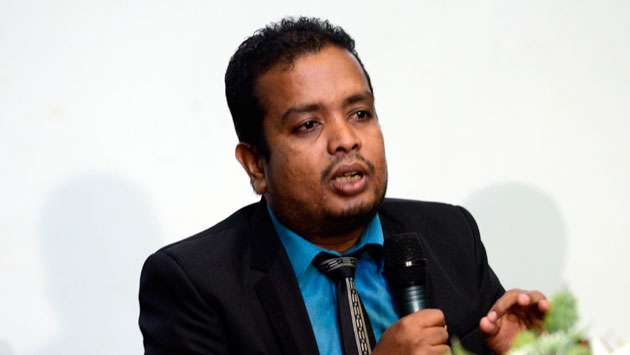
Colombo, June 25 (Daily Mirror) - Operating aircraft burning hydrocarbons contributes around 2.5% of the total carbon dioxide (CO₂) emissions caused by human activities, Sustainability and Civil Aviation Specialist and Aviation Research Leader Nuranga Adikari said.
Speaking at the 91st Air Dream programme organised by the Airport and Aviation Services (Sri Lanka) (Private) Limited (AASL) at the authority’s auditorium, Adikari highlighted the environmental impact of aviation emissions. He noted that by 2019, the global aviation sector had emitted approximately 600 million tons of CO₂ into the atmosphere.
He further explained that alongside CO₂, aircraft also release nitrogen oxide and sulfur dioxide, though in comparatively lower quantities.
“With the onset of the COVID-19 pandemic, emissions of carbon dioxide, nitrogen oxide and sulfur dioxide significantly declined due to reduced aircraft operations. However, emission levels are now gradually returning to their pre-2019 levels,” Adikari said.
He warned that the release of large amounts of CO₂ contributes to global warming, which disrupts global weather patterns.
To mitigate this, AASL has initiated several measures aimed at reducing carbon emissions. These include efforts to minimise fuel consumption in ground handling operations and the adoption of new, fuel-efficient engine technologies.
Adikari also underscored the importance of the Carbon Offsetting and Reduction Scheme for International Aviation (CORSIA), introduced by the International Civil Aviation Organization (ICAO). "CORSIA is a global, market-based measure designed to cap and reduce CO₂ emissions from international aviation. Under this scheme, all aviation operators in the country are required to report their annual emission levels to the AASL," he said.
The AASL has set a target to maintain national aviation emission levels at or below the volumes recorded in 2018.
Meanwhile, addressing the gathering, Thushara Morawaka, Human Resources and Administration Manager at SriLankan Catering Limited, noted that their meal production capacity had also been impacted by the pandemic.
“Before COVID-19, we produced around 25,000 meals a day, but that number has now dropped to 15,000,” Morawaka said. He added that daily operations require about 2,000 kilograms of chicken, 600 kilograms of fish, and 600 kilograms each of pineapple, papaya, and watermelon.
The Air Dream programme is a regular knowledge-sharing platform organised by the AASL for aviation industry professionals.