 SHEAIN FERNANDOPULLE
 Reply To:
Name - Reply Comment
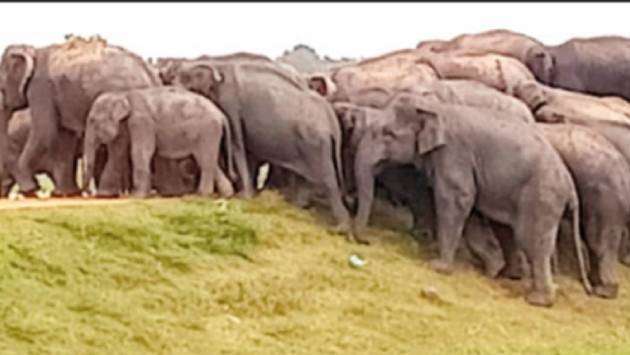
Colombo, March 6 (Daily Mirror) - Amidst the rising population of wild elephants in Sri Lanka and the alarming rate of elephant deaths, reckless tourism practices continue to endanger these tuskers and disrupt their natural habitats.
This is evident with the incidents where tourists are taken to observe wild elephants in haphazard way, particularly in areas like Dambulla, Habarana, Minneriya, Sigiriya, and Kaudulla.
Safari jeeps and other vehicles frequently stop dangerously close to the elephants, disturbing them in their natural habitat and creating obstructions on busy roads. Drivers of other vehicles have accused the authorities of turning a blind eye to these hazardous practices despite repeated complaints.
Authorities, including the Department of Wildlife Conservation and the police have been urged to take stricter action against both unethical safari practices and activities that lead to elephant deaths.
However, enforcement remains a challenge due to a shortage of officials. Habarana Range Forest Officer B.A.K.C. Bamunusinghe acknowledged that while regulations exist for safari operators and tour guides, monitoring their activities has proven difficult.
Meanwhile, according to the Department of Wildlife Conservation, a staggering 75 elephant deaths have been reported in just the last two months.
These deaths include 14 from gunshots, 10 from electrocution, five from explosives hidden in food (‘hakka patas’) and nine from train accidents.
Other deaths were due to natural causes or unidentified reasons. In 2024, a total of 388 wild elephant deaths were reported, while 488 deaths were recorded in 2023.
According to statistics, some 3,527 elephants died during the last ten years.
Meanwhile, a recent elephant census conducted in August 2024 revealed that Sri Lanka’s wild elephant population has increased by 28% since the last survey in 2011, bringing the total to a minimum of 7,451 elephants.