 CHATURANGA PRADEEP SAMARAWICKRAMA
Reply To:
Name - Reply Comment
Colombo, June 12 (Daily Mirror) - Sri Lanka’s first-ever nationwide animal census has been successfully completed at a total cost of just Rs. 2.7 million, the Ministry of Agriculture, Livestock, Land and Irrigation announced yesterday. Agriculture Ministry Director (Agri Technology) Hemantha Amarasinghe told the media yesterday that printing a single leaflet for the survey cost only 30 cents. “The entire expenditure for the survey can be summarized on just two pages,” he said, explaining that expenses primarily covered the printing and distribution of leaflets delivered to homes across the country.
A total of seven million leaflets were printed by the Government Printers at a cost of Rs. 2,478,000. The remaining funds were used for fuel charges for four vehicles that distributed the material across 25 districts, with some areas utilizing public transport for distribution free of charge.
Agri Development Additional Secretary R.D. Chithranayana noted that while Sri Lanka boasts a high literacy rate, smartphone usage remains limited in rural areas. As a result, leaflets were chosen as the most effective method to collect data from residents.
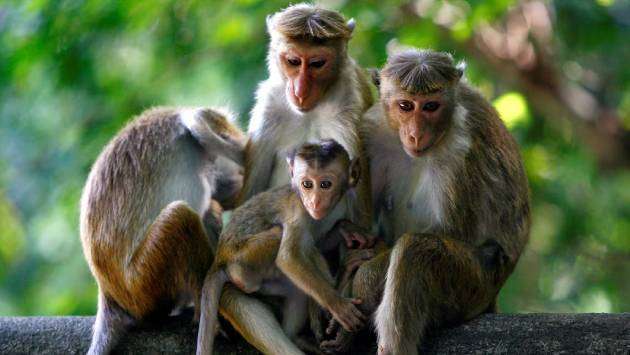
The census, held on March 15, involved residents participating by counting and reporting sightings of wild animals such as Toque macaques, other monkey species, giant squirrels and peacocks — particularly those venturing into farmlands and causing crop damage.
According to Hector Kobbekaduwa Agrarian Research and Training Institute Director/CEO Prof. A.L. Sandika, Sri Lanka is home to 5.17 million Toque macaques, 1.74 million other monkeys, 2.66 million giant squirrels and 4.24 million peacocks.
The highest animal populations were recorded in the Kandy District, followed by Kegalle, Anuradhapura, Polonnaruwa and Kurunegala. In contrast, Jaffna, Batticaloa, and Nuwara Eliya districts reported the lowest numbers.
Religious towns such as Polonnaruwa, Hambantota and Anuradhapura were found to have dense monkey populations. Toque macaques were notably recorded in Anuradhapura, Polonnaruwa, Kandy, Galle, Matara, and Hambantota. Meanwhile, large numbers of giant squirrels and peacocks were counted in Kurunegala, Anuradhapura and Moneragala districts.
A committee comprising experts from the Department of Wildlife Conservation, university academics and researchers has been appointed to analyze the data. The committee will study the relationship between animal populations and human-wildlife conflict, particularly crop damage, and develop strategies to manage wildlife and support agricultural productivity.
Officials say the findings will be instrumental in shaping future wildlife management and agricultural policies.