 CHATURANGA PRADEEP SAMARAWICKRAMA
 Reply To:
Name - Reply Comment
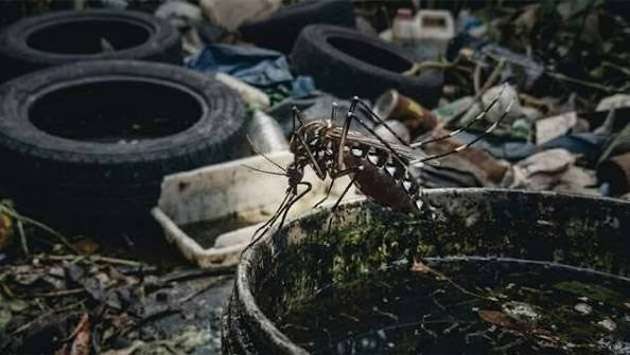
Colombo, June 10 (Daily Mirror) - The Health and Mass Media Ministry has reported significant mosquito breeding risks across the country as part of its ongoing three-day national dengue control programme, with inspections revealing widespread concerns in homes, workplaces, and public institutions.
On the second day of the campaign alone, health authorities inspected 31,155 premises, identifying 8,069 as high-risk locations for mosquito breeding. Of these, 1,864 premises were confirmed to have dengue mosquito larvae.
According to the National Dengue Control Unit, more than half of factories (61%), construction sites (55.4%), and places of worship (51.5%) inspected were found to be at high risk of mosquito breeding. Schools (44.7%) and government institutions (40.4%) also showed alarmingly high levels of risk.

During the inspections carried out on June 9, authorities issued 1,079 notices to property owners for maintaining mosquito breeding conditions, while legal action was initiated against 711 individuals.
Over the two-day period of the special programme, which covers 74 Medical Officer of Health (MOH) divisions across 14 districts, a total of 62,351 premises have been inspected. Of these, 16,190 premises—about 26 percent—were identified as potential mosquito breeding sites.
Residential areas accounted for the majority of inspections, with 57,008 homes checked and 14,291 found to have breeding risks. Among all premises, 3,948 were confirmed to have mosquito larvae, with the highest concentrations recorded in homes (58%) and construction sites (22.4%).
Authorities also issued 2,244 notices for violations and have taken legal action against around 1,500 individuals, with factories and construction sites among the most frequently penalised sectors.
The three-day nationwide operation, which began on June 8 and concludes today (June 10), is being carried out as part of intensified efforts to curb the spread of dengue. Health officials are urging the public to maintain clean surroundings and eliminate mosquito breeding sites, while supporting ongoing prevention activities.