 CHATURANGA PRADEEP SAMARAWICKRAMA
 Reply To:
Name - Reply Comment
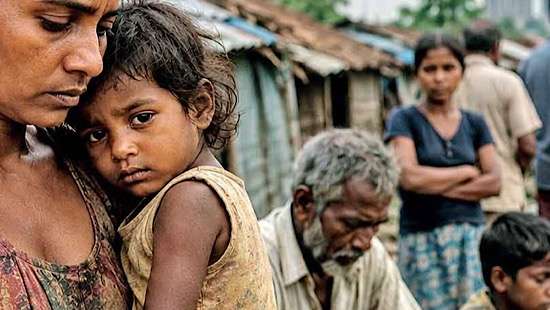
Colombo, June 8 (Daily Mirror) - Sri Lanka’s poverty profile, still benchmarked on the Department of Census and Statistics’ Household Income and Expenditure Survey 2006/07, shows that 15.2 percent of the population about 2.8 million people, lived below the national poverty line, highlighting deep regional and structural disparities that continue to shape development policy.
According to the data compiled by the Department of Census and Statistics, Sri Lanka, poverty was heavily concentrated in rural areas, where the headcount index stood at 15.7 percent, accounting for more than four-fifths of the country’s poor population. The estate sector recorded the highest poverty rate at 32 percent, while urban areas remained comparatively low at 6.7 percent.
At provincial level, the Western Province reported the lowest poverty incidence at 8.2 percent, yet still contributed a significant share of the national poor due to its large population size.
In contrast, Uva Province (27 percent) and Central Province (22.3 percent) remained the most affected. District-level figures show extreme concentrations of poverty in Nuwara Eliya and Monaragala, where around one in every three people was classified as poor.
The national Poverty Gap Index stood at 3.1 percent, with an estimated monthly shortfall of Rs. 1,257 million required to lift all poor households above the poverty line (at 2006/07 prices). On average, each poor person needed about Rs. 448 per month to escape poverty, underscoring the relatively small but widespread income deficits driving deprivation.
Despite reductions in overall poverty, inequality remained pronounced. The richest 20 percent of the population accounted for nearly 50 percent of total consumption, while the poorest 20 percent held only 7.1 percent.
Urban areas showed the highest consumption inequality, even as estate areas recorded deeper poverty among those below the poverty line.
The survey also found that average dietary energy consumption was 2,118 kilocalories per person per day, with over half the population consuming below the minimum requirement of 2,030 kilocalories. Urban populations recorded unexpectedly lower calorie intake levels compared to rural and estate sectors.
Sri Lanka’s poverty rate has declined steadily over time—from 26.1 percent in 1990/91 to 15.2 percent in 2006/07—largely driven by improvements in rural incomes. However, estate-sector poverty and persistent district-level disparities continue to limit uniform progress.
Experts said that while national averages show improvement, pockets of chronic poverty remain in parts of the Central and Uva provinces, underscoring the need for more targeted development interventions.