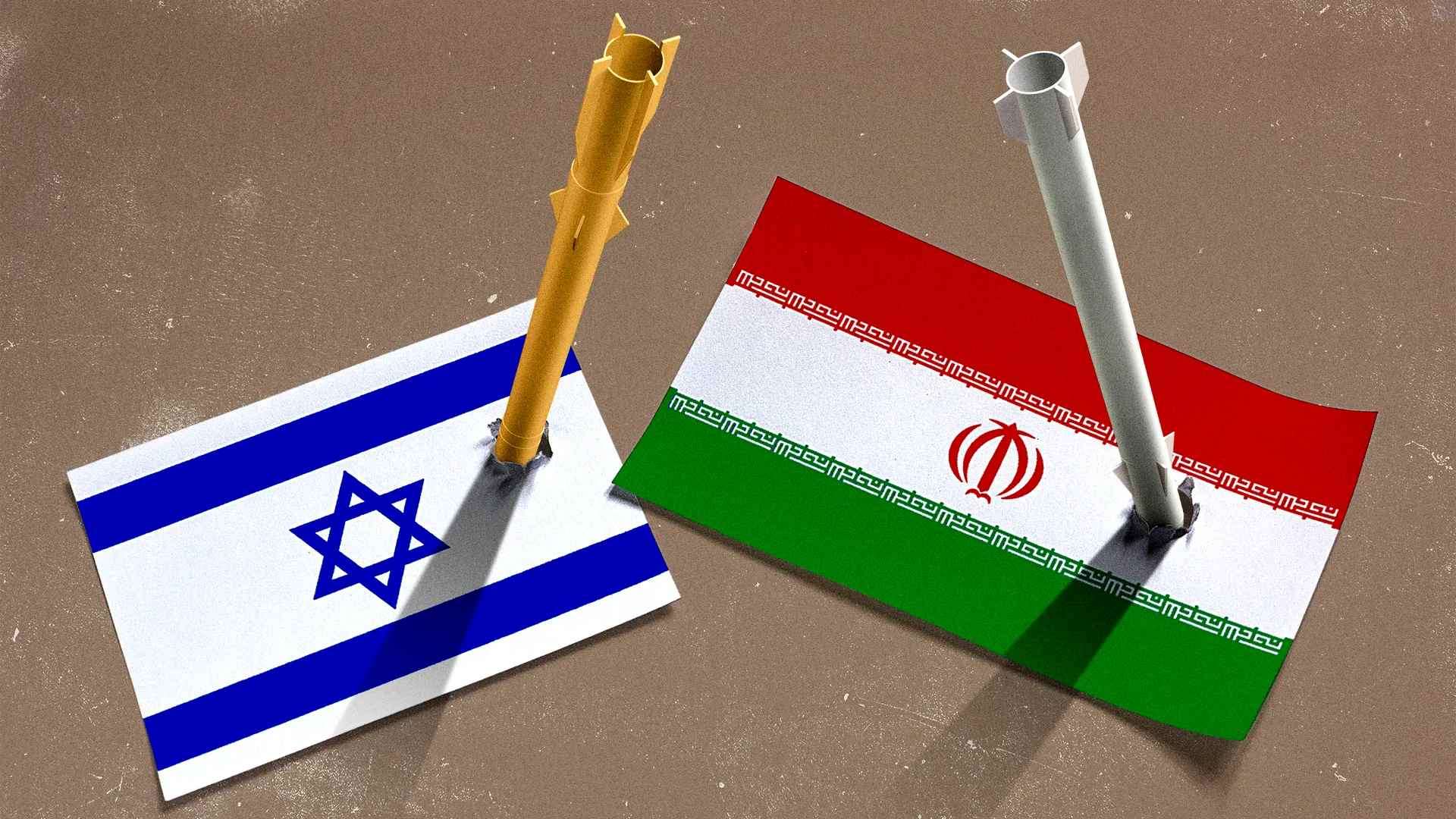
When giants clash, it's the ants that get crushed. But when Asia's giants — China and India — raised their pitch in a war of words, it had little or no impact. The stock market, the oil prices and other war-sensitive yardsticks remained the same. Does this mean, the recent tension between the two countries need not be taken seriously? Far from it, the disputes between the two countries, which are Asia's fastest growing economies and nuclear powers, also deserve all our attention with regard to conflict resolution.
Ever since the two countries went to war in 1962, after years of tension over territorial disputes, Sino-India relations have been shaped largely by mutual suspicion and given rise to a costly arms race in Asia.
Though these disputes have not been conclusively resolved, the two countries have desisted from reverting to war to sort them out. Relations did improve, especially in the post-Cold War era, recording a marked increase in the trade between the two countries. But the recent exchange of words between them showed that neither country was willing to compromise on its territorial claims.
The simmering crisis showed sporadic flames recently when Indian Prime Minister Manmohan Singh earlier this month visited the disputed Arunachal Pradesh to attend an election rally in support of the Congress Party. The visit prompted China's Foreign Ministry to issue a statement through its spokesman, Ma Zhaoxu on October 13. The statement said China was seriously dissatisfied by the visit of an Indian leader to Arunachal Pradesh.
Though he did not name Singh, the spokesman accused the "Indian leader" of ignoring China's concerns.
"We demand the Indian side pay attention to the serious and just concerns of the Chinese side, and do not provoke incidents in the disputed region, in order to facilitate the healthy development of Sino-Indian relations," Ma said in the statement posted on the Foreign Ministry website (www.fmprc.gov.cn).
An angry India hit back by telling China that its leaders were free to visit any state. The Foreign Ministry in a statement said New Delhi was "disappointed and concerned".
Within hours of the Chinese statement, Indian Foreign Minister S.M. Krishna told journalists: "Well, regardless of what others say, it is the Government of India's stated position that Arunachal Pradesh is an integral part of India."
Beijing which controls 38,000 sq km of the disputed region after the 1962 war, stakes its claim for some 90,000 sq km of land in Arunachal Pradesh, insisting that it was part of Southern Tibet.
Beijing also issued a strong statement last week over the planned visit by the Dalai Lama, the spiritual head of the Tibetan Buddhists, to Arunachal Pradesh.
The war of words was aggravated by India's protest over the issue of a different type of visa by the Chinese embassy in New Delhi to people from Indian-administered Kashmir. The Indians ask whether Beijing considers Kashmir a separate state detached from India.
New Delhi has also expressed concern over a dam China is said to be building across the Brahmaputra River in Tibet and warned against any water diversion that could harm Indian territories downstream.
It is interesting to note that, amid this tension, India and China signed a bilateral deal on Wednesday to cooperate on moves to protect the environment. Premier Singh is also billed to meet his Chinese counterpart Wen Jiabao in Bangkok this weekend on the sidelines of the ASEAN summit. Next week, China's Foreign Minister Yang Jiechi will be in India for trilateral talks which also include Russia.
The fact that the two countries, when they issued the tough statements, did not care much about such high-level diplomatic contacts and the 52 billion dollar trade ties — China is India's biggest trading partner — not only shows their unwillingness to compromise on territorial matters but also points to the urgency with which the disputes should be solved peacefully once and for all. For a war between the two nuclear powers could only spell multiple-disaster.
The problem, however, is that the mutual suspicions run deeper despite diplomatic moves. China's close relations with Pakistan, a series of deep sea ports China is building in countries surrounding India — eg; the Gwadar port in Pakistan and the Hambantota port in Sri Lanka — and Beijing's perception that Washington is promoting New Delhi as a regional superpower to check the growing power of China are some of the factors that keep alive this mutual suspicion which could be traced back to the late 1950s. In fact, India pursued its atomic bomb and the nuclear programme in response to China's atomic bomb.
In the first decade after China's communist revolution, the relations between the two countries bloomed within the hallowed principles of Pancha Sheela. They agreed to solve their territorial disputes in accordance with the Pancha Sheela principles, which were first promoted by Chinese Prime Minister Zhou Enlai at talks with an Indian delegation in December 1953 in Beijing. See box for the five Pancha Sheela principles.
Both these countries gave leadership to the Afro-Asian movement, a group that spearheaded a campaign to end colonialism. But India's moral support for the Dalai Lama and his Tibetan rebels and the territorial dispute over Aksai Chin in the Kashmir-Xinjiang area and Arunachal Pradesh led to the 1962 war which dealt a crushing blow to India.
Relations remained strained until a new world order emerged in the post-Cold War era with trade dominating and determining ties between countries. Throughout the Cold War period both China and India accused each other of entertaining imperialist or hegemonic designs.
Prof. Lin Liang Guang of the Beijing University told a Colombo seminar in 1992 that one of the legacies India inherited from imperial Britain upon independence in 1947 was great power chauvinism. The gist of his argument was that many Indian leaders, including Independent India's first Prime Minister Jawaharlal Nehru, were driven by national egoism and believed that they had the responsibility to police the region.
He interpreted a statement Nehru had made in 1944 as clear indication of India's hegemonic ideals.
In the controversial statement Nehru said: "India will inevitably exercise an important influence. India will also develop as the centre of economic and political activity in the Indian Ocean area. The small national state is doomed. It may survive as a culturally autonomous area but not as an independent political unit."
Not only Prof. Lin, but many South Asian analysts, even today, cite this statement when they criticize India's high-handed policy in dealing with countries in the region.
They point out India's annexation of Hyderabad, Kashmir, Sikkim and Goa and its interference in the internal affairs of neighbouring countries such as Bhutan and Nepal as part of this Nehru doctrine, which was the precursor to the so-called Indira doctrine, named after Nehru's daughter and India's third Prime Minister, Indira Gandhi.
In terms of this doctrine, India believes that South Asia is its exclusive domain and no outside power has the right to interfere in the affairs of states in the region. The doctrine warns states in the region that if they want to look for outside assistance to sort out internal problems, such assistance should be sought within the region first — meaning India should be approached first.
Almost all Indian governments have adopted this policy, perhaps with the exception of the regime of Prime Minister Inder Kumar Gujral, who during his short stay in office tried to promote what was then known as the Gujral doctrine of peaceful coexistence.
Obviously, the hegemonic Nehru-Indira doctrine was shunned by almost all the countries in the region. While the small countries gnashed their teeth and grudgingly acknowledged the doctrine as they did not have much option, others scoffed at it or defied it. Sri Lanka, however, adopted a loosely-defined middle path, at times defying India and earning its wrath and at other times, honestly or dishonestly, currying-favour with India and winning its support.
The Pancha Sheela Principles
1. Mutual respect for each other's
territorial integrity and sovereignty
2. Mutual non-aggression
3. Mutual non-interference in each other's internal affairs
4. Equality and mutual benefit
5. Peaceful co-existence