Reply To:
Name - Reply Comment
 By Sonia Dandona Hirdaramani
I was thrilled to see Sri Lanka ranked highest on the map of key ancient gem sources. It stood out as the origin of five key gemstones, surpassing India with three, while other regions had just one each in comparison.
What an illustrious history Sri Lanka’s gems have. You write in your book that Sri Lanka is said to be the source of stones that King Solomon had gifted the Queen of Sheeba to Charlemagne’s Talisman to Queen Victoria’s tiara to Princesses Diana and Kate’s engagement ring. Why do you think sapphire blue holds such prominence as a color?
When I think of blue, and historically, as well, the first thing that comes to me is the heavens, the sky, and if you associate the color with the sky, then that becomes a religious, divine aspect, quite automatically in most cultures. From a very European context, we think of blue as being the sky, the heavens, God, and rulership. It’s also associated with loyalty and hope. It's also for Europe, a classic go-to engagement ring, as we've seen with Princess Diana and Kate. My mother's engagement ring is a Sri Lankan sapphire.
You can see these associations of color if you go back centuries or millennia in different cultures. You can see that if an emerald is green, you're going to think of the grass, trees, growth, and fertility. If a ruby is red, you're going to think of power, fire and what’s running through your veins, blood. You see the blue of a sapphire, and you think of the heavens or the sea, but nature and great power. It makes sense to me that even over here, we've got sort of astrological associations with sapphires; this idea that blue can be a very powerful color in many ways.
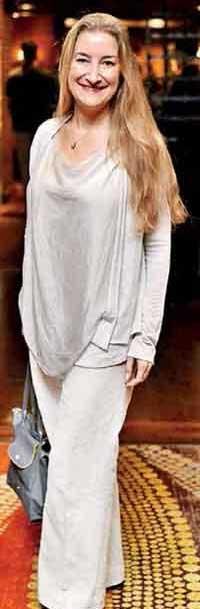 |
| Helen Molesworth at FACETS Gems of Influence Breakfast |
In some cultures, certain gems are believed to bring bad luck. Have you come across any particularly interesting superstitions pertaining to gemstones?
Well, it's exactly this with sapphire, isn't it? We’ve got in some of the Asian cultures, where if your astrology does not fit the blue of the sapphire, you don't wear a blue sapphire. I think of the great collections of the Maharajas in India, where greens and reds were the real go-to stones, because perhaps blue was considered too powerful for some people's work, or too dangerous.
It was funny how that color-shift really changed around the time of Princess Diana’s engagement ring, and then when Kate was given it. I was working in China at the time, and suddenly all the girls were wearing blue sapphires and wearing blue dresses. You did not see that in China until about then, so sapphires have changed the face of even the fashion industry at times.
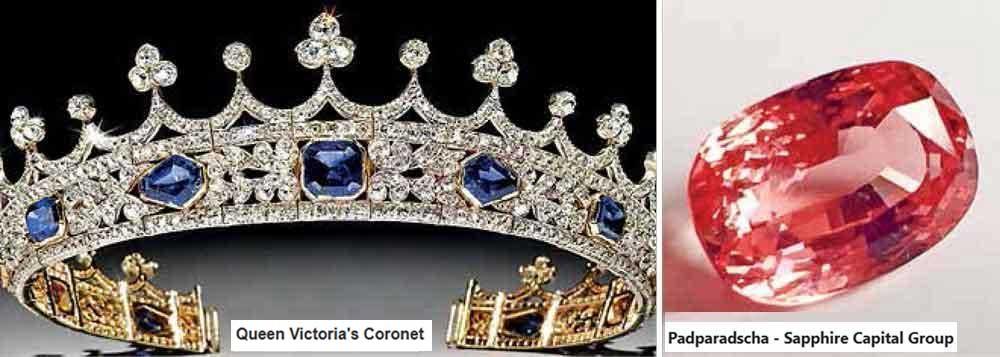
Can you tell us about the story behind Queen Victoria’s Sri Lankan sapphire and diamond coronet?
I love this jewel. It’s such a sweet, beautiful, romantic piece. To describe it, it's a tiara form of a coronet, because it was made into a complete circle. It's tiny: only 11 centimeters across.
She was quite a small lady, and it's made with sapphires that came from her family collection, with diamonds. Her husband, Prince Albert, designed it himself with his family crest as part of the design, in 1840, which was the year of her wedding. It doesn't get much more romantic from a ‘making a jewel’ perspective and she adored it. She wore it around the back of her chignon bun when she was a young wife, and it was a very romantic story, because she was obviously very much in love with her husband, and even after he died, she carried on wearing the coronet on top of her widow's cap. For the Opening of Parliament, when she should have been wearing a crown, she had a crown carried next to her on a cushion, and she wore the coronet, so she was close to her husband, who had passed. It's a very romantic story. What's so lovely is that there is a bit of zoning in some of the sapphires, some sort of banding of color. She obviously wanted these family sapphires in the coronet, and the jeweler has just used a bit of blue enamel around the inside of the back of the collards to make the colors pop, which is such fun thing when you realize she was Queen of England. She could have anything she wanted, but these Sri Lankan sapphires meant more to her than anything else. And from romance, we can jump to a story of power: The Talisman of Charlemagne.
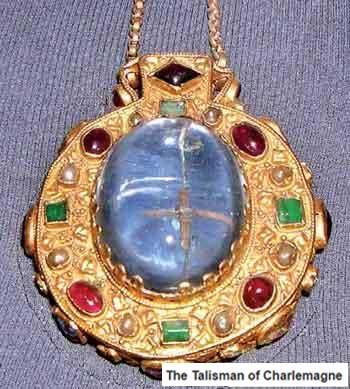 I love gems that have got sort of mysterious stories we'll never quite know the answers to, because you can spend your life researching, but you've also got that freedom of imagination. The truth is: it was a beautiful, big pendant that the Holy Roman Emperor Charlemagne had made up with Sri Lankan sapphires. What's in it today is a 190-carat light blue Sri Lankan cabochon sapphire and he was buried wearing it. The story was he had it made up for his wife by a Middle Eastern mystic to make sure that she would stay in love with him forever. He gave it to her and apparently their marriage was very happy. When she died, he continued to wear it and was buried with it. The grave was opened, and it ended up being given from Napoleon to his consort, Josephine. Sri Lankan sapphires have great power and magic.
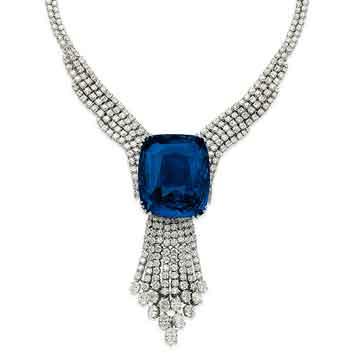
The Blue Belle of Asia – a 392 carat cushion shaped sapphire – which sold for $17 million at auction – was found in Pelmadulla.
I was in Pelmadulla the day before yesterday. There are very famous mining areas around the region of Ratnapura in Sri Lanka. This sapphire was found in 1926, and in 2025, nearly 100 years later, I'm back in the same mining region - exactly where it was originally discovered.
Speaking of another serendipitous situation, one of the most “precious” anecdotes is how gems led you to Bentota, the same spot your grandfather had been in during the war. Now that is precious.
Well, I've always had this feeling that I've loved Sri Lanka, and I just put it down to human taste, and, you know, feeling that you're happy in a wonderful country. I've been coming back, and coming to the mines, for many years. I've brought students on field trips, and I've learned about the sapphires of this country and have great friends here.
 I was actually working on my book during COVID lockdown, and I had all this history about Sri Lankan sapphires. I was in my uncle's house where I found a chest of letters my grandfather had written during the war, that no one had read. He was an army officer in the war in the 1940s. As I was reading the letters, suddenly words - all the quite unusual gem places I traveled to around the world started coming off the page.
I'd been to Northern Burma - Mogok, which is where the land of rubies is - very few people get to go. He'd been there and I had visited his army barrack house!
In Bentota, I went back, and I found the rest house that he would have stayed at in the 40s. It's been turned into the Cinnamon Bentota Beach Hotel. I found the tree he would have sat next to, drinking his pink gins at the end of the day in 1944. He was exactly the same age in Bentota as I was when I discovered all of this. Goose bumps all around. I have a feeling my grandfather set me on a path and I'm walking in his footsteps, in my search of sapphires.
--------------------------------------------------------
Helen writes: “More than any other gemstone, sapphires narrate the undulations of life: the low hum of frustration, moments of outrageous fortune, and the rare interventions of what can only be described as destiny.” Let’s hope that this opportunity in the gem trade becomes another facet of Sri Lanka’s overall growth, allowing it to shine as brightly as it truly deserves.