 Rishini Weeraratne
 Reply To:
Name - Reply Comment
GLOBAL LOCAL BY RISHINI WEERARATNE
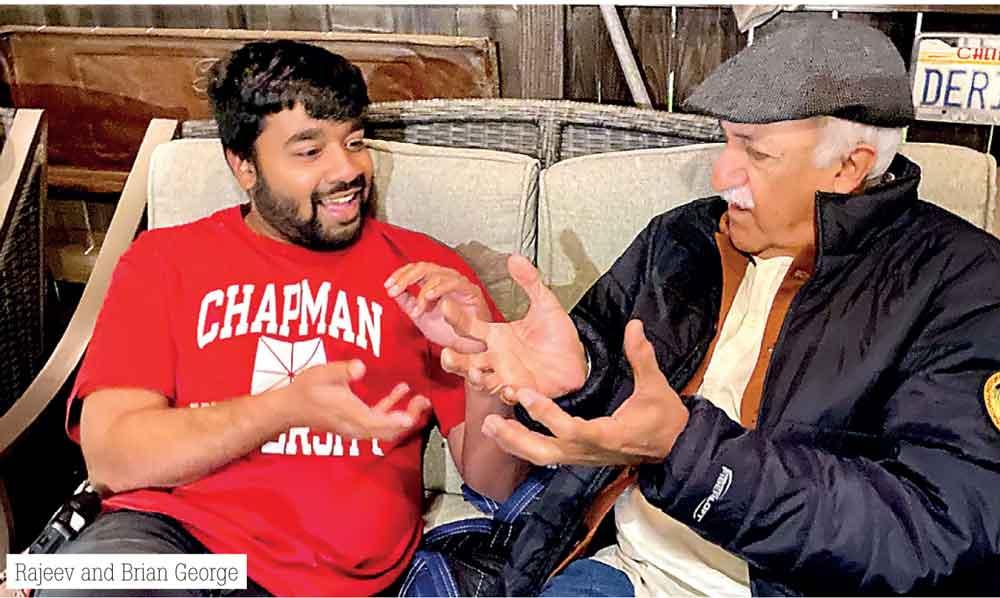
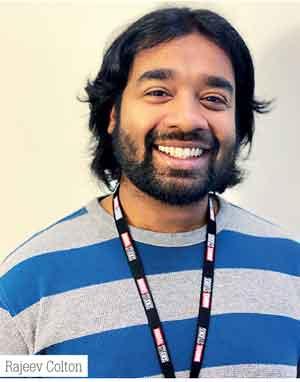
 Rajeev Colton is a dynamic and trailblazing filmmaker whose passion for storytelling transcends cultural boundaries. Born in Sri Lanka, Rajeev’s journey into the world of cinema was driven by a profound love for film and a desire to share unique South Asian narratives with the global audience. After honing his craft at Evangel University, where he earned a Bachelor of Fine Arts in Film, Rajeev furthered his expertise with a Master of Fine Arts in Producing for Film and Television from Chapman University. His career spans a diverse range of roles, from being a Video Producer for YAMU TV in Sri Lanka to working with some of the biggest names in Hollywood, including Marvel Studios and Proximity Media, where he collaborated with industry giants like Ryan Coogler and Asghar Farhadi. Rajeev is committed to elevating Sri Lankan cinema, striving to bring authentic, nuanced South Asian stories to the global screen. His work is not only a testament to his skill as a filmmaker but also reflects his dedication to fostering cross-cultural dialogue through film. With a unique blend of international experience and a deep connection to his Sri Lankan roots, Rajeev continues to pave the way for future generations of filmmakers from Sri Lanka and beyond.
 Can you share a bit about your early life in Sri Lanka and what sparked your interest in filmmaking at such a young age?
I was born in Colombo, spent part of my childhood in Kandy, and then moved back to Colombo when I was nine. As the middle child of three, I grew up in a Christian household with an older sister and a younger sister. My passion for filmmaking started early; watching Jurassic Park at the age of six completely captivated me, and it remains my favourite film to this day. Thanks to my amazing parents, who had an extensive VHS collection, I was exposed to a wide range of Hollywood films, which only deepened my love for the industry. While I did watch some local TV shows (Always Breakdown, Dhamini, and Koppi Kade), I wasn’t particularly drawn to Sri Lankan cinema. So, to me, the most logical path to pursuing my dream was to eventually make my way to Hollywood and work alongside the greats!
Growing up in Kandy, how did your environment shape your creative aspirations?
I have a deep love for Kandy and cherish the time I spent growing up there. It was the place that laid the foundation for everything I’ve pursued in my life. Growing up in the ’90s, before the internet and streaming became widespread, my entertainment came from my imagination, playing with my sisters and friends, and simply making the most of the world around me. Looking back, I see it as a truly God-given environment, one that nurtured my creativity and shaped the way I see storytelling. Those early experiences continue to inspire the work I do today.
What role did your family play in nurturing your passion for cinema?
My family’s role in nurturing my passion for cinema was a mix of both pushback and support. The pushback came from the uncertainty of filmmaking as a career, especially in Sri Lanka, where it wasn’t seen as the most stable or conventional path. There were understandable concerns about financial security and long-term prospects.
At the same time, they supported me in their own way. They saw how much I loved filmmaking and how dedicated I was to it. It wasn’t until I started applying for college that I realized their scepticism had actually been a test, to see if I was truly committed. If they were going to invest in my future, they needed to know I was in it for the long haul. That realization completely shifted my perspective. What I once saw as resistance, I came to understand as tough love. They went from being my biggest critics to my biggest supporters, championing my dreams while keeping me grounded in reality.
 How has your Sri Lankan heritage influenced your storytelling style and perspective as a filmmaker?
As a writer, you always draw from what you know; your lived experiences inevitably shape the stories you tell. No matter how different a film’s plot may seem from a filmmaker’s personal life, there’s always a piece of them within it. I’ve recently learned to fully embrace that truth, especially when competing on an international stage. My Sri Lankan heritage is an integral part of who I am, and I see it as both a privilege and a responsibility to bring that perspective into my work. Given the profound influence that cinema has on audiences, I feel a deep obligation to represent my culture authentically, to reflect not just the beauty of Sri Lanka, but also its complexities, contradictions, and untold stories. While I know that one day, I’ll be ready to co-produce and take on more international projects, right now, I feel drawn to home. There are so many Sri Lankan stories that deserve to be told, and only we, as Sri Lankans, can truly give them a voice.
Why did you choose to pursue a Bachelor of Fine Arts in Film at Evangel University, and how did that experience shape your career?
When I set my sights on becoming a filmmaker, I explored the different paths available to me while living in Sri Lanka. But to achieve the level of quality I admired in Hollywood’s greatest producers, writers, directors, and actors, I knew that attending film school in the U.S. was the right step for me. Evangel University wasn’t initially on my radar, I hadn’t associated it with film school, but when I was offered a generous scholarship that made studying in the U.S. possible, it became the clear choice. Looking back, it turned out to be exactly what I needed. Evangel is a small Christian liberal arts university in Springfield, Missouri, with a strong, focused film and theatre program. The professors there, especially Gabriel Mays and Glenda Mohr (who remain mentors and feel like family), played a huge role in shaping my journey. They not only laid the foundation for my craft but also guided me toward my specific passions within film, TV, and theatre; all while supporting me through their prayers and encouragement. I’m incredibly grateful for my time at Evangel and proud to be an alumnus.
What motivated you to continue your education with a Master of Fine Arts in Producing for Film and Television at Chapman University?
After graduating from Evangel, I returned to Sri Lanka, equipped with my undergraduate degree and eager to dive into the industry. I started working at YAMU TV as their first video producer. While the experience was rewarding, and I built lasting friendships with former colleagues, I realized I wasn’t truly fulfilled. The content I was producing, focused more on commercial work rather than cinema or TV, didn’t align with my deeper creative aspirations. Acting had always been my dream, but during this time, I also discovered a strong passion for producing and writing.
It became clear that if I wanted to grow and pursue the kind of work I truly desired, the next step was to pursue a Master of Fine Arts in Producing for Film and Television. I felt that attending a top film school would give me the tools and opportunities to take my career to the next level.
 How was your experience working as a Teaching Assistant to Asghar Farhadi, and what did you learn from him?
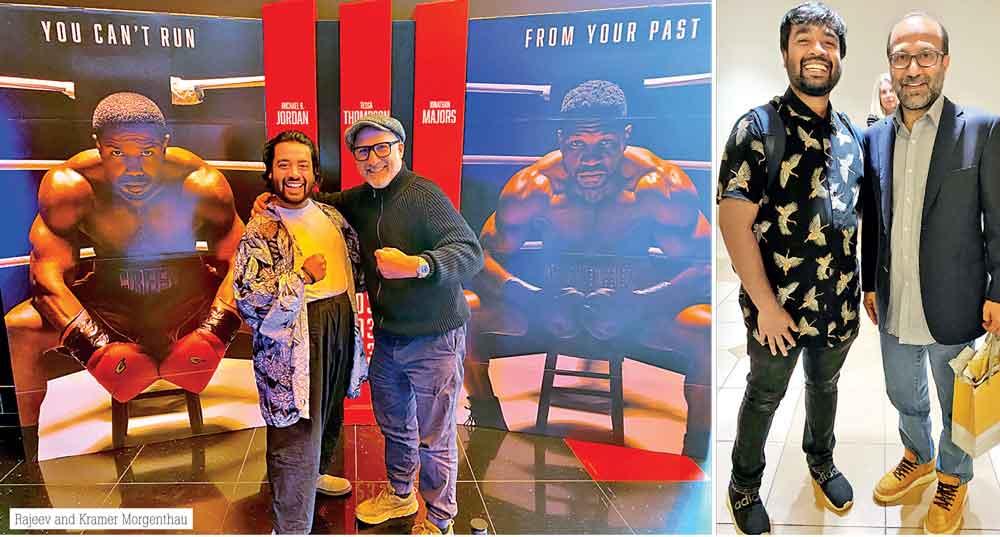
Where do I even begin? The opportunity to work as a Teaching Assistant to Asghar Farhadi came a few semesters into my program, which gave me enough time to familiarize myself with his work and research. Farhadi is an incredibly prolific and gifted storyteller, and his body of work, along with the accolades he’s earned, firmly establishes him as one of the best filmmakers in the world. This experience is one I will forever cherish, and I am deeply grateful to Dean Stephen Galloway for selecting me for the role. While I gained countless insights during that time, there are three key takeaways I hold most dear:
1. Trust your instincts and spirit: By the time I worked with Farhadi, I had made a few shorts, learned from my mistakes, and gathered a wealth of stories I was passionate about. Farhadi emphasized that the best way to figure out how to tell those stories is to trust everything you’ve learned, everything you believe in, and cast your line into the unknown.
2. Your team is your family: Farhadi taught me the importance of protecting your team, allowing them to fully understand and connect with your vision. When your team shares in your passion, it not only improves the film, but it creates a more fulfilling experience for everyone involved.
3. Don’t just tell a story; make a movie: Farhadi is an auteur whose signature style is evident in every film. He’s taught me that while compelling characters and high-stakes situations are essential, it’s the way you tell the story, the visuals, sound, movement, tone, and design, that truly makes a film stand out. Creating your own signature style as a filmmaker is key to making your mark in the industry.
Tell us a bit about your time with Proximity Media and working with Sev Ohanian and Oscar Nominated Ryan Coogler?
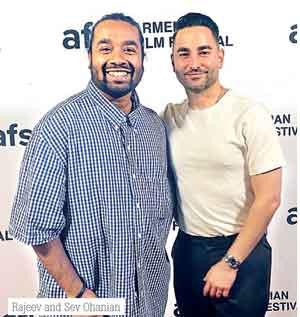
During the same semester I was working as a teaching assistant to Mr. Farhadi and producing my graduate thesis Dadu, I was selected as one of three fiction interns at Proximity Media. It was an opportunity I absolutely couldn’t pass up! Juggling all of this definitely pushed me to refine my time management and prioritization skills. Was I stressed? Absolutely. But I would do it all over again for the incredible experiences and lessons I gained during those five months. At the time, Proximity Media was just three years old and in the middle of filming Creed III. They had one of the best internship programs I’ve ever been a part of. We were constantly reading new scripts, staying updated on industry trends, and sitting in on meetings with the executives, where we got the chance to pick their brains. Looking back, I know working with Proximity Media was a pivotal moment in my career. It provided a much-needed education and opened the door to where I am today. Huge shoutout to Madi Boll, Desi Gallegos, Nick Lopez, and Hannah Baker for their mentorship, as well as the genius of Sev Ohanian (Missing, Searching, Run), who was an incredible leader and inspiration during my time there.
Were there any professors or mentors during your studies who had a lasting impact on your filmmaking journey?
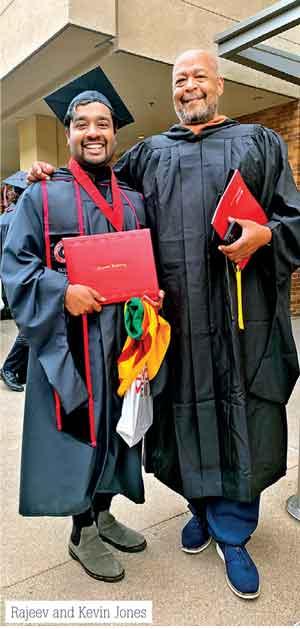
All my professors have had a profound impact on my life and my journey as a filmmaker, and I’m fortunate to still stay in touch with many of them. That said, a few stand out for the way they went above and beyond with their mentorship, besides Gabriel and Glenda, of course. Two that come to mind are Kevin Jones (former VP of Production at Paramount Pictures and former SVP of Production at Columbia Pictures) and Thomas Ethan Harris (Co-Founder and former Director of Programming for the Los Angeles Film Festival and former Director of Programming for the Palm Springs International Festival of Short Films). Kevin Jones, in particular, was a game-changer for me. He’s the man who discovered the script that became Forrest Gump, and he was also the one who believed in me enough to connect me to Captain America: Brave New World. His faith in my potential and his willingness to put himself out there for me is something I’ll always be grateful for.
How did your short films, such as ‘Anirudh’ and ‘Dadu,’ come to life, and what inspired these projects?
Anirudh and Dadu are two incredibly special and personal projects for me. They both came to life during my time at Chapman, where the process typically involved a director sourcing a script or writing one themselves, then approaching a producer to collaborate. I was fortunate enough that God brought Raghav Puri (the writer and director of both films) into my life. He’s a good friend, and I would work with him in a heartbeat. Anirudh tells the story of an Indian actor struggling to land a role in a play because of his “thick South Asian accent,” something both Raghav and I have personally experienced. It was deeply meaningful for us to explore this issue. Dadu, on the other hand, was Raghav’s personal love letter to his grandfather, written in a way that resonates with all South Asians. Both films were born out of our shared experiences and the desire to tell stories that reflect our culture and personal histories.
Tell us about your experience working at Marvel Studios as the Director’s Assistant on Captain America: Brave New World. What is it being part of such a massive production?
Where do I even begin? I truly think I’ll always view my life in two parts: Rajeev before Captain America: Brave New World and Rajeev after. Working on a massive studio film like this was the dream of my younger self. To have reached that level, gained so much knowledge, and now be able to build on that experience as a Sri Lankan filmmaker, it’s a turning point in my journey.
Landing the job right after film school felt like going from a regular swimming pool to the Olympic diving boards. But none of this would have been possible without the guidance, support, and belief from Julius Onah, one of the greatest filmmakers and bosses I could ever hope to work with. He was instrumental in helping me carry out my duties while fostering a great working relationship, maintaining my reputation, and now having a genuine friendship with everyone involved in the film. Being on a huge studio film set is everything you could dream of and more. The sheer scale of the production, the number of people involved, the complexity of the sets, cameras, trailers, props, costumes, seeing how film magic comes to life right before your eyes is still something that amazes me. And Marvel Studios operates at such a high level, given the entertainment titan it has become. It was an experience that truly opened my eyes to the craft and scale of filmmaking on this level.
How do you balance your work between independent projects and big-budget Hollywood films?
Captain America: Brave New World has been the only big-budget Hollywood film I’ve worked on so far, but even while working on such a large-scale production, I knew it was important to prepare my own slate of projects for when the time came to produce my own work. We filmed Monday through Friday, with weekends off, and during that time, I’d use my weekends to focus on writing and developing my own projects, all while doing some personal prep work for Julius. Balancing independent projects with big-budget films is more manageable when you’re a producer, mainly because a lot of the work is carried out by your team, writers, directors, casting, etc. I’ve been fortunate to work for a boss and a studio that not only encouraged this work-life balance but also supported us in pursuing our own projects outside of the studio’s big productions. This environment allowed me to keep my focus on both the Hollywood experience and my personal creative aspirations.
As a young South Asian filmmaker, what unique challenges have you faced in the Hollywood movie industry?
As a young South Asian filmmaker in Hollywood, I’ve faced some unique challenges, but I’ve also seen opportunities for growth. Hollywood, as an international storyteller, has an openness to seeing, learning about, and connecting with other worlds and cultures. But at the same time, there’s still a struggle to fully grasp and understand the depth of these cultures and the choices made within them. From an acting perspective, things like mannerisms, accent, and physical appearance play a significant role in determining what roles you might land. I truly believe that Hollywood’s approach to diversity often revolves more around accent than colour. For example, many films with characters from different cultures (like Luca, Raya, and the Last Dragon, or Furiosa) tend to have characters with Western accents because it’s easier for mainstream audiences to digest, and therefore easier to sell. On a positive note, bigger studios have become more open to producing and acquiring international content, especially when the stories have universal themes and are polished to a high standard. Films like Parasite, Squid Game, and Everything Everywhere All at Once have shown that there’s more hope than ever for seeing truer diversity in mainstream projects and platforms. When it comes to storytelling, I’ve found that people in Hollywood are generally open and excited to hear fresh perspectives, especially when the concept is original and has a strong, unique signature. Movies, in my opinion, have two audiences: the general audience and the filmmaker audience. Both have different levels of openness, tastes, and preferences. While one influences what gets made, the other plays a major role in determining whether the project succeeds or fails.
Have you experienced any stereotypes or biases in the industry, and how did you navigate them?
I can only speak to my experience in America, and honestly, I haven’t encountered much in the way of stereotypes or biases. If people held any biased perceptions of me or my work, it was never brought to my attention. I think this speaks to where Hollywood is today, more open and ready to listen. For example, Julius Onah, who is Nigerian-born and moved to the US at a young age, hired me not because of our shared immigrant background but because of our mutual love for cinema. That’s what we bonded over from the start, and as time went on, conversations about our upbringings, cultures, and family naturally emerged. The same has been true in my work on projects like Anirudh, Dadu, and others during college.
One of the reasons I love the film industry is that it doesn’t matter where you come from, all that matters is your passion and the quality of your work. That said, there are some industry-specific dynamics, especially related to how the American government structures hiring processes. Studios often favour local talent first, because it’s simpler and less bureaucratic than bringing in an international hire. But this doesn’t mean it’s an insurmountable barrier; it’s just another challenge that can be navigated. And there’s always a way to reach your dreams! When it comes to acting, I think some restrictions exist, but those tend to depend on the project’s vision and the creative team. If you find yourself in a situation where you’re not being considered for a role, the best thing to do is find or create projects led by creatives who see and understand your potential. We all have roles we dream of playing, but the reality is that producers, directors, and casting directors make decisions based on a variety of factors. It’s important not to take it personally. The good news is there is always an Oscar-worthy role for everyone, it’s just a matter of finding or creating the right opportunity!
What does representation mean to you, and how do you aim to bring more South Asian stories to the global screen?
I love this question! For me, representation in film and TV can be broken down into two types: visual and soul. Visual representation is important, it’s always great to see someone who looks like you, and even better when they come from your own country. It shows that people from our backgrounds are out there, talented, and deserving of the spotlight. However, the most crucial type of representation for me is soul, the deeper connection, and the universal themes we can all relate to. When I was in college, the topic of Disney would often come up, and people would assume that, of course, I related most to Aladdin. But the character I identified with most, ironically, was Peter Pan. On the surface, Aladdin dreamed of a grand life and love, while Peter Pan struggled with change and chose to never grow up. While Aladdin may have looked like me on the outside, it was Peter Pan who mirrored me on the inside. The truth is, the audience always relates most to the character whose soul resonates with theirs, someone who shares their struggles, wants, needs, and traits, regardless of their appearance. This is how I aim to bring South Asian stories to the global screen, by focusing on the shared, universal human experiences, while also celebrating Sri Lankan culture and voices. I want to show our characters through a lens that reflects not just our background, but the universal emotions and connections that everyone can understand.
How do you hope to inspire other aspiring South Asian filmmakers who want to break into Hollywood?
I hope to inspire other aspiring South Asian filmmakers by being a living example that, it is possible, dreams really do come true! My message is simple: dream big, dream strong, and never give up. My faith in God has been a huge part of my journey. I’d be lying if I didn’t acknowledge how trusting in Him and nurturing that relationship through my life and work has played a significant role in opening doors and creating opportunities for me. From the age of 6, I’ve wanted to do what I’m doing now. It’s not an overnight success, it takes time, effort, and a lot of persistence, but if you hold onto that faith and your dream, I promise you, you will get there!
You’ve expressed a desire to elevate Sri Lankan cinema. What specific projects or collaborations are you planning in this regard?
I’m thrilled to be working on some exciting projects that aim to elevate Sri Lankan cinema. For updates on these ventures and future collaborations, be sure to follow Malla Productions on Instagram and Facebook, more details will be shared very soon!
 Can you share your ultimate dream as a filmmaker? Is there a particular genre or story you are eager to explore?
My ultimate dream as a filmmaker is to create impactful movies that resonate universally, offering messages of hope, unity, and triumph. At the core, I want to make my younger self proud, knowing that his passion and dreams grew into something meaningful, touching lives around the world. I have a special love for ‘coming of age’ stories and, more recently, true stories. There’s so much power in narratives rooted in real experiences. I’m drawn to stories that are both entertaining and deeply human, with themes that are grounded in principle, faith, and universal truths. While I love the classic hero’s journey, I’ve also developed a fascination for films with a naturalistic aesthetic, focusing on characters living their lives in a more subtle, yet profound way. It’s those stories where something quietly shifts, for better or worse, that I’m particularly excited to explore.