 Rishini Weeraratne
 Reply To:
Name - Reply Comment
 By: Rishini Weeraratne
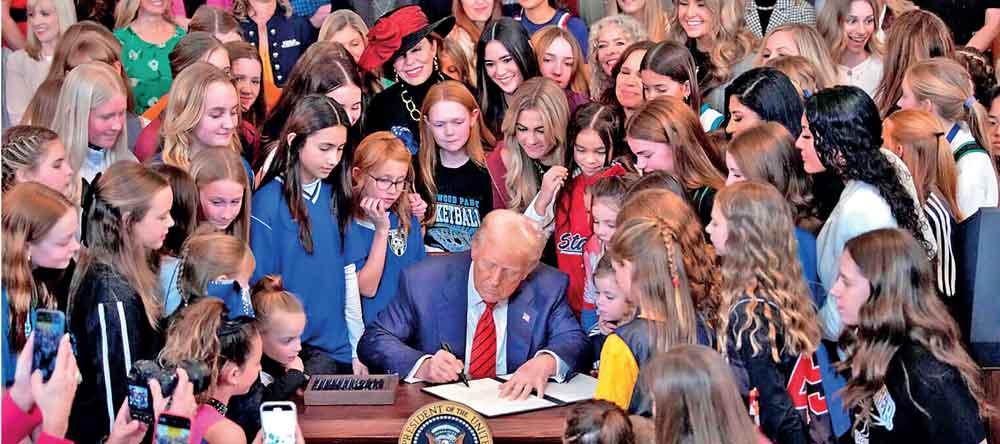
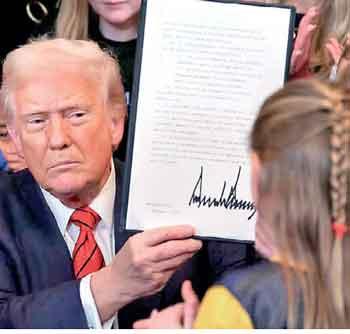
In a bold move that has sparked national debates and fervent reactions across the political spectrum, former President Donald Trump signed an executive order banning transgender women from participating in women’s sports. This decision, which prioritizes fairness and safety for biological women in athletic competitions, comes as a response to growing concerns about the integrity of women’s sports in the face of transgender athletes who may have physical advantages. This executive order has been hailed as a landmark decision in the ongoing fight for women’s rights, particularly in the context of ensuring that biological women have equal opportunities to compete on a level playing field. The decision to ban transgender women from competing in women’s sports has been met with approval from various women’s advocacy groups, athletes, and political figures who argue that the move is necessary to safeguard the integrity of women’s athletics.
 Women’s Rights and Safety at the Forefront
Riley Gaines, a former NCAA swimmer and a prominent advocate for women’s sports, has been a vocal critic of the inclusion of transgender women in female sports. As a passionate defender of fairness and equal opportunities for women, Riley has repeatedly emphasized the risks that transgender athletes pose to the safety of biological women. She argues that transgender women, who were born male and transitioned later in life, often have physical advantages over their female counterparts due to factors such as muscle mass, bone density, and cardiovascular capacity. The participation of transgender women in women’s sports has led to some highly publicized controversies. One notable example is Lia Thomas, a transgender swimmer who dominated the NCAA women’s swimming championships. Many female athletes voiced their concerns over the perceived unfairness of Thomas’s participation, arguing that their performance was not reflective of a level playing field. Riley alongside other women’s rights advocates has consistently argued that allowing transgender women to compete in women’s sports undermines the hard-fought victories and achievements of female athletes. In a world where female athletes have long battled for recognition, resources, and opportunities, the presence of transgender women with physiological advantages raises serious questions about the future of women’s sports.
NCAA Adjusts Policy in Response to Executive Order
Following President Trump’s executive order, the NCAA (National Collegiate Athletic Association) made significant adjustments to its policy regarding transgender athletes. The governing body of college sports announced a revised policy that aims to ensure fairness while maintaining opportunities for transgender athletes. The new policy mandates that transgender women must undergo a testosterone suppression regimen for at least one year before competing in women’s events. This adjustment reflects a growing recognition of the challenges posed by the inclusion of transgender athletes in women’s sports, especially in high-performance environments like college athletics. While the NCAA’s revised policy is seen as a step toward balancing inclusivity with fairness, it has not been without its own controversies. Critics argue that the testosterone suppression requirement is not enough to level the playing field and that the physical advantages of transgender women in sports cannot be fully mitigated through hormonal treatment alone.
The NCAA’s decision to revise its policy comes amid increasing pressure from women’s sports groups, athletes, and advocacy organizations who have raised concerns over the impact of transgender athletes on the integrity of women’s sports. The executive order signed by President Trump has further intensified the debate, drawing attention to the need for clearer guidelines that prioritize fairness and safety for female athletes.
The Politics of Transgender Rights in Sports
The debate surrounding transgender women in sports is not just a matter of fairness but also a political issue that has become a focal point in the broader culture wars. Supporters of transgender rights argue that the inclusion of transgender athletes in women’s sports is essential for upholding the dignity and rights of transgender individuals. They emphasize that sports should be inclusive and accessible to all people, regardless of gender identity. On the other hand, proponents of the executive order, such as President Trump and his allies, view the move as a necessary step to protect the rights of biological women. They argue that women’s sports were established to provide women with the opportunity to excel in athletics, and allowing transgender women to participate would compromise that mission. For many women’s rights activists, the issue is clear: biological women deserve a fair chance to compete in sports without being at a disadvantage due to the inclusion of transgender women.
A potential solution could be the introduction of a third category in sports competitions, allowing transgender athletes to compete against one another or with those who choose to participate in this category. This would avoid placing transgender athletes in the women’s category, where they might have physical advantages, and protect the fairness and safety of biological women athletes. This approach would create a more inclusive environment while preserving the integrity of women’s sports.
Trump’s decision to sign the executive order banning transgender athletes from women’s sports reflects his broader political stance on issues of gender and women’s rights. The former president has long positioned himself as a defender of traditional values, and his executive order aligns with his broader approach to gender and social issues.
A Step Toward Protecting Women’s Spaces
In addition to supporting women’s sports, the executive order reflects a growing movement to protect women’s spaces more broadly. From locker rooms to shelters, the inclusion of transgender women in women’s spaces has raised concerns about safety and fairness. Critics argue that biological women should not have to share these spaces with individuals who may have different physical characteristics, particularly when it comes to issues of privacy and security. The executive order banning transgender women from participating in women’s sports is a reflection of this broader concern about the erosion of women’s spaces. By taking this step, President Trump has shown his commitment to ensuring that women’s rights are protected in the face of changing social norms and policies.
The Future of Women’s Sports
As the debate over transgender athletes continues to unfold, the future of women’s sports remains uncertain. While the NCAA’s revised policy and President Trump’s executive order mark significant steps toward protecting the integrity of women’s athletics, the issue is far from resolved.
As more states and sports organizations grapple with the question of transgender inclusion, the conversation will likely continue to evolve. For now, the focus remains on ensuring that women’s sports remain fair, safe, and equitable for biological women. Advocacy groups and female athletes like Riley Gaines will continue to push for policies that protect the rights of women and ensure that biological women are not side-lined in the fight for athletic opportunities. The decision to ban transgender women from women’s sports is a crucial moment in the ongoing struggle for women’s rights, and it signals a growing recognition of the need to protect the integrity of women’s athletics in an increasingly complex and diverse world.
In conclusion, President Trump’s executive order banning transgender athletes from women’s sports is a victory for women’s rights advocates who are determined to preserve fairness in athletic competition. The order, along with the NCAA’s revised policy, represents an important step toward ensuring that biological women can continue to excel in sports without facing unfair competition from transgender women. As this issue continues to evolve, it is clear that the fight for women’s rights in sports is far from over.