Reply To:
Name - Reply Comment
 By Sonia Dandona Hirdaramani
Helen Molesworth is an esteemed expert in the gem and jewellery industry, with an extensive international career spanning commercial, academic, and curatorial roles across Europe and Asia. Over a decade as a jewellery specialist for Sotheby’s and Christie’s in London and Geneva, she has handled and valued historically notable gems and notable collections, including the private jewellery collection of HRH Princess Margaret. Currently, Helen serves as the Senior Jewellery Curator at the Victoria and Albert Museum in London. Precious: The History and Mystery of Gems Across Time, was published by Penguin in May 2024.
Sri Lanka is often referred to as ‘island of gems.’ When you think of Sri Lanka, besides sapphires, what stones do you think of?
Yes, it has been known as Ratna Dweepa. For me, as a jewelry historian, I know that it is a very historic island with myths that go back to the stories of the Old Testament, with King Solomon and the Queen of Sheba giving gifts of gemstones from Sri Lanka – millennia-old stories. I've been to mines where they produce moonstone, peridot, chrysoberyl, garnet, amethyst, or spinel. Spinel is very important to Sri Lanka. It's a rich and beautiful gem-varied country.
Do you have a favorite?
I am partial to sapphire. I love the Sri Lankan sapphires so that's probably the one I feel most emotionally tied to.
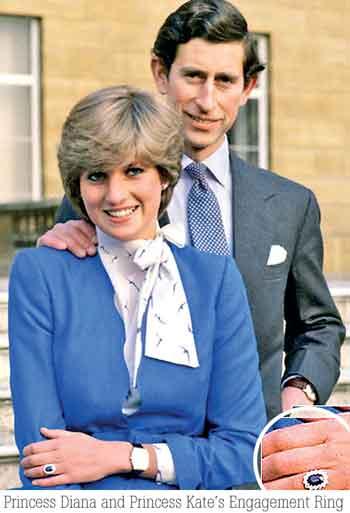 In your opinion, what sets Sri Lankan sapphires apart from those found in regions like Kashmir or elsewhere?
Part of it is the history. I love that this is a country that's been mining and trading for 2000 years consistently, which we can't say about any other location for sapphires in the world. It's not just that; the sapphires are also wonderful quality and large. The largest sapphires in the world, historically have always come from Sri Lanka. Some of the stones that I've handled have been 2/3/400 carats, whereas the largest ones from Kashmir are going to be in the 10s and 20s, maybe 50s, if you're lucky. Sri Lanka has large, high quality historic gem material, which means it's unique.
We always hear about the blue sapphire, but in your book, you highlight a beautiful golden yellow one. Do you think the colored sapphire market is undervalued, or are there specific-colored sapphires that deserve more recognition?
Of course, people hear the word sapphire, they think blue, because that is the variety name for the blue version. But every single color of the rainbow is the corundum family.
So red sapphire is ruby, but you have orange and yellow and pink and purple and green. You've got this whole rainbow of color options in the sapphire family.
There is a very famous one that comes from Sri Lanka, the Padparadscha sapphire, which is this orange-y pink-y color, but it's famously sort of lotus-colored, and from the island. That seems much more popular in recent days, which I'm really happy to hear about. But I think there are other colors, like yellow, which has become much more popular recently. People have loved yellow sapphires for centuries, but probably my favorites, and I think this is where we we're moving into much more subtle appreciation of gem colors, are these slightly green-y and blue-y, purple-y colors. I love these kind of mixed color gemstones, where you see the two tones together.
Since you do wear a scientist hat as well, can you explain how Sri Lankan sapphires are available in all colors of the rainbow?
I'm a total gem geek and I am a bit of a scientist. It’s a bit like when an artist has a palette, and they mix colors. You know that if you mix yellow with blue, you get green. You take two colors that have got coloring elements in them, and it's the same with sapphires. You have certain tiny trace elements chemically in the crystal structure which create a color. In the case of blue, it's iron together with titanium. In the case of different colors, you might have a certain trace element that will be one color, and you mix them together and you get another. Iron, chromium, even vanadium, create purple colors; really it’s a scientific mix.
I personally feel, Sri Lankan star sapphires, with their rarity and the fact that they are difficult to replicate, especially in an era of lab-grown gems, seem poised to increase in value over time. Do you agree?
I also think that's a really good place to be looking. One of the first stones I bought was a beautiful Sri Lankan style sapphire of 10 carats, because I exactly feel this way about them. They are hard to replicate in a lab because the star doesn't look natural, and it's created in nature by these very fine inclusions that are all aligned in a certain way, so the light shines off them to create this star.
You’re right and I think they've been undervalued for many years, because people haven't understood that they're so special in the way this gem is formed. And of course, if you think about a star, it has all these lovely associations with it.
If someone were starting or adding to their collection, is there a particular Sri Lankan gem you would recommend?
There are so many things I would love to have, so I have lots of answers to that, but I do think sapphires are a good place to start. My tip for people is always buy what you love because firstly, you need to love it, because that's going to give you joy, right? Secondly, if you love it, someone else is likely to, which means you've probably got a good start for a value base. Having said that, I can also look at the market, financially and historically, and I can see that there are also some very interesting gemstones which have been under-recognized for a very long time that have started to really become popular in the industry. Spinel and garnets, they’re coming up in all these lovely colors. I think there's a real potential for these other-colored gemstones.
This all bodes well for Sri Lanka?
Indeed, it does.
You explained that sapphires are more durable than say emeralds? Less likely to crack. Is that right? If so, I hope consumers keep this in mind; it’s good for the Sri Lankan market!
We score things in gemology on something called the Mohs scale for hardness, which is from 10, at diamonds, and goes down to one; sapphires are at nine. It's the second hardest gem material that we have, which means it doesn't scratch at all easily, only by sapphire or diamond. You know, many of our iPhone cover cases are synthetic sapphire because it's so durable, better than glass, right?
There's also the matter of whether something is tough. Sapphires are a very durable stone, so it doesn't break so easily, which emeralds can do because they have inclusions. It's to do with how tightly packed the crystal structure is.
When reading these beautiful stories about the stones, their provenance, and the fact that they are naturally sourced and finite, I can’t help but wonder: do you think the colored gemstone market will be impacted as much as the diamond industry by lab-grown stones?
Well, I think this is an interesting question. I've spent quite a lot of time studying the history of gems, because if you understand history, you can understand the present, and you can potentially look at the future.
I like looking at this diamond question in the context of rubies, sapphires, and pearls at the turn of the 20th century. We started to see big moves to synthesize rubies, sapphires, and pearls. What happened was rubies and pearls, in particular, became very commercially available in their cultural and synthetic form in the 1920s; ruby, sapphire and pearl prices collapsed, compounded by the big depression in America.
Today, if someone says “natural pearls or natural rubies” to me, I think most expensive gems in the world, so the prices have completely rebounded, because there are two different markets. I think we are probably going to look at that with the diamond market – there will be a total split between buying natural diamonds and buying the cultured or the synthetic lab-grown diamonds, because people are going to look at those more as costume varieties. The only difference is we have got to make sure that the trade is utterly transparent. You've got to know what you're buying, and diamonds are quite hard to distinguish, but we can, and that's what's important. If somebody gave me a synthetic ruby, I could probably tell you across the room, because they really have a different light to them.
Ethical and sustainability considerations are becoming increasingly important to consumers. From your experience, how does Sri Lanka manage its practices, particularly in the mines, given your extensive visits?
It's one of the reasons I love Sri Lanka, and I love coming to the mines, because you see a country that has mined consistently for centuries in very similar, consistent manners, for reasons of sustainability. When you go to the mines in Sri Lanka, you see a paddy field with maybe a shaft that has been sunken down into it, which, when it's finished, will be refilled and that field will be workable again. Quite often, those mining systems are also cooperatives, where the miners have a share of the find as do the people who lease the equipment, as well as the lease-owners of the land; there is a community approach to mining here.
It's also something where I just feel that if you've had families in the mining business, you want your children and grandchildren to continue. There's been a great push here to ward off the big corporates coming in. I think this idea that, “We’re protecting the land, the people and our future here,” is an important approach to mining for gemstones in general.
What are the key challenges currently facing gemstone miners in Sri Lanka, and, more broadly, the Sri Lankan gem industry?
I think partly because the country is so focused on utilizing sustainable practices, you then have other countries that are doing, not necessarily, not sustainable, but more corporate approaches. You get higher turnover, lower costs, all that you have in any capital open market. You have got those challenges. You've got big miners in African countries where they're mass producing, so you can have a lower cost per-capita. Having said that, I don't worry about it so much because people understand the value of a Sri Lankan sapphire over another sapphire in another country.
For me, and I certainly tell this story whenever I get the opportunity, a Sri Lankan sapphire is historic and sustainable. You've got a gem that is easily distinguishable, because these stones have their own qualities that we can define as geologists, but it also has that emotional impact as well, and that's what adds value in gems.
I think there is a market where more gems are found. You end up with different pricing structures, but there's always one way you end up with the finer and the more valued ones. I’m not so worried about that long-term, as long as people understand in the market how lucky they are to have a Sri Lankan sapphire.