11 Feb 2026 - {{hitsCtrl.values.hits}}
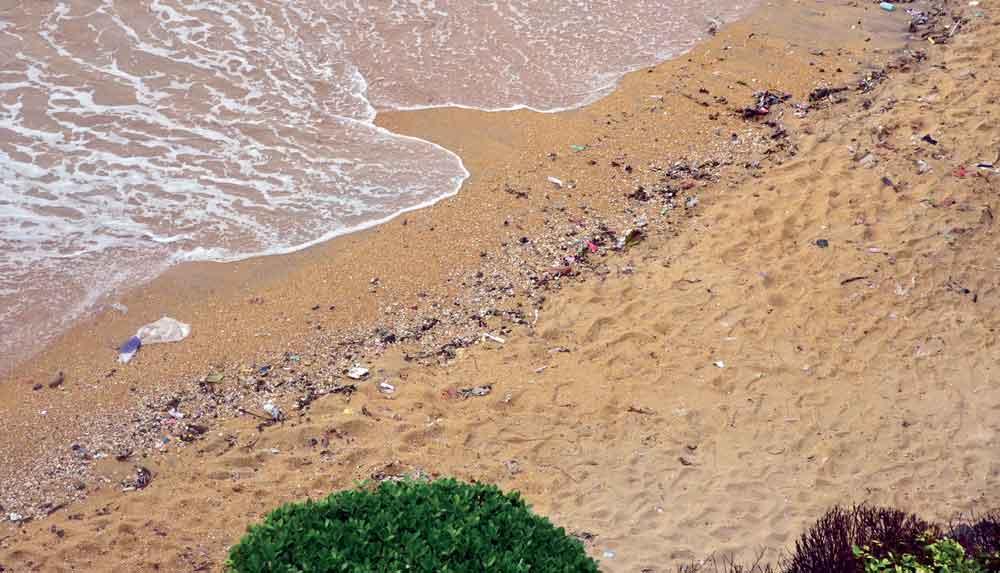
Debris collected along Mt. Lavinia beach
Pix by Kithsiri De Mel
 Lack of infrastructure and ad hoc approaches to waste segregation pose significant challenges
Waste piled up along river banks, canals and lakes is a common sight in Colombo. Despite numerous initiatives taken to mitigate the waste generation crisis in urban cities, lack of infrastructure and ad hoc approaches to waste segregation pose significant challenges.One of the more pertinent issues with regards waste accumulation along water ways is the fact that much of this waste ends up at sea.
Challenges in managing urban waste
According to the Western Province Waste Management Authority (WMA-WP) - a government body that focuses on waste management systems, around 4000-4300 metric tonnes of urban waste is being generated in the Western Province. Around 2000-2200 metric tonnes of this waste is being collected by local government authorities. This includes waste from areas such as Colombo, Gampaha and Kalutara.
“Around 60% of urban solid waste is being generated from the Western Province,” said Nalin Mannapperuma, Director General at WMA-WP. “We have set certain goals with regards to waste collection, segregation, mitigation and management according to the Western Province Municipal Solid Waste Management Master Plan 2021-2042. Therefore it is the responsibility of the WMA-WP and other stakeholders to achieve these goals. The authority has developed various key performance indicators and we have instructed all stakeholder institutions about each of these indicators,” he added.
 We have set certain goals with regards to waste collection, segregation, mitigation and management according to the Western Province Municipal Solid Waste Management Master Plan 2021-2042. Therefore it is the responsibility of the WMA-WP and other stakeholders to achieve these goals
Nalin Mannapperuma, Director General Western Province Waste Management Authority
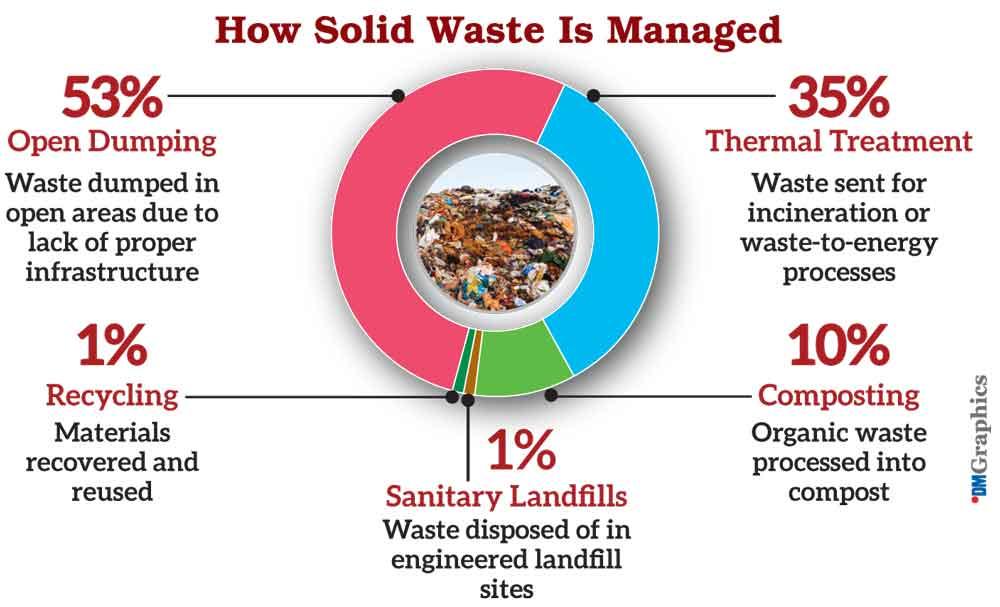
He said that one of the challenges faced is with regards to large amounts of waste being generated in the Western Province. As a result, it’s becoming a challenge to manage this waste due to lack necessary infrastructure. “From the total waste being generated around 10% is utilised for composting purposes, 1% is being recycled, 35% is being sent for thermal treatments, 1% is sent to sanitary landfill sites while around 53% of waste is dumped in the open due to lack of infrastructure. But we are in the process of developing this infrastructure according to the master plan. Another major issue is with regards to land scarcity within the Western Province. For instance we need a big land area to put up a compost plant. In addition, we need more support from people to segregate waste. There’s a possibility of managing waste in places where it is being generated but public support is vital to expedite these practices in an efficient manner,” he further said.
Reducing pollution in waterways
When asked about waste that ends up in the ocean, Mannapperuma said that around 80% of waste generated on land reaches the ocean. “So it’s important that we manage waste generated on land by reducing open dumping and by collecting waste regularly. We have introduced trash traps in many canals and the private sector is quite interested in carrying out these projects. So far we have installed more than 100 traps in canals in the Western province,” he added.
 Amendments are now being made to the National Environment Act No. 47 of 1980 to introduce Extended Producer Responsibility (EPR) principles for plastics starting from PET bottles. The CEA is also in the process of drafting EPR regulations”
Shyamani Periyapperuma, Director General – Waste Management at Central Environment Authority
However, their key message to people is to refrain from dumping waste into waterways. “People living in settlements near canals and rivers need to be made aware of sustainable waste management practices while relevant authorities should carry out waste collection in a regular manner. As such, we are doing our best to mitigate the amount of waste accumulated in water ways,” Mannapperuma underscored.
Progressive policy decisions
Many stakeholders including the Central Environment Authority (CEA) play a key role in expediting efficient waste management practices. Speaking to the Daily Mirror, Shyamani Periyapperuma, Director General – Waste Management at CEA said that the Authority handles the policy implementation aspect while working in collaboration with other stakeholders to manage urban waste. The CEA issued temporary guidelines to manage waste generated in the aftermath of cyclone Ditwah with a focus on handling hazardous, solid, clinical and electronic waste.
 During night time they end up on the shore. MEPA conducts daily cleaning activities on the Mt. Lavinia beach but that alone is not enough. Following discussions with the residents association we have had meetings with CEA, tourist police and other stakeholders and there are certain responses already. We instructed government authorities to do their job properly
Samantha Gunasekara Chairman Marine Environmental Protection Authority
When asked about solid waste accumulation along water ways, Periyapperuma said that certain legislative provisions are being introduced to discourage use of plastics for instance. “Amendments are now being made to the National Environment Act No. 47 of 1980 to introduce Extended Producer Responsibility (EPR) principles for plastics starting from PET bottles. The CEA is also in the process of drafting EPR regulations,” she added.
She further said that due to policy decisions such as the ban on sale of sachet packets, people are now discouraged from taking shampoo packets to a river or lake. “In most instances these sachet packets are dumped in those places, polluting water ways. The waste eventually ends up at sea. The decision on charging a fee for the issuance of plastic bags has also deemed effective. The practice of obtaining plastic bags with handles has significantly reduced in supermarkets, but it may not be so in regular boutiques,” she added.
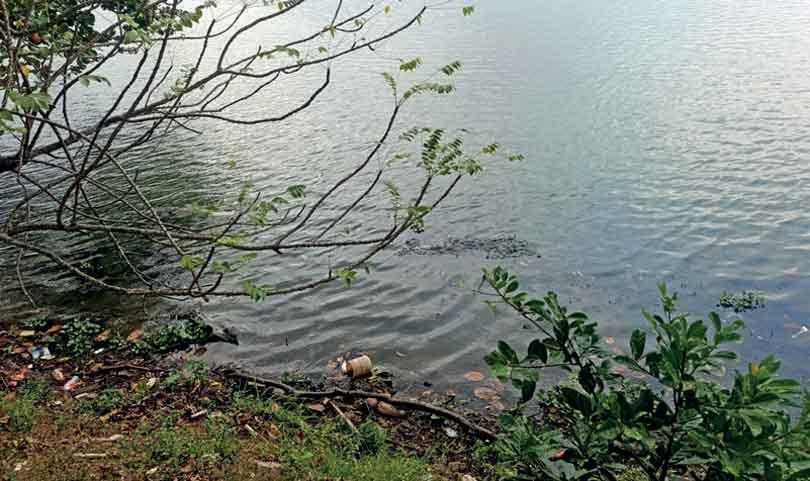
Waste accumulated on the banks of Diyawanna Lake
But even with such policy interventions, waste accumulation remains an issue. The pristine Mt. Lavinia Beach often becomes a victim of marine pollution. Much of the waste accumulated on land is carried to the sea and eventually ends up at the bay area. During our visit we saw plastic waste including gloves, discarded yoghurt cups and ice cream wrappers floating on the beach.
Recently, the Mt. Lavinia Hotel had come under scrutiny for allegedly polluting the beach by dumping waste. But the hotel management denies these allegations. Issuing an explanation, the management said that much of the debris reaches the ocean through rivers, especially during the rainy season and naturally washes back to the shore every day. “This is a continuous environmental issue and not the result of the actions or inaction of any single institution or authority. The hotel’s in-house team carries out routine beach-cleaning operations. However, the corner bay area is more prone to debris accumulation due to natural currents and tides, making visibility of waste more pronounced. This is a recurring and natural occurrence,” the management said.
In February 2025, the government launched an island wide beach cleaning initiative under the Clean Sri Lanka programme. The Marine Environmental Protection Authority (MEPA) is the apex body entrusted with the sole responsibility of preventing, controlling, managing and reducing marine pollution.
Commenting on the situation at Mt. Lavinia beach, MEPA Chairman Samantha Gunasekara said that a majority of land-based garbage is carried to the sea via the Dehiwela and Wellawatte canals for instance. “During night time they end up on the shore. MEPA conducts daily cleaning activities on the Mt. Lavinia beach but that alone is not enough. Following discussions with the residents association we have had meetings with CEA, tourist police and other stakeholders and there are certain responses already. We instructed government authorities to do their job properly. They have to manage land based plastics and garbage that collect in drains in order to control them coming to the sea. We also noticed that the tendency to release sewage into the sea by certain hotels around Mt. Lavinia beach has reduced following these discussions,” he added.
23 Jun 2026 26 minute ago
23 Jun 2026 33 minute ago
23 Jun 2026 36 minute ago
23 Jun 2026 39 minute ago
23 Jun 2026 2 hours ago