01 Mar 2015 - {{hitsCtrl.values.hits}}
 ast week, a rather interesting news story that appeared in an Emirati news portal and picked by local and International media reported that Saudi women who had refused to employe housemaids from Chile and Morocco, since they were ‘beautiful,’ prefer to hire women from Asian countries, including Sri Lanka.
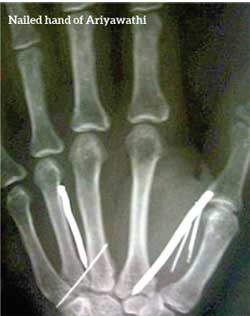
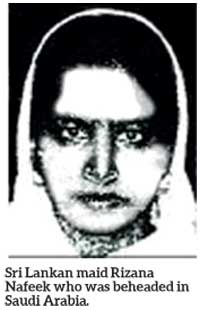
 country which primarily relied on foreign remittanes from our women working in Arab countries under near slave-like conditions. As of 2012, Middle East is the destination for 94 per cent of Sri Lankan foreign workers; 42 per cent of them are housemaids and an additional 22 per cent are of other categories of unskilled workers, according to the Sri Lanka Bureau of Foreign Employment. Of a total of 1.8 million Sri Lankan workers employed abroad, only 25 per cent are skilled, plus another 10 per cent described as professional, middle level and clerical. In 2012, Sri Lanka received US $ 6.4 billion in foreign remittances from Sri Lankans working abroad.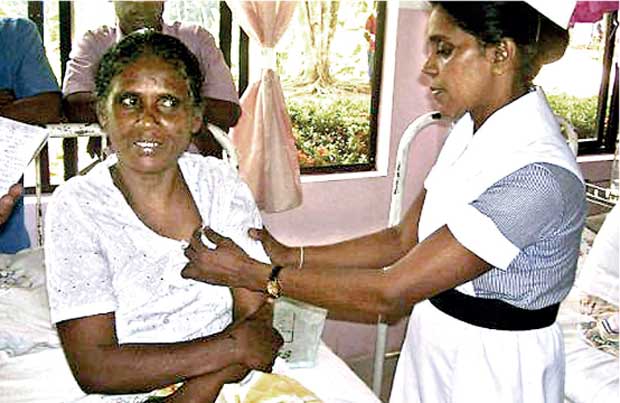
 independence. It was US $ 142 in 1960 and it grew by a paltry US $ 20 by the end of the decade. By the end of the 60’s, South Korea which started from scratch, had already grown four-fold. Another example: Per capita income of Singapore at its independence after the short lived merger with Malaysia in 1965 was $ 516. When it celebrates its 50th anniversary of independence this year, its per capita income would be well over $ 55,000.
 international politics is that countries (at least successful ones) do not take decisions purely driven by idealism; they take decisions that serve their self interests. Our self interest was the uplifting of millions of Sri Lankan lives and transforming our economy. Our interests lie right here, locally, and not in some abstract rhetoric in the form of solidarity with Cuba, or Africa, or Arab nationalism; all of which could have been noble causes (though some later proved to be not so noble), but had little bearing on bettering our lives.
  growth. This is where I cannot help but acknowledge the salient contribution made by ex-president Mahinda Rajapaksa. His regime was corrupt, mildly authoritarian and nepotistic, but, like the East Asian and South East Asian autocrats in the yester era, he put in place infrastructure and made sure investment projects would not be held captives by the self- serving criticism of myriad critics. The new administration should nurture that capital. However, with critics back to lambast every project from highways to a port city, and casinos to private universities, one could only hope that the new administration would not squander this opportunity.
05 Jul 2026 7 hours ago
04 Jul 2026 04 Jul 2026
04 Jul 2026 04 Jul 2026
04 Jul 2026 04 Jul 2026
04 Jul 2026 04 Jul 2026