27 Jul 2026 - {{hitsCtrl.values.hits}}
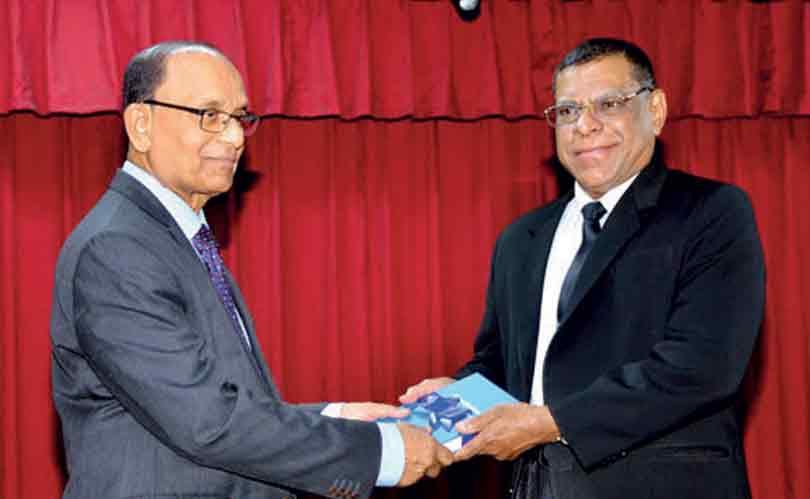
Dr. Jayampathy Wickramaratne (left) presenting a copy of the book to Chief Justice Preethi Padman Surasena at the launch
 A particularly important contribution of Constitutional Conversations is its treatment of the Executive Presidency and constitutional amendment
 I was privileged to be among a distinguished gathering of judges, lawyers, academics and constitutional scholars at the launch of Dr. Jayampathi Wickramaratne’s latest work titled Constitutional Conversations held a few days ago. The occasion marked not merely the publication of another book, but the culmination of decades of dedicated engagement with Sri Lanka’s constitutional evolution by one of the country’s foremost constitutional lawyers, scholars and reformers.
This article is not intended as a review of Constitutional Conversations. Rather, it seeks to engage with the broader themes that emerge from Dr. Jayampathi Wickramaratne’s work and to stimulate discussion on his ideas concerning constitutionalism, judicial evolution, constitutional reform, and democratic governance in Sri Lanka.
|
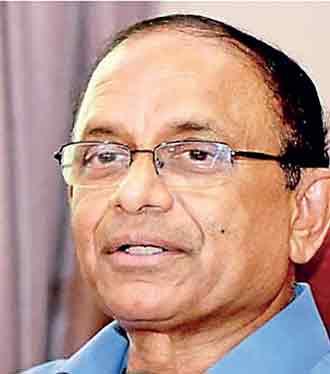
Dr. Jayampathy Wickramaratne |
Reading Constitutional Conversations, one is reminded of both the possibilities and disappointments of Sri Lanka’s constitutional journey. The book is, at once, an account of constitutional developments over several decades and a reflection on the continuing struggle to build a constitutional order founded on democracy, equality, justice and the rule of law.
Addressing defining issues
The book comprises of eleven chapters dealing with constitutional governance in Sri Lanka and developments up to the end of 2025. Its structure closely follows Dr Wickramaratne’s own engagement with constitutional reform over the last three decades. The chapters address many of the defining issues of Sri Lanka’s constitutional discourse, including the Executive Presidency, checks and balances between institutions, constitutional amendments, fundamental rights, devolution and broader questions of democratic governance.
Anyone familiar with Dr. Wickramaratne’s professional life will recognise that this work emerges from decades of direct involvement in constitutional affairs. He has served as a constitutional adviser, participated in constitutional drafting processes and represented the people in Parliament.
Yet what makes this book especially valuable is that it is neither an attempt to justify past decisions nor a memoir of personal achievements. It is a thoughtful, measured and reasoned engagement with constitutional questions. The title Constitutional Conversations aptly captures this spirit: a continuing dialogue about ideas, institutions and the future of constitutional democracy.
An insider’s account
One of the book’s greatest strengths is that it provides an insider’s account of constitutional developments that have often been understood only through public debate or academic analysis. Dr Wickramaratne explains not merely what happened but also how and why particular constitutional choices were made. In doing so, the book complements academic scholarship by providing the practical and political context within which constitutional reforms were conceived and negotiated.
A constitution is ultimately a document “by the People” and “for the People”. Its purpose is not merely to establish institutions of government but to restrain, regulate and hold political power accountable. Constitution-making therefore cannot become the exclusive preserve of politicians, whether in government or opposition. Those who exercise political power are precisely the persons whose authority a constitution must limit.
The experience of many countries demonstrates that constitutions drafted primarily through political bargaining often reflect immediate political interests rather than enduring national aspirations. The process of constitution-making must therefore involve a broader participation of civil society, academics, professionals and citizens, ensuring that legislators give effect to the constitutional will of the people rather than merely shaping constitutional arrangements according to political convenience.
Sri Lanka’s own constitutional history provides important lessons in this regard. The country has more than two centuries of experience in constitutional development. From the Colebrook-Cameron reforms of 1833 to the Donoughmore reforms of 1931, which introduced universal franchise, each stage reflected changing political realities and evolving demands for representation.
The Soulbury Constitution of 1947 provided the constitutional framework for independence and established a Westminster-style parliamentary system. Although criticised for lacking a deeper philosophical foundation and a comprehensive social vision, it provided a framework within which democratic institutions functioned with relative stability until the early 1970s. As G. G. Ponnambalam QC observed during the Queen v. Liyanage proceedings, it was nevertheless an incomplete constitutional arrangement.
The 1972 Constitution transformed Ceylon into the Republic of Sri Lanka and affirmed that sovereignty belonged to the people rather than the Crown. However, the 1978 Constitution introduced a fundamentally different constitutional model by creating a powerful Executive Presidency. Introduced under President J. R. Jayewardene, with limited public participation, it sought to create an effective and stable system of government. Yet the concentration of power in one office created continuing concerns about accountability, institutional balance and the protection of constitutional democracy. As constitutional scholar L. Marasinghe has observed, a constitution is the highest rule system of a state, created by the people for the people, and must respond to the needs and aspirations of society. It cannot simply reflect the interests of those who happen to hold political power at a particular moment.
Treatment of the Executive Presidency
A particularly important contribution of Constitutional Conversations is its treatment of the Executive Presidency and constitutional amendment. Dr. Wickramaratne presents a carefully reasoned argument that the constitutional provisions relating to the office of the Executive President and direct presidential election are not entrenched in a manner requiring approval at a referendum. His analysis engages directly with difficult questions surrounding Article 4 and the sovereignty of the people.
The Executive Presidency has undoubtedly acquired enormous political significance in Sri Lanka’s constitutional culture. Yet political significance should not automatically be confused with constitutional entrenchment. By examining constitutional text, drafting history and judicial interpretation, Dr. Wickramaratne invites readers to reconsider whether the office has been given greater constitutional protection than the Constitution itself intended.
Another notable strength of the book is its comparative perspective. Rather than limiting himself to familiar constitutional experiences such as India, the United Kingdom and the United States, Dr. Wickramaratne draws examples from Finland, Portugal, Uruguay, Costa Rica, France and several other jurisdictions. This reflects both his extensive knowledge of comparative constitutional law and his experience in constitutional reform processes beyond Sri Lanka.
This comparative approach recalls an important tradition in Sri Lankan constitutional scholarship. Dr. N. M. Perera’s doctoral research examined Ceylon’s constitutional development through comparative constitutional analysis and demonstrated the value of learning from the experiences of other nations. Dr. Wickramaratne continues that tradition by showing that comparative constitutional law is not about copying foreign models but about identifying principles that may enrich domestic constitutional development.
A central theme running throughout the book is the importance of constitutional critique. Sri Lanka, like other Commonwealth countries, belongs to the common law tradition where law develops through judicial precedent. Judicial decisions therefore cannot simply be accepted as final statements of law. They must be examined, questioned, refined and, where necessary, reconsidered. Respectful and reasoned critique is indispensable if constitutional law is to remain responsive to justice and changing social realities.
Sri Lankan constitutional law has similarly benefited from comparative reasoning. The development of equality, jurisprudence and the extension of constitutional principles to state-owned corporations demonstrate how foreign judicial reasoning has enriched domestic law. Constitutional systems do not evolve in isolation; they develop through an ongoing dialogue with other jurisdictions.
A central concern of Constitutional Conversations is the protection of democracy from excessive concentration of power. Sri Lanka’s constitutional history demonstrates that overwhelming parliamentary majorities do not necessarily produce constitutional responsibility. The 1972 Constitution, the creation of the Executive Presidency in 1978 and subsequent amendments weakening institutional safeguards illustrate how democratic institutions may gradually be eroded even within formally democratic systems.
The history of constitutional amendments demonstrates the dangers of leaving constitutional change primarily in political hands. Amendments introduced by successive governments have sometimes reflected immediate political interests rather than long-term national objectives. While the Nineteenth Amendment contained important democratic reforms by strengthening checks on executive power, its later dilution demonstrated that democratic achievements cannot depend solely upon the goodwill of those temporarily exercising political authority.
A constitution must not become a tool that politicians reshape according to their ambitions. It must remain a people-centred framework that protects democracy, limits power and preserves the aspirations of citizens.
Dr Wickramaratne argues persuasively that meaningful constitutional reform requires more than isolated amendments. It requires institutions capable of limiting governmental power: an effective Parliament, an independent judiciary, strong constitutional commissions, a professional public service, an independent media and an active civil society.
The book also makes an important contribution to discussions on devolution and pluralism. In a diverse society such as Sri Lanka, the distribution of power is not merely an administrative question but one that concerns equality, inclusion and national unity. Meaningful power-sharing gives all communities a genuine stake in governance and strengthens the foundations of lasting peace.
Perhaps the most enduring lesson of Constitutional Conversations is that constitutional reform is never a single event. It is an ongoing process, a continuing conversation that each generation must renew.
Dr. Wickramaratne reminds us that constitutionalism is ultimately a lived struggle: a continuing effort to secure dignity, equality, justice and accountable government. His book serves both as a record of Sri Lanka’s constitutional journey and as an invitation to continue that journey with greater wisdom, deeper reflection and renewed commitment.
Dr. Jayampathi has once again made an important contribution to Sri Lanka’s constitutional discourse. One hopes that Constitutional Conversations will not merely be read as a record of the past but will stimulate the constitutional conversations that Sri Lanka must continue to have if it is to build a democratic future founded upon constitutionalism, accountability and the rule of law.
27 Jul 2026 8 minute ago
26 Jul 2026 26 Jul 2026
26 Jul 2026 26 Jul 2026
26 Jul 2026 26 Jul 2026