Reply To:
Name - Reply Comment
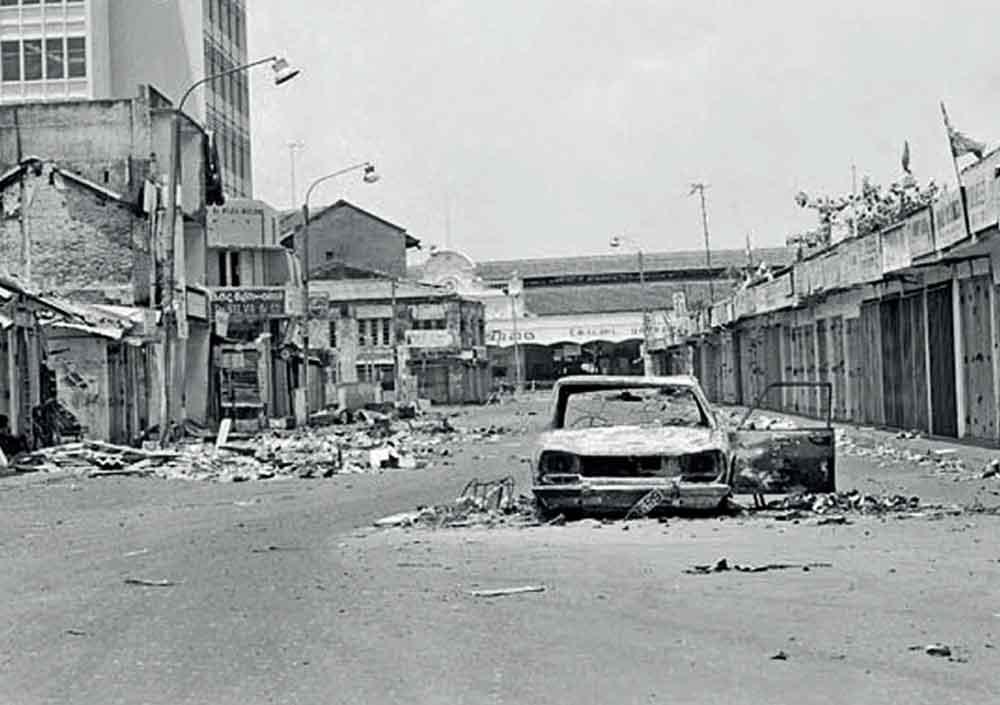
Business establishments, factories and movie theatres run by Tamils were torched, sometimes while the occupants were in them (Courtesy The Guardian UK)
 Exactly 43 years ago, on July 23 1983, a single violent incident in Jaffna shifted the course of Sri Lankan history by a wide angle. It accelerated an armed conflict in the north of the country that was then marked by random, isolated incidents into a full-blown war which became one of the longest armed conflicts in the world.
It also triggered a fresh armed conflict in the south which within two years claimed over 60,000 lives, mainly innocent people. The brutality of the armed forces and vigilante groups created by the same forces during that conflict could be assessed by comparing its death toll with that of the former which ran into just over a hundred thousand within three decades.
Both bloodbaths could have been averted had those power-hungry politicians in power then acted prudently and farsightedly. In fact, it was the government that created the southern conflict – one between the armed forces assisted by vigilante groups, and the Janatha Vimukthi Peramuna (JVP) which had by then renounced violence after their failed insurrection in 1971 to enter into democratic politics.
Thirteen soldiers were killed in Jaffna on July 23, 1983 in a land mine blast followed by gunfire by the Liberation Tigers of Tamil Eelam (LTTE), the most ruthless among half a dozen Tamil armed groups then active in the Northern and Eastern Provinces who were fighting to carve out a separate state for Tamils, within the territory of Sri Lanka.
The southern populace – who were till then used only to news of isolated attacks by Tamil groups that killed one or two police officers or soldiers -- was shell-shocked with the number of soldiers killed, though they became accustomed in the years which followed to hearing news of the demise of Presidents, ministers and commanders of the armed forces, apart from thousands of soldiers. The LTTE killed over 1200 army personnel within two days in 1996 while overrunning the Mullaitivu army camp and between 1500 security forces personnel were killed when the Tamil Tigers overran the Elephant Pass military complex in 2000.
However, with the bodies of the 13 soldiers being brought to Colombo for their funeral on July 24, 1983 hundreds of thousands of people thronged the Capital with emotions spilling over. Something happened somewhere initially which triggered a huge backlash against the Tamils in the city.
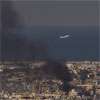
Thousands of houses and vehicles occupied by Tamils and business establishments, factories and movie theatres run by Tamils were torched, sometimes while the occupants were in them. The news flew across the country where similar riots against Tamils broke out, except in the Northern and Eastern Provinces.
The complicity of the ruling United National Party (UNP) was apparent by the inaction on the part of the security forces personnel deployed in the streets. Not a single shot was heard to have been fired or tear gas was used to quell the mobs. 53 Tamil detainees in the Welikada prison were killed in two separate days allegedly by the outsiders and fellow detainees, without any reported resistance from the prison guards or the security forces personnel.
Indian Foreign Minister Narasimha Rao was in Colombo and Kandy to see the carnage which was ongoing for a week. President J.R. Jayewardene who was unheard of for the first four days of arson attacks, killings and looting addressed the nation on July 27 but only to criticise the Tamil leaders for their demand for separate Tamil state and not to warn the rioters. Next day, attacks and looting intensified. Not a single hooligan was prosecuted.
Narasimha Rao presented in Indian parliament a report on his observations in Sri Lanka, especially on the pathetic situation of people of Indian origin which was highly damaging to Sri Lanka. Indian Prime Minister Indira Gandhi, who was already not happy with President Jayewardene’s pro-Western policies, used this report as well as the large influx of Tamil refugees who crossed the Palk Strait to escape death and destruction for India’s geo-political ends.
She armed, trained and funded about four Tamil armed groups including the LTTE and forced the Sri Lankan government to accept a power devolution scheme which was brought to the island by senior officials of Indian External Affairs Ministry like G. Parthasarathy and Romesh Bandari. It culminated in the ‘Indo-Sri Lanka Peace Accord’ imposed on Sri Lanka by India in 1987, introducing provincial council system.
The hate instilled in the minds of Tamil youth by the week-long anti Tamil pogrom provided thousands of recruits for the Tamil armed groups while the widespread sympathy for Sri Lankan Tamils around the world helped Tamil leaders, such as Appapillai Amirthalingam, who was then the Opposition Leader, cultivate diplomatic backing for the Tamil separatist struggle. The rest is history.
On the other hand, the Jayewardene government used the riots in 1983 to proscribe the JVP and two other leftist parties falsely accusing them of backing the riots. In fact, the JVP, which was then growing rapidly, was the real target. It was widely believed that President Jayewardene wanted to eliminate the JVP from the political arena due to the legal challenge of its leader, Rohana Wijeweera against the results of the referendum that was held in December 22, 1982, to extend the term of the Parliament that was elected in 1977, till August 1989.
The ban on other two parties was lifted soon when it was seen a mockery of justice while the JVP remained proscribed on various flimsy grounds. The JVP took various legal as well as political actions through its trade unions and other friendly entities and persons to get the proscription imposed on it done away with. After being pushed to the wall after three years, during which time its cadres and leaders were increasingly arrested and killed, the party sought protection through a desperate decision to arm itself and face a military that was battle hardened, well- experienced and armed with sophisticated modern weaponry.
However, the JVP was forced to confront what had become inevitable. Its entire politburo, except for one member, Somawansa Amarasinghe, was eliminated. Rohana Wijeweera was killed while in custody of the army. Thousands of JVP members were killed or disappeared or escaped to other countries while thousands more were incarcerated. Politics of other parties and personal animosities of various people played their role, wiping out thousands more, mostly innocent youth, from the surface of the earth. The number of total fatalities is said to be over 60,000. Yet, people still call it the ‘JVP Bheeshanya,’ thanks to the power of pro-establishment media over the year.