23 Dec 2016 - {{hitsCtrl.values.hits}}
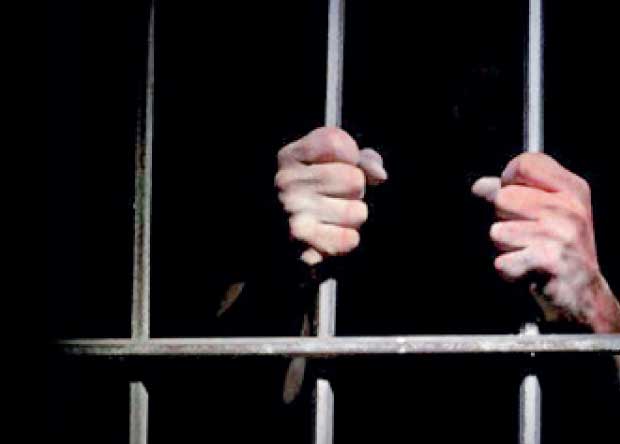
On 14 November the Human Rights Committee heard a case by an alleged torture victim, Roy Manojkumar Samathanam, against Sri Lanka, which dealt with the alleged ill-treatment and torture of Roy by officers from the Terrorist Investigation Division (TID) while in detention.
 Roy agreed to talk to the dailymirror ‘’ in an exclusive interview to a Sri Lankan newspaper. In reading the following article it is imperative that International Law has to be kept in mind so that the due process of law is upheld. In ratifying the International Covenant on Civil and Political Rights (ICCPR), under which the story below has been judged, Sri Lanka has accepted its authority.
“By becoming a party to the Optional Protocol, the State party has recognized the competence of the Committee to determine whether there has been a violation of the Covenant and that, pursuant to article 2 of the Covenant, the State party has undertaken to ensure for all individuals within its territory or subject to its jurisdiction the rights recognized in the Covenant and to provide an effective and enforceable remedy when a violation has been established”.
 However, what follows are still only the views of the Human Rights Committee, arrived at in the absence of response from the State Party. The Committee is merely a group of independent experts who monitor Human Rights and is not a judicial body. In light of the judgement of Nallaratnam Singarasa v. Attorney General (2006), this is not a case that has been heard within the domestic jurisdiction of Sri Lanka, by domestic courts, which have delivered a binding judgement on the parties.
Irrespective of the decision in that case, innocence until guilt is proven in a court of law with the views of both parties heard, is a resounding principle that has to be kept in mind, irrespective of the horrific nature of events described below and the purpose of this article is not to carry out functions of the judiciary.
This is Roy’s story.
15 Minutes
Roy Manojkumar Samathanam was born in Colombo but he went to Canada in 1990. In 2005, he returned to Sri Lanka to get married. His wife got pregnant so he planned to stay and go back to Canada with his wife and child after getting their visas.
From time to time, Roy would assist a friend to import goods for the friend’s shop. In September 2007, his friend imported 600 mobile phones to Sri Lanka, via Singapore, that Roy had to go to the Customs to collect and bring back to his house, for his friend to pick up the next day. On 14 September 2007 at 3.30 am around 15 officers of the Terrorist Investigation Division (TID) arrived at his home, and asked to inspect the boxes. “I told them that they were phones that belonged to my friend.” The officers had then told him that this was illegal due to the GPS capabilities. They had informed him and his wife and that he was to be taken to the TID Headquarters for questioning and that he would be dropped back in 15 minutes.
From that point onwards until 2010 Roy alleges to have been tortured at the hands of certain officers of the TID, charged under false accusations under the Prevention of Terrorism Act, not afforded a lawyer, not given medical attention and coerced to sign a confession to the crimes he was accused of.
Post-Apocalypse
He had returned to Canada in 2010 and had wanted to file a case there itself but hadn’t been able to since “those I was accusing were still in office.” Therefore he had filed it in Geneva.
“I did this, as much as for me, for those who were still being tortured since there has to be justice for them too. The Sinhalese who were imprisoned there were called ‘Sinhala kotiyo’. I was made to watch many of these tortures.I want justice. On occasion I have seen the TID assault people to extort money out of them only to release them the next day. The officers would get drunk at about 11.30 in the night and start assaulting prisoners till about 3.00 in the morning. In October 2007, UN Special Rapporteur Nowak visited the TID detention centre. However before he came the place was painted and the prisoner were given long sleeve shirts to wear.
However, on another occasion he came unannounced and with a camera which he used to document the state of affairs and has published a report on the situation. I saw all this since I was taken to translate from Sinhala to Tamil in some of these instances. People were so fed up that they would plead guilty to anything. These officers allegedly violate their own laws.”
“I want a response from the Sri Lankan Government. I want the Canadian Government to follow this up since I know the Sri Lankan Government will not do anything irrespective of what Geneva says. I might even file criminal cases here on in the USA since the present Government is not doing anything.”
Roy’s story has been corroborated with official documents, including his testimony to the House of Commons of Canada, his complaint to the Human Rights Committee and its subsequent views. Excerpts from them follow.
The Writing On The Wall
“During that period, I was handcuffed in the daytime, and at night I slept over the table or - Extracted from ‘House of Commons, Canada, 41st Parliament, 1st Session, Subcommittee on International Human Rights of the Standing Committee on Foreign Affairs and International Development, Thursday, November 17, 2011.’ - downstairs, down on the floor. When they arrested me, they first punched me, and then later on, they didn’t do anything. After about a week, they again said that I had to write a confession. They said that I had to confess that I was an LTTE member from Canada. They said that they knew there were a lot of LTTE people, Tamils, in Canada and that the Canadian government was helping the LTTE. They told me to say all of that and to write a confession in my native language of Tamil and sign it, and that they would then take it to court and release me. I told them that I was not going to do that. After about six months, they came during the night, about 15 officers from the terrorist investigation division and army intelligence. They started to beat me up. They kept on assaulting me for about 10 minutes and then left. Then the next day, the ICRC came in, and I complained to the ICRC about it.”
“In late July 2008, Mr. Samathanam was temporarily taken back to the TID Facility - Extracted from ‘Individual Communication Concerning The Optional Protocol to the International Covenant on Civil and Political Rights, 13 November 2013.’and headquarters in Colombo, where he was again handcuffed to...desk in Unit 2. There, Mr. Samathanam was interrogated. He was pressurised to confess to being a member of the LTTE’s International Intelligence Wing. There was a point where Mr. Samathanam to acquiesce to their demands. After an hour of interrogation, Mr. Samathanam hand-wrote in Tamil a statement that...read aloud to him from his notebook, which stated that Mr. Samathanam had imported an illegal GPS device for the LTTE. Though he was taken to see the detention centre’s Junior Medical Officer on two occasions in late July and early August, Mr. Samathanam believes this was done in an attempt to show that his “confession” was not coerced. Mr. Samathanam was then sent back to Boosa.”
The introduction given to this story must be qualified with the following:
“Lack of cooperation from the State party Extracted from ‘CCPR/C/118/D/2412/2014;Human Rights Committee; Views adopted by the Committee under article 5(4) of the Optional Protocol, concerning communication No.2412/2014*, **.’
4.1 By notes verbales of 4 June 2014 and 22 February 2015, the State party was requested to submit information to the Committee on the admissibility and merits of the communication. On 27 August 2014, the State party informed the Committee that it was unable to provide the information requested, owing to its Supreme Court’s judgment in the case of Nallaratnam Singarasa v. Attorney General of 15 September 2006, in which the Supreme Court stated that the Government of Sri Lanka by acceding to the Optional Protocol had violated the provisions of the Constitution; and that only courts and tribunals set up under the Constitution could vindicate the rights of the people of Sri Lanka.
The State party stated that it was imperative that it respected the judgments of its domestic courts. On 21 May 2015, the State party informed the Committee that following the Presidential election of 8 January 2015, its authorities initiated a process of consultations, taking into account the views of the Committee and the UN High Commissioner for Human Rights, on the possibilities to review the Supreme Court’s decision mentioned above; and that a response pertaining to the communication would be submitted following this process.
4.2 By notes verbales of 15 June 2015, 22 December 2015 and 23 May 2016, the State party was again requested to submit information to the Committee on the admissibility and merits of the communication. The Committee notes that this information has not been received and that the State party has not provided any information as to the process of consultations mentioned in its note verbale of 21 May 2015. The Committee regrets the State party’s failure to provide any information with regard to admissibility or the substance of the author’s claims. It recalls that article 4(2) of the Optional Protocol obliges States parties to examine in good faith all allegations brought against them, and to make available to the Committee all information at their disposal.
In the absence of a reply from the State party, due weight must be given to the author’s allegations, to the extent that they are substantiated.” -
As such the the Committee has requested from Sri Lanka, information about the measures taken to give effect to the Committee’s Views within 180 days.
“The State party is also requested to publish the present Views and disseminate them widely in the official languages of the State party”
Need for Public Initiative
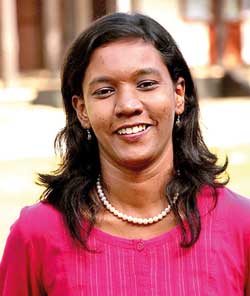 Dailymirror spoke to Dr Dinesha Samararatne who is a Senior Lecturer at the Department of Public and International Law at the Faculty of Law of the University of Colombo to get a legal analysis of the effects that these views will have on Sri Lanka. “Human Right treaties, unlike bilateral treaties deal with how States should treat their own people. There is also no strict enforcement of them. The only body to do this internationally is the Security Council. Therefore even though States enter into Human Right treaties the enforcement of them is extremely limited.
The Optional Protocol of the ICCPR monitors Human Rights at a domestic level and declares if certain rights are violated. It then recommends a course of action to the State in question. If there is no report forthcoming all they can do is to constantly ask for one. Currently there are about 16-20 petitions of this nature where violations have been found. However no steps have been taken to date.
It must be kept in mind that the Committee is not a judicial body. Judicial functions are not functions of a treaty body since all this is based on voluntary ratifications allowing citizens to claim if rights have been violated. All the Committee does is to look at the evidence and make a finding.
In the Singarasa case it was held that Sovereignty was with the people and therefore judicial power could only be administered by judicial courts. This eliminates any view from the Committee because the learned bench interpreted the Human Rights Committee as a judicial body. Therefore this allows the Sri Lankan Government to say that submissions to the Committee cannot be made. This is the State consciously not going before it. The Government hasn’t withdrawn from the Committee either and in 2006 and 2008 it bent over backwards and told the international community that the ICCPR would be respected. When the President asked the Supreme Court he was informed that most rights in the ICCPR were guaranteed domestically.
What has emerged from this confusion is that successive Governments are saying that they will respect rights but when it comes to individual cases they say they can’t. Politically there are two standards. No cases have followed Singarasa though. For instance in CTC v Minister of Health it was held that the NATA Act would be interpreted in light of the relevant international treaty and in furtherance of international obligations.
Although all domestic remedies have to be exhausted in order to appear before the Committee the Committee itself has broadened this requirement to include “effective” remedies.
If we do not respond to these allegations it may become a problem in getting GSP+ since the EU wants ICCPR recommendations to be given its due respect. There are several ways Sri Lanka can handle this. We can see if the Supreme Court will re-examine a previous decision however difficult that may be. The AG can order an internal inquiry and file an indictment under the Torture Act. But in practice Sri Lanka can still disregard it. This is what we did last year. Postpone and buy time. However since the Claimant is from Canada the Government of Canada may exert political pressure.
Therefore it is up to civil society to take these issues up and strengthen the legislative process.”
dailymirror also spoke to the Ministry of Justice regarding this matter but was informed that the matter was not one relating to the Ministry. The Foreign Affairs Ministry declined to comment on the issue stating that investigation on it had to be done before any comment could be given. However, when contacted previously by dailymirror,
the Foreign Affairs Ministry said that the incident should be examined by the authorities, such as the Justice Ministry and the Attorney General’s Department.
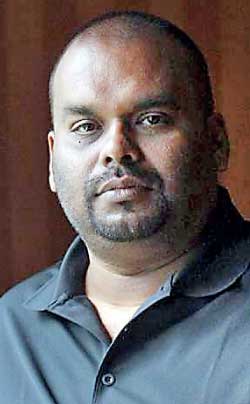
Roy currently lives in Toronto with his family. He is unable to work due to PTSD.
27 Jun 2026 3 minute ago
27 Jun 2026 10 minute ago
27 Jun 2026 31 minute ago
27 Jun 2026 45 minute ago
27 Jun 2026 52 minute ago