18 May 2026 - {{hitsCtrl.values.hits}}
 Yet from the beginning, many believed he had been murdered with the assistance of prison officials and powerful enemies connected to the Police and relatives
In the letter, Kotalawala insisted that nobody in the prison, among his relatives or among his friends should be blamed for his death
 The murder of Francis Attygalle (21), the only male heir of a wealthy family, shocked colonial Ceylon in 1906. The handsome millionaire, linked by marriage to the families of D. S. Senanayake, Sir John Kotelawala, and J. R. Jayewardene, died from a gunshot wound under mysterious circumstances, leaving controversies that haunted the island’s political landscape for decades.
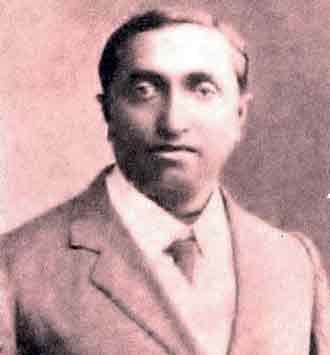
John Kotalawala, the chief suspect and brother-in-law of the victim, a former police officer, was implicated in the sensational Attygalle murder trial, one of colonial Ceylon’s enduring mysteries. He later died in Hulftsdorp Jail, officially recorded as a suicide by poisoning while awaiting trial.
|
John Kotalawala, the accused |
|
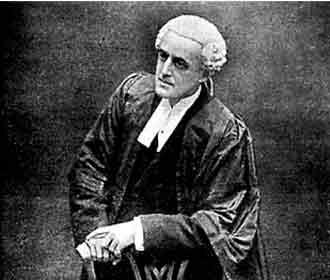
Counsel Eardley Norton represented the accused |
Yet from the beginning, many believed he had been murdered with the assistance of prison officials and powerful enemies connected to the Police and relatives. Kotalawala left behind three young children, including future Prime Minister [1953—1956] Sir John Kotelawala. His death attracted widespread attention across the island and generated speculation that continued long after the trial itself.
As the trial progressed, especially after the damaging evidence given by the pardoned witness Piloris alias Pila, who was kept in the custody of prosecutors, Kotalawala reportedly became convinced that conviction was inevitable. John, familiar with criminal procedure, understood the danger posed by the prosecution’s case. Evidence later presented at the inquest suggested that Kotalawala may have obtained poison while in remand custody and kept it concealed for some time.
On the night of 20 April 1907, prison officers discovered him violently ill in his cell at Hulftsdorp Goal. He was rushed to the General Hospital in Colombo around 11.30 p.m. Doctors immediately suspected poisoning and attempted emergency treatment using a stomach pump, injections and oxygen. Despite these efforts, Kotalawala died shortly after midnight in severe agony.
Excited crowds
The following morning Colombo was gripped by excitement as news of his death spread rapidly through the city. Crowds gathered outside the hospital and police had to be deployed to maintain order. The post-mortem examination conducted by Judicial Medical Officer Dr. Huybertsz revealed severe inflammation of the stomach and intestines consistent with irritant poisoning. The official conclusion was death by bichloride of mercury poisoning.
An inquest was quickly opened before the city coroner and attracted enormous public attention because the main murder trial had not yet concluded. There was even debate over whether the proceedings should be closed to the press in order to avoid influencing the ongoing case. Ultimately, however, journalists were allowed to attend. Doctors and prison officers who testified at the inquiry all stated that Kotalawala himself admitted taking poison. Dr. Wijeyasinghe of the General Hospital said that while being treated, Kotalawala told him he had swallowed either arsenic or “calomel” and had possessed the substance for some time.
Jailor James de Alwis gave similar evidence. Summoned to the cell after Kotalawala began vomiting violently, he asked what had happened and was allegedly told, “I have taken arsenic.” The prison dispenser, Alwin Percival Moss, also testified that Kotalawala admitted taking poison which he had obtained “from outside.”
A major development at the inquest was the discovery of three farewell letters in the cell. One, addressed to his wife and enclosed in an envelope to the Police Magistrate, became central to the mystery surrounding his death. In the letter Kotalawala denied instigating the murder of Francis Attygalle, but admitted that the evidence against him appeared overwhelming.
“I see I have no chance of escape,” he wrote. “Government and my enemies are determined to see that I am hanged.”
He further claimed that a friendly person connected to Welikada Jail had secretly supplied him with arsenic months earlier and that he had hidden the poison inside the sleeve of a black coat since February. According to the letter, he had delayed using it because he still hoped to escape conviction, but after hearing Pila’s evidence, he abandoned all hope.
In the letter, Kotalawala insisted that nobody in the prison, among his relatives or among his friends should be blamed for his death. He also refused to identify the person who allegedly supplied the poison. The inquiry nevertheless exposed serious weaknesses in prison security. Officers admitted that meals from home were delivered directly into cells and that prison staff could enter cells whenever necessary. Witnesses also confirmed that Kotalawala’s coat sleeve contained a slit where poison might have been concealed.
Questions arose over whether he could really have hidden poison for months without discovery. Defence lawyers also highlighted delays in treatment. Nearly forty minutes elapsed between the discovery of the poisoning and Kotalawala’s arrival at hospital. Medical witnesses admitted that quicker treatment using emetics and stomach pumps might have improved his chances of survival.
The evidence of Martin Kotalawala, brother of the deceased, added further interest to the inquiry. Martin identified the body and confirmed that the letters appeared to be in his brother’s handwriting, though one signature looked slightly unusual. He rejected suggestions that Kotalawala had appeared depressed or suicidal before his death.
optimistic and composed
According to Martin, his brother remained confident throughout the trial and discussed the evidence energetically with his lawyers, especially the famous defence counsel Eardley Norton. He testified that even after damaging testimony was heard, Kotalawala still appeared optimistic and composed. Defence counsel Eardley Norton argued that Kotalawala had shown no outward signs of despair and had continued discussing weaknesses in the prosecution case with his legal team. Norton maintained that the farewell letter should not be interpreted as a confession to murder.
The later sections of the account extend beyond the inquest to broader issues of suicide and criminal responsibility. They compare such situations with modern cases of bullying, ragging, and assisted suicide, questioning whether severe intimidation or sustained pressure that leads to suicide should be treated as a punishable offence. Legally, aiding and abetting refers to the act of encouraging, assisting, or inciting another person to commit a crime or suicide. Many jurisdictions recognise this principle and allow courts to hold such individuals criminally liable even if they are not the direct perpetrators.
In Kotalawala’s case, the discussion centres on whether the strain of the murder trial, fear of conviction and public disgrace may have influenced his final actions.
Despite the official verdict of suicide, doubts persisted. Some accepted that Kotalawala had taken poison after concluding that conviction was inevitable, while others believed he may have been poisoned inside prison.
More than a century later, the death of John Kotalawala remains one of the unresolved controversies connected with the Attygalle murder case and colonial Ceylon’s criminal history.
(This article is adapted from the work in print titled “Sensational Attygalle Murder & Kotelawala ‘h.o.m.i.c.i.d.e’ 1907..” authored by the writer.)[email protected]
07 Jul 2026 20 minute ago
07 Jul 2026 45 minute ago
07 Jul 2026 1 hours ago
07 Jul 2026 1 hours ago
07 Jul 2026 1 hours ago