07 Apr 2026 - {{hitsCtrl.values.hits}}
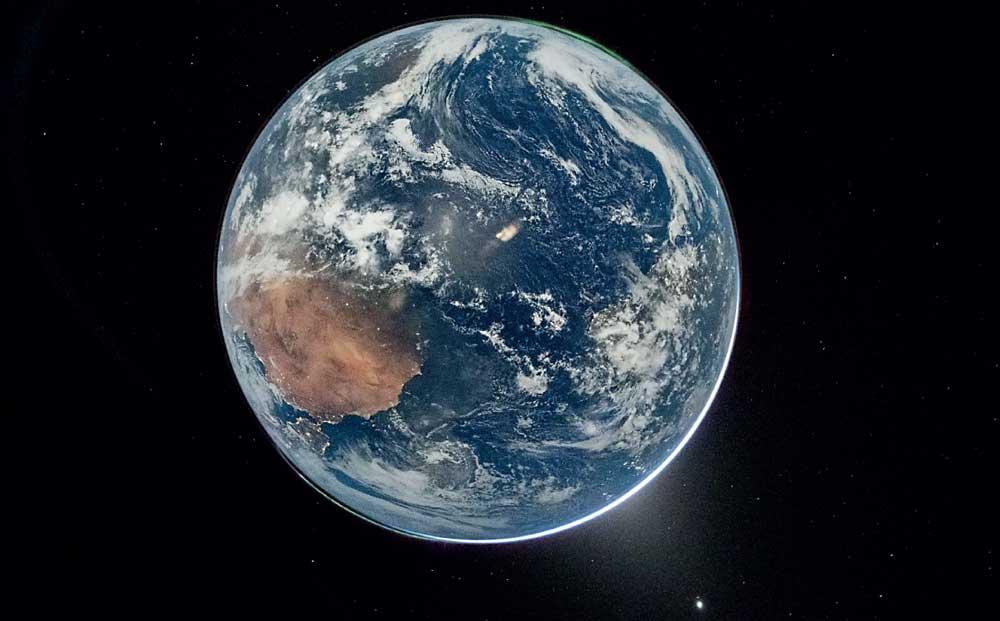
The four astronauts on board Artemis II will see an Earth very different from the war-torn planet experienced by millions of people
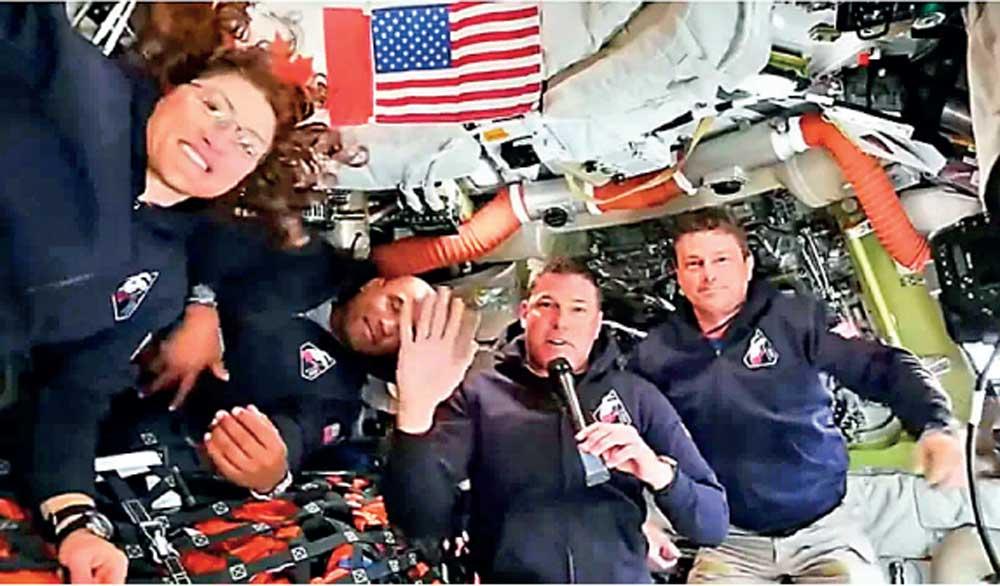
 The four astronauts aboard NASA’s Artemis II mission will follow a “free-return” trajectory around the Moon, giving humanity images of Earth as a single, silent, luminous jewel. From space, our planet appears whole, and without borders, an elegant sphere of life floating in vast darkness. But the view from above belies a far more troubling reality on the surface.
The same world that looks unified from afar is scarred by division, torn by conflict, and weighed down by the decisions of a few powerful leaders. From the fires of Iran and Israel to the enduring sorrow of Palestine, the veil of life is strained, and humanity is fractured by boundaries it has drawn itself. What astronauts see as a single, indivisible home is, on the ground, a landscape of pain, separation, and endless suffering.
The heartbreak is in the contrast: a planet breathtakingly united in the vastness of space, yet painfully divided by human ambition, rivalry, and neglect. At the centre of this unfolding crisis stands the overwhelming power of the United States, now deeply engaged in a widening conflict in Iran. Yet troubling developments at home raise serious questions about stability, leadership, and accountability.
Since early 2025, the U.S. military has undergone a sweeping shake-up under Defence Secretary Pete Hegseth. More than a dozen senior generals and admirals have been removed from key posts. The most striking move came on April 2, when General Randy George, the army Chief of Staff, was ordered to step down immediately and take early retirement. Alongside him, General David Hodne, head of the Army’s Training and Transformation Command, and Major General William Green Jr., Chief of Chaplains, also exited. The Chief of Staff of the Army is not a battlefield commander but the institution’s senior professional leader, responsible for ensuring that the Army is trained, equipped, and ready. As a member of the Joint Chiefs of Staff, the CSA shapes military policy and readiness, overseeing manpower, doctrine, modernisation, and resource allocation. When such a position is suddenly vacated, questions about timing, intent, and stability cannot be ignored. In times of war, leadership coherence is critical; sudden removals send signals of uncertainty both inside the military and to the wider world.
Meanwhile, reports suggest the U.S. is struggling in its campaign against Iran. Military hardware has suffered damage, operational setbacks are mounting, and some traditional allies are pulling back, leaving Washington increasingly isolated. Repeated appeals for ceasefires, both directly and through proxies like Pakistan, have been rebuffed, with Iran showing no willingness to negotiate under current conditions. What was meant to be a swift campaign risks becoming a protracted struggle, with mounting costs and diminishing control.
President Donald Trump has escalated his rhetoric, warning that U.S. strikes “haven’t even started” and suggesting attacks on bridges, power plants, and other infrastructure. He claims the United States holds all the cards, portraying Iran as powerless to respond. But the world is watching a reality far more complicated: thousands of U.S. troops remain in the region, economic turmoil spreads globally, and alliances appear fractured. French President Emmanuel Macron has called for restraint, emphasising that war is not a spectacle but a matter of life and death. The disconnect between bluster and effective strategy has left allies, adversaries, and the public unsettled.
Economic coercion & political objectives
Tensions in Cuba add another layer to U.S. isolation. Tightened sanctions and a near-total fuel blockade have created widespread blackouts and disrupted essential services. Trump has made aggressive public statements suggesting sweeping control over Cuba’s future, remarks that violate international law and alarm global leaders. Deliveries of fuel from allies have provided temporary relief, but they are insufficient if the pressure continues. The crisis illustrates the perils of using economic coercion to achieve political objectives, and the urgent need for coordinated diplomatic responses.
When errors were exposed, some formal regret was expressed. The difference today is stark: language once softened by diplomatic pretence is now blunt, unapologetic, and openly contemptuous of law. Threats to destroy infrastructure and cripple entire nations are stated as goals, with little regard for human cost or international norms.
Benjamin Netanyahu and Donald Trump, both seasoned figures with long careers marked by power, privilege, and global influence, now preside over decisions whose consequences reach far beyond their nations. These choices touch ordinary people, destabilise regions, shake economies, and shape the lives of generations yet unborn.
What deepens the anguish is not only the scale of these consequences but the human cost. Conflicts intensify, from Iran to the broader Middle East, and ordinary families bear the burden: shattered homes, grieving parents, and children growing up amidst fear. These are not abstractions; these are lived realities, inflicted by decisions made far above the lives they disrupt.
At the same time, institutions tasked with restraint and oversight, parliaments, the United Nations, and the international community, appear hesitant or divided. Their inability to act decisively creates a sense of helplessness. Mechanisms designed to protect humanity seem unable to rise to the moment, leaving the world vulnerable to the ambitions of a few.
This moment raises a deeply unsettling question: how stable is the global order if it can be so easily strained by the choices of a handful of leaders? When power moves ahead without sufficient checks, the line between strategy and suffering blurs, and the burden falls on those with no voice. From space, astronauts see a single, luminous Earth, radiant and whole. On the ground, humanity has created fractures, borders, and endless conflict. The beauty of a fragile, living planet stands in painful contrast to the reality of human ambition, rivalry, and neglect.
History may remember not only the actions taken during this era, but also the silence and inaction that allowed them, and the human cost borne in that silence. The world’s fragility is starkly apparent: a single conflict, poorly managed or unchecked, can ripple across continents, destabilising lives, economies, and the very structures meant to protect civilisation. This is the quiet heartbreak: a planet breathtakingly united in the vastness of space, yet painfully divided by human hands. The lesson is urgent, clear, and unavoidable. Without restraint, foresight, and shared responsibility, the choices of a few can imperil the future of all. The time for decisive, collective action has never been more pressing. Leadership must rise above rhetoric and self-interest, institutions must enforce international norms, and global society must protect the vulnerable. The cost of failure is measured not in policy papers or speeches but in shattered lives, displaced families, and the erosion of trust in the mechanisms that bind nations together.
From space, Earth is a radiant jewel; on the ground, it is a reminder of human failure, conflict, and the urgent need for accountability. Humanity stands at a crossroads: Will it act to uphold the fragile unity glimpsed from above, or will it allow fractures to deepen until the consequences are irreversible? The answer will define not only this generation but countless generations yet to come.
[email protected]
04 Jun 2026 30 minute ago
04 Jun 2026 52 minute ago
04 Jun 2026 54 minute ago
04 Jun 2026 1 hours ago
04 Jun 2026 1 hours ago