06 Jun 2025 - {{hitsCtrl.values.hits}}
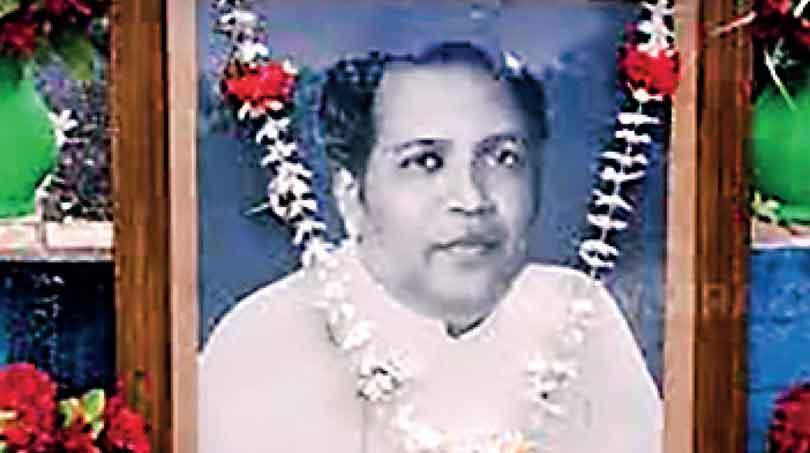
Fr. Chandra Fernando
Fr. Chandra had also spoken candidly about divisions amongst Sinhalese and Tamil Catholics in his interview with Jon Lee and Scott Anderson
 Today, June 06, will mark 37 years since the killing of human rights activist and Catholic priest Rev. Fr. Chandra Fernando at his church residence in Batticaloa. He was Chairman of the Batticaloa Citizens’ Committee at that time and Parish Priest of St. Mary’s Church (The Cathedral) in Batticaloa. The Indian Peace Keeping Forces (IPKF) had been controlling Batticaloa during that period.
I have heard accounts of survivors of torture, families of the disappeared, extrajudicial executions, eyewitness and community leaders’ statements about widespread human rights violations in the North and East by the IPKF; and Batticaloa was no exception. The IPKF is also suspected to be responsible for Fr. Chandra’s killing.
Fr. Chandra’s family members, such as his nephew Ravishankar and younger sister Chandra, remember him as being very kind and helpful. As second oldest in a family of eight, he had helped his younger siblings and parents in many ways, such as by drawing water from the well, helping in cooking and putting his younger siblings to sleep. After he became an adult and a Catholic priest, this love and kindness extended to anyone, particularly communities affected by war, violence and human rights violations.
Fr. Chandra was a well known voice in Batticaloa against human rights violations. One source told me he had gone to a notorious detention facility in Southern Sri Lanka known as Boossa and returned with several detainees, whom he had personally dropped at their houses to ensure nothing happened to them. The present Catholic Bishop of Trincomalee, Rt. Rev. Dr. Noel Emmanuel, was residing with Fr. Chandra as the assistant Parish Priest of the Cathedral at the time the latter was killed. He recalls Fr. Chandra was willing to negotiate with senior officers of the IPKF, especially in relation to those being arbitrarily detained, and that he was able to obtain the release of many.
Fr. Annathas is a Catholic Priest from Batticaloa who has many memories of Fr. Chandra. When he was studying to be a priest, he remembers Fr. Chandra encouraging him and others with him to be more involved in work for justice. Later on, after becoming a priest, he recalls an incident where the IPKF had detained him (parish priest at that time) in the parish house and detained many youth in the Iruthayapuram church and there was fear many would be disappeared or killed.
Acts of courage
Fr. Chandra had rushed to the church and had managed to get them all released. But while he was engaged in negotiations, his motorbike was shot at and damaged. In another incident, Fr. Annathas was injured in a bomb blast by the Liberation Tigers of Tamil Eelam (LTTE), in which many were killed and injured. At a time when no one would have stepped out and come to the site, Fr. Chandra had come and taken him to hospital.
At a time of deep ethnic tensions, Fr. Chandra had many Sinhalese and Muslim friends. When the LTTE was threatening some Sinhalese who were living around Batticaloa, Fr. Chandra had visited them, helped to evacuate them and ensured they got police protection.
Veteran writer and war reporter Jon Lee Anderson’s earliest visits to Sri Lanka was in 1987 where he had met Fr. Chandra in Batticaloa. He had vivid memories about Fr. Chandra when I talked to him a few days ago. According to Jon Lee:
“Batticaloa was a place of murders on every side at the time of our visit, and Father Chandra was right there in the midst of it, trying to expose the truth of what was going on. Doing that, obviously, cost him his life. He was a most courageous and principled man, incredibly candid, living at great personal risk and bearing witness in a place of absolute horror. A rare individual.”
Jon Lee and Scott Anderson had published some of Fr. Chandra’s quotes in their book ‘War Zones: Voices From The World’s Killing Grounds’, published in 1988. Below are some quotes.
“The policemen can come and kill anyone on the road, and they’ll not give the body and they’ll bury them and tell them, ‘I have killed ten terrorists’. There’s no postmortem, no inquiry, nothing”.
“Even at night, they go and knock at the door and rape the girls and women, and break their houses, steal their gold, jewelry, and arrest people. They have killed so many people. Here, today, no young man can live. Because between the age of, say, fifteen and forty, every man has been arrested from time to time. Even last night, they opened fire at five people who had dinner here. They were shot at, and they arrested two and released them in the morning”.
“They killed a sixty three year-old man who looked after this church and took the body. They never returned the body. Sixty three years old. In September. He was the watchman of my church. For no reason. They just came and shot him and took the body. We saw them do it, but they said, ‘No. That incident did not take place.’ Where’s the body? Nobody knows”.
“Even last year, people were killed inside the Church, on the nineteenth of January last year. Three young men were working inside the Church; they were killed inside the Church”.
The authors refer to a cluster of women, who were wives and mothers of Tamil men who have been picked up by the security forces, waiting to speak to Fr. Chandra. Bishop Noel, Fr. Annathas and Fr. Chandra’s relatives also recalls that Fr. Chandra was actively helping families of those detained, disappeared and killed.
Fr. Chandra had also spoken candidly about divisions amongst Sinhalese and Tamil Catholics in his interview with Jon Lee and Scott Anderson.
“The Church in the south doesn’t know what’s really happening in the north and east. They have not come and seen. We want them to come and see with their own eyes what is happening here and talk to the people who have been affected. And let them go and see the camps and how the young men are treated there. They have never come. And when we go and tell them, they don’t believe all this is happening here. The Church is divided. We are completely separate now. The Tamil bishops of the north and east are one, the rest of the bishops are another. The Sinhala bishops condemn the bishops of the north and east. They don’t say anything, just keep quiet”.
Fr. Chandra had also been forthright about how Tamils took up arms in his interview to the Andersons.
“We were taking up nonviolent struggle from 1956 to 1983. We were nonviolent; we were beaten up, arrested. And the number of communal riots we experienced… So they found, the young men, that nonviolence is something which cannot bring you anything. So they’ve taken up to arms”.
Everyone who talked about Fr. Chandra believed the IPKF was responsible for his killing, but no one knew of any investigation, prosecution and conviction. Bishop Noel recalls that Fr. Chandra had openly challenged the Indian Peace Keeping Force (IPKF), which had led to those concerned about him to request him to step down from his work as Chairman of the Citizens’ Committee. Bishop Noel also recalls that the Chairmen of Citizens’ Committees in nearby towns of Kathankudy and Kalmunai had also been killed, and that some young men had visited the Cathedral some days preceding the killing and had a heated argument with Fr. Chandra.
Activism led to his death
According to Tamil Guardian , the former editor of the TamilNet, Sivaram (who was killed later on) had also reported that Fr. Chandra’s activism had led to his death. Sivaram is reported to have had said that Fr. Chandra was “disliked by the Indian army for exposing atrocities and rights violations it committed in the east” and written on how “the most dreaded Tamil paramilitary operative” known as PLOTE Mohan was allegedly involved in the murder, reportedly after having joined Indian military intelligence.
Bishop Noel and Fr. Annathas were amongst those who first saw Fr. Chandra’s body after the shooting. They recall that he had been shot in the face and head, and his cassock was torn and buttons were missing, indicating there may have been a scuffle between Fr. Chandra and the killers. His funeral had drawn unprecedented number of large mourners.
He fought to save other’s lives, but had to sacrifice his own life in the process. He fought for justice, though there’s no justice for him after 38 years. But he is remembered with love and admiration by many in Batticaloa. A hall in the Cathedral is named after Fr. Chandra and two other Batticaloa Catholic priests who disappeared due to their humanitarian and human rights work, Fr. Herbier and Fr. Selvaraj. His family members and friends, including some Catholic priests, will gather today at his tomb to remember him. I hope many, especially priests and Catholic youth, will be inspired by him to support those affected by human rights violations and speak out against injustices.
Fr. Chandra is amongst several Catholic Priests and Sisters killed or disappeared in Sri Lanka between 1985 and 2009 for their human rights and humanitarian work, amidst war and insurrection. Details of others are available in an earlier article which appeared on the Daily Mirror of 6th January 2025, titled “There’s still no justice 40 years after Fr. Bastian was killed.”
06 Jun 2026 9 minute ago
06 Jun 2026 42 minute ago
06 Jun 2026 1 hours ago
06 Jun 2026 2 hours ago
06 Jun 2026 2 hours ago