23 Feb 2026 - {{hitsCtrl.values.hits}}
 Sri Lanka’s Parliament has embarked on an ambitious reform of long-standing political privileges, sparking intense debate over fiscal responsibility, fairness, and the future of the public service. In recent months, lawmakers have moved to abolish both parliamentary pensions and state-funded entitlements for former presidents, measures aimed at curbing perceived excesses and reshaping political culture.
Abolishing Presidential Perks
|
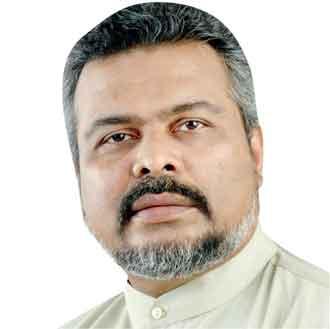
Nandana Gunatilleke, a principled parliamentarian and trade unionist, entered politics without personal wealth and returned to private life with little financial security |
Justice Minister Harshana Nanayakkara presented the Presidents’ Entitlements (Repeal) Bill, which seeks to annul the 1986 law granting former Presidents, their spouses, and retired MPs a range of state-funded benefits. These included official residences, personal staff, transport allowances, monthly stipends, and pensions. The bill, published in the Government Gazette on July 31, 2025, faced procedural scrutiny when MP Dayasiri Jayasekara questioned whether the constitutionally mandated seven-day gap between gazetting and parliamentary introduction had been observed. This interval ensures public awareness, and allows potential legal challenges. Minister Nanayakkara and Leader of the House Bimal Rathnayake confirmed that the gazette notice had been issued by July 30, satisfying all constitutional requirements.
Parliamentary Pensions Repealed
Last week, Parliament passed the Parliamentary Pensions (Repeal) Bill, abolishing pensions for MPs. This fulfilled a key election pledge of the National People’s Power (NPP), led by the Janatha Vimukthi Peramuna (JVP). The vote exposed inconsistencies within the Opposition. While several parties criticised the measure during debate, many left the chamber before the vote, leaving their opposition unrecorded.
The JVP has consistently opposed parliamentary pensions, viewing public office as voluntary service rather than a financial entitlement. JVP and NPP MPs typically channel their salaries and allowances into party funds rather than taking them personally. Prime Minister Dr. Harini Amarasuriya revealed that only one MP has opted to forgo both salary and allowances entirely.
Other opposition parties have been less clear. In November 2024, Hesha Vithanage of the Samagi Jana Balawegaya (SJB) announced plans to abolish MPs’ pensions and other perks such as subsidised meals, security, concessional loans, official residences, vehicle allowances, and insurance. Yet no motion materialised. Meanwhile, Ravi Karunanayake of the New Democratic Front had presented a private member’s bill in February 2025 pursuing the same objective, but none of the opposition parties opposed or criticised him at the time. Ironically, when the repeal bill was debated in February 2026, the SJB criticised the measure but avoided the vote, while Karunanayake supported it to prevent the NPP from claiming sole credit.
Public Backlash and Inequality
Critics of parliamentary pensions point to the wealth of most MPs. Major-party candidates often spend millions on campaigns without losing existing income. Past perks, including duty-free vehicle permits, allowances, and other benefits, sometimes generated significant private gains.
Resentment has grown because millions in Sri Lanka’s informal sector -- agricultural labourers, fishermen, hawkers, masons, carpenters, lack social security. Local and provincial representatives also have no comparable pension schemes. Ordinary public servants receive pensions only after ten years of service and upon reaching retirement age, usually 55. MPs, by contrast, qualified after just five years and could begin drawing benefits immediately, meaning a member elected at 25 could receive a pension at 30. This disparity is widely seen as unfair and has fuelled public anger.
Supporting Honest MPs
Yet proponents of pensions caution that the debate must consider fairness for honest, modest legislators. Not all MPs are wealthy. Figures such as Nandana Gunatilleke, a principled parliamentarian and trade unionist, entered politics without personal wealth and returned to private life with little financial security.
Abolishing pensions entirely could discourage capable, uncorrupted individuals from entering politics, especially given the high cost of elections. Advocates propose structured pensions, contribution-based or means-tested, to support honest MPs while limiting benefits for affluent politicians. Such measures could ensure that public office remains accessible to principled citizens from all backgrounds, balancing fiscal austerity with inclusivity.
Political Financing in Sri Lanka
Underlying the pension debate is a broader issue: political party financing. In Sri Lanka, a single party reportedly holds billions of rupees, which it can freely disperse among its MPs without state oversight. This lack of transparency creates a risk of misuse, undermines public trust, and allows wealthy donors to exert undue influence.
Across Europe, the Council of Europe and its Venice Commission have developed guidelines to prevent such abuses, promoting transparency, citizen participation, and fair competition. Sri Lanka lacks comparable independent regulation, leaving party finances largely unmonitored.
To safeguard democracy, political parties must maintain detailed accounts of all income and expenditure, disclose significant donations, and submit finances to independent auditors. Donations from state-owned enterprises, contractors, offshore companies, and religious institutions should be banned. Campaign spending ceilings would also help limit excessive fundraising. Violations should carry meaningful sanctions, including fines, reimbursement of illicit funds, or disqualification of candidates.
The Cost of Political Culture
The debate over pensions and party financing reflects deeper tensions in Sri Lankan politics. On the one hand, reforms address public resentment over inequality and fiscal irresponsibility, signaling a shift toward transparency and accountability. On the other, strict cuts risk alienating honest MPs from modest backgrounds, who rely on pensions to continue public service with dignity.
Campaign costs remain prohibitively high, and most major parties rarely field candidates from financially disadvantaged families. By contrast, the JVP/NPP coalition often supports its members’ election costs, reducing the financial barriers for new entrants. Without thoughtful reform, abolishing pensions entirely could disproportionately affect these principled but poor politicians, discouraging them from seeking office.
A Changing Political Ethos
The repeal of parliamentary pensions and the move to abolish presidential entitlements signal a changing political ethos in Sri Lanka. Citizens increasingly demand accountability and fairness, challenging decades of unquestioned privilege. Yet success will depend not only on cost savings but also on maintaining inclusivity, preserving integrity, and ensuring that public office remains open to capable citizens from all social strata.
Sri Lanka stands at a crossroads: will politics be defined solely by austerity measures, or can it balance curbing excess with rewarding honesty and ensuring representation for underprivileged yet capable citizens? The ongoing debates over pensions, entitlements, and party financing suggest that the answer will shape the country’s democratic culture for decades to come.
14 Jun 2026 31 minute ago
14 Jun 2026 1 hours ago
14 Jun 2026 2 hours ago
14 Jun 2026 2 hours ago
14 Jun 2026 2 hours ago