04 Mar 2026 - {{hitsCtrl.values.hits}}
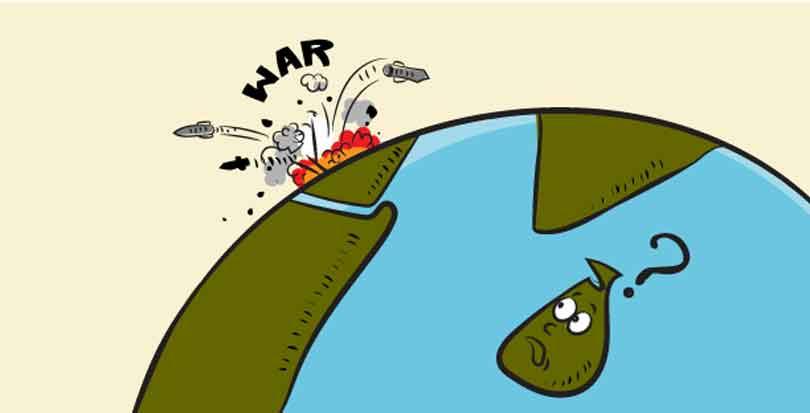
 Blurb: Even if we purely rely on non-Middle eastern countries for oil, the upsurge of prices would be imminent in such a scenario, resulting in corresponding hikes of prices of almost all goods and services Blurb: Even if we purely rely on non-Middle eastern countries for oil, the upsurge of prices would be imminent in such a scenario, resulting in corresponding hikes of prices of almost all goods and services |
After four years, winding queues for fuel have emerged again outside filling stations in many parts of the country due to panic buying and hoarding, following the sudden tensions in the Middle East triggered by the unprovoked attack on Iran by the United States and Israel last week.
Once bitten, twice shy, so the proverb goes. People had to undergo unprecedented difficulties due to months-long fuel shortages in 2022 when an unprecedented economic crisis befell the country. The Supreme Court blamed the then leaders of the government, including the Rajapaksa brothers, for this debacle.
The queues for fuel and cooking gas then spanned for miles, and people waited in them sometimes for weeks day and night. Hence, the initial fear following the US and Israeli attack on Iran, and the latter’s retaliation could be justifiable, but the continued queues seem to be caused mainly by hoarding. The government has already clarified that the Ceylon Petroleum Corporation (CPC) already has fuel stocks sufficient for over a month, and additional consignments are on the way from India and Singapore, not from the Middle East.
Yet, this is a wake-up call for the government on the situation in the making by the belligerent parties in this war. Despite US President Donald Trump having stated that the war would last for another four weeks, Sri Lanka cannot bet on it for two reasons.
On one hand, there is the credibility of the US President who was accused by Iran for attacking it, not once but twice while negotiations were on. On the other hand, Trump alone now cannot decide the trajectory or the duration of the conflict, especially after US and Israeli forces killed Iran’s Spiritual Leader Ayatollah Ali Khamenei. Iran has so far launched strikes across nine countries in the region: Bahrain, Iraq, Jordan, Kuwait, Oman, Qatar, Saudi Arabia and the United Arab Emirates, and also a runway at a UK military base in Cyprus. We do not know if this is a foolhardy action or the manifestation of real strength on the part of Iran.
These factors signal other countries, including Sri Lanka. to prepare for a possible long-drawn-out war in the world’s main oil supply region where over a million Sri Lankans are working. Thanks to remittances by those men and women toiling in these desert countries, and hundreds of thousands of tourists visiting Sri Lanka, the country is currently on the path of a fast recovery from an unprecedented economic crisis triggered by decades of mismanagement and corruption.
Are we going to leave those million men and women in the Mideast to risk their lives just for their remittances even if the war escalates and drags on? Sri Lanka faced a similar situation during the two Gulf wars imposed by the Western powers on Iraq to plunder Iraq’s huge oil reserves during 1990/91 as well as between 2003and 2011.
We lost a sizable amount of annual foreign exchange flow then in addition to bearing the burden of repatriating Sri Lankans working in several Middle Eastern countries. It must be reminded that the government of the day was accused of dragging its feet in bringing back those Sri Lankans for fear of losing foreign exchange, whereas India was swift in that regard. This time, if the conflict escalates, the job will be difficult, and the financial loss possibly incurred by the country would be high and drastic, as it has already spread across almost the entire region.
Even if we purely rely on non-Middle eastern countries for oil, the upsurge of prices would be imminent in such a scenario, resulting in corresponding hikes of prices of almost all goods and services, as happened in 2022 when it went up threefold. Also, it would be the impact and the duration of the conflict on the sea routes and air routes that would decide the country’s inward foreign exchange flow from tourism and exports as well. These possible scenarios dictate early wide discussions among experts and the stakeholders on the upcoming situation if we are to minimise hardships.
14 Jun 2026 2 hours ago
13 Jun 2026 13 Jun 2026
13 Jun 2026 13 Jun 2026
13 Jun 2026 13 Jun 2026
13 Jun 2026 13 Jun 2026